
Why I Source Steam Cleaner Solutions for Multi-Unit Housing
Why Source Steam Cleaner Solutions for Multi-Unit Housing
Over the years, I’ve realized that supplying equipment for the multi-unit housing market requires a totally different mindset than retail sourcing. Property managers aren’t just looking for something to clean a minor spot on a rug; they need robust, heavy-duty solutions to turn over units quickly and efficiently. That’s exactly why a reliable steam cleaner is an absolute non-negotiable in this space.
When you source these units for wholesale distribution, you’re solving a massive headache for property management groups. They need chemical-free, high-heat sanitization to handle everything from grimy grout to bedbug prevention in high-turnover environments. Building a catalog of Property Management Supplies that actually perform under pressure is how you lock in lucrative, long-term B2B contracts.
How steam cleaner sourcing supports turnover, maintenance, and tenant readiness
In multi-unit housing, fast turnaround is money. When a tenant moves out, the maintenance team has a very narrow window to prep the apartment for the next resident. Sourcing high-quality steam cleaners allows these teams to cut through kitchen grease, sanitize bathroom fixtures, and refresh carpets without relying on harsh chemicals that leave lingering odors. This rapid, deep-cleaning capability directly supports tenant readiness and keeps occupancy rates high.
Why multi-unit housing buyers need commercial programs instead of retail SKUs
I always warn procurement teams against buying retail SKUs for commercial properties. Retail models simply burn out when subjected to daily use across a 300-unit complex; their duty cycles are too short and their boilers aren’t built for sustained heat. Multi-unit buyers desperately need commercial programs that offer continuous-fill systems, heavier-duty hoses, and extended run times to handle the rigorous demands of property maintenance.
Which buying factors matter most to distributors, importers, and procurement teams
For B2B buyers, the decision comes down to total cost of ownership rather than just the lowest FOB price. Distributors and importers care most about healthy profit margins, reliable spare parts availability, comprehensive warranty support, and consistent landed costs. Procurement teams need to know that if a machine goes down, they can easily swap out an O-ring or a brush head without having to scrap the entire unit.
What a Steam Cleaner Program Should Cover
You can’t just import one generic machine and expect it to meet the diverse demands of a massive apartment complex. A successful sourcing program requires a tiered, strategic lineup. I always advise importers to build a portfolio that covers quick spot-cleaning as well as heavy-duty restorative work, ensuring you capture every tier of the property management budget.
It’s all about matching the hardware to the specific application. If your catalog lacks variety, facility directors will simply go elsewhere for their Residential Complex Cleaning needs. You need to offer a comprehensive mix of boiler capacities, operating pressures, and form factors to provide a true end-to-end solution.
Which property use cases drive demand across turnover cleaning, common areas, and maintenance
Demand in this sector is driven by highly specific use cases. Turnover cleaning requires aggressive grease removal in kitchens and hard-water stain removal in baths. Common areas demand efficient sanitization of lobby tiles, elevator tracks, and gym equipment. Meanwhile, general maintenance teams rely on steam for localized bedbug eradication and HVAC coil cleaning, making versatile machines incredibly valuable.
How to define product scope by pressure, tank capacity, heat-up time, attachments, and duty cycle
Defining your product scope means getting granular with the specifications. A solid commercial lineup should include machines pushing at least 4 to 6 bar of pressure with boiler capacities ranging from 1.5 liters for quick jobs to 3+ liters for extended work. Heat-up times should ideally be under 10 minutes, and the duty cycle must support continuous operation without thermal shutdown.
When to source handheld, canister, upright, or continuous-fill models
I recommend sourcing a Portable Steam Cleaner for quick bathroom touchups and spot treatments. Canister models are the sweet spot for deep, room-to-room turnover cleaning. Upright models are excellent for continuous hallway carpet maintenance, while continuous-fill dual-tank models are mandatory for all-day janitorial shifts where stopping to depressurize and refill is not an option.
How to Compare Steam Cleaner Specifications
When I’m sitting down with factory spec sheets, it’s incredibly easy to get lost in the marketing jargon. Every supplier claims their machine is “heavy duty” or “commercial grade,” but the raw numbers don’t lie. You have to look under the hood to see if a steam cleaner will actually survive the daily abuse of commercial property maintenance.
Procurement teams rely on me to filter out the underperforming models before they ever reach a shipping container. I focus intensely on thermal stability and recovery times, because if a cleaner loses pressure after two minutes of continuous spraying, it’s practically useless for an apartment turnover. Let’s break down the technical specs that actually dictate performance.
Which specs to compare first: pressure, temperature stability, recovery time, cord length, and accessories
When evaluating factory samples, I immediately look at the pressure rating and temperature stability at the nozzle.
| Specification | Retail Standard | Commercial Target |
|---|---|---|
| Operating Pressure | 2.5 – 3.5 Bar | 4.0 – 6.5+ Bar |
| Boiler Temperature | 120°C – 135°C | 145°C – 165°C |
| Power Cord Length | 3 – 5 Meters | 8 – 10+ Meters |
| Hose Material | Standard Plastic | Steel-reinforced / Heavy PVC |
A high-quality Multi-purpose Steamer must also have a rapid recovery time so the user isn’t waiting for pressure to build back up, alongside a long commercial cord to navigate large rooms without constantly switching outlets.
How to evaluate models for apartments, student housing, and senior living
Different housing types require different specs. Student housing turns over rapidly and often requires high sustained heat for pest control (like bedbugs) and heavy stain removal. Senior living facilities, however, prioritize low-noise operation, lightweight maneuverability, and chemical-free sanitization to protect residents with respiratory sensitivities.
How spare parts, warranty terms, and service kits affect procurement value
A machine is only as good as its serviceability. I always negotiate a spare parts package—typically 1-2% of the total order value in extra O-rings, brushes, and hoses—to be included in the container. Favorable warranty terms and easy-to-swap service kits drastically increase the procurement value, ensuring the distributor isn’t left eating the cost of minor field failures.
How to Source the Right Steam Cleaner Supplier
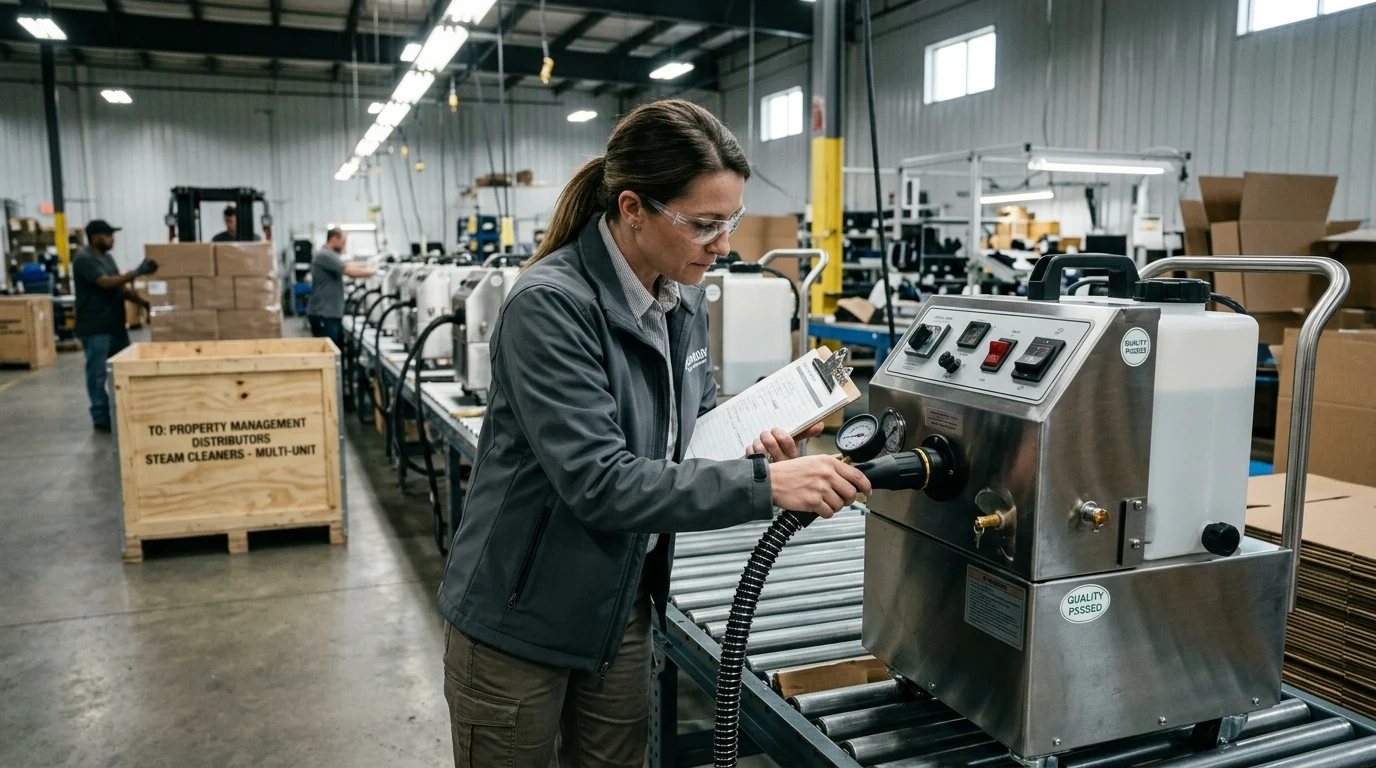
Finding a factory that can actually deliver on its promises is half the battle in international trade. I’ve walked countless factory floors, and the difference between a disorganized assembler and a true manufacturer is night and day. You want an OEM or ODM partner who controls their own boiler welding, electronics assembly, and safety testing in-house.
A cheap unit price means absolutely nothing if the supplier can’t scale production or fails international safety audits. When sourcing for wholesale distribution, I actively seek out factories that deeply understand Western compliance standards and have a proven, verifiable track record of exporting commercial cleaning equipment.
Which screening points show factory capability, OEM or ODM options, and production consistency
To gauge capability, I look for ISO 9001 certifications, in-house tooling workshops, and automated testing lines. A capable ODM will have their own R&D team ready to customize boiler sizes or shell designs, rather than just offering off-the-shelf white-label units. Consistent production is proven by their quality control logs and their ability to pass stringent burst-pressure tests on every single boiler.
How to review MOQ, samples, lead time, private label packaging, and carton configuration
Standard MOQs for customized commercial steamers usually hover around 500 units, though you can sometimes negotiate lower for standard colors. I closely review their lead times—typically 45 to 60 days—to ensure it aligns with my supply chain. Furthermore, I insist on approving the private label packaging and carton configuration to ensure the box dimensions maximize container space.
What audits, testing, and pre-shipment inspections reduce sourcing risk
Never wire a final balance without a third-party pre-shipment inspection. I mandate AQL 1.5 for major defects and 4.0 for minor ones. Inspections must include functional testing: filling the unit, heating it to max pressure, checking for water or steam leaks at the joints, and performing hi-pot electrical safety tests before the container is sealed.
Which Compliance and Quality Requirements Matter
If there’s one area where I absolutely never compromise, it’s regulatory compliance. We are dealing with pressurized vessels containing boiling water and live electricity—it’s a massive liability if something goes wrong on the job site. Importing non-compliant units is a fast track to product recalls, customs seizures, and devastating lawsuits.
I always demand verifiable, third-party test reports before even ordering a physical sample. You have to ensure that the products strictly meet the specific regulatory requirements of your target market, whether that’s North America, Europe, or elsewhere, and that those certificates are current and authentic.
What electrical, safety, and market-entry standards to verify
For the US and Canadian markets, UL or ETL certification is mandatory for commercial electrical equipment. For Europe, you need CE, RoHS, and often specific Pressure Equipment Directive (PED) compliance. Without these marks, commercial property managers simply cannot legally use the equipment on their premises due to their own insurance liabilities.
How to check material quality, pressure reliability, labeling, manuals, and traceability
I verify that boilers are made from high-grade stainless steel or thick-cast aluminum, not cheap alloys prone to cracking. Every machine must have clear, permanent warning labels, comprehensive English user manuals, and a serial number or batch code stamped on the chassis to ensure full traceability in the event of a manufacturing defect.
Why certifications, liability, and after-sales defect handling shape sourcing decisions
A solid paper trail protects your business. If a unit fails and causes property damage, you need to know the factory’s insurance and defect policy will back you up. I heavily favor suppliers who offer a clear after-sales protocol, such as providing credit for dead-on-arrival (DOA) units, over those who offer a slightly lower price but vanish after the goods clear customs.
How Logistics, Packaging, and Landed Cost Affect Margins
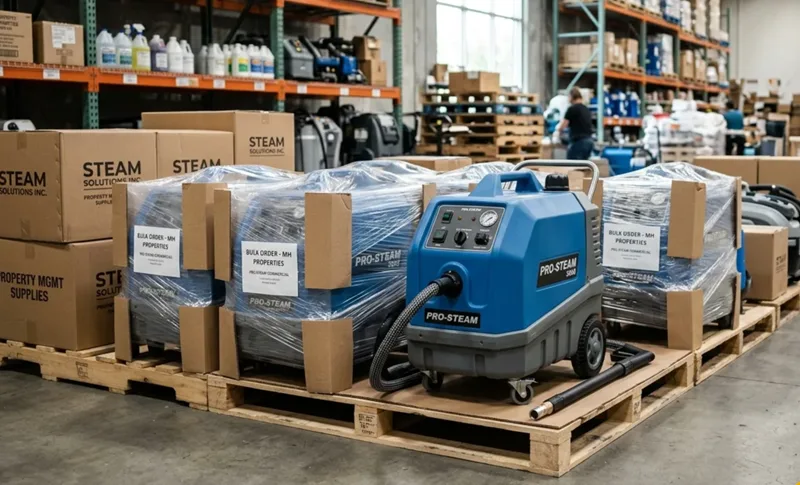
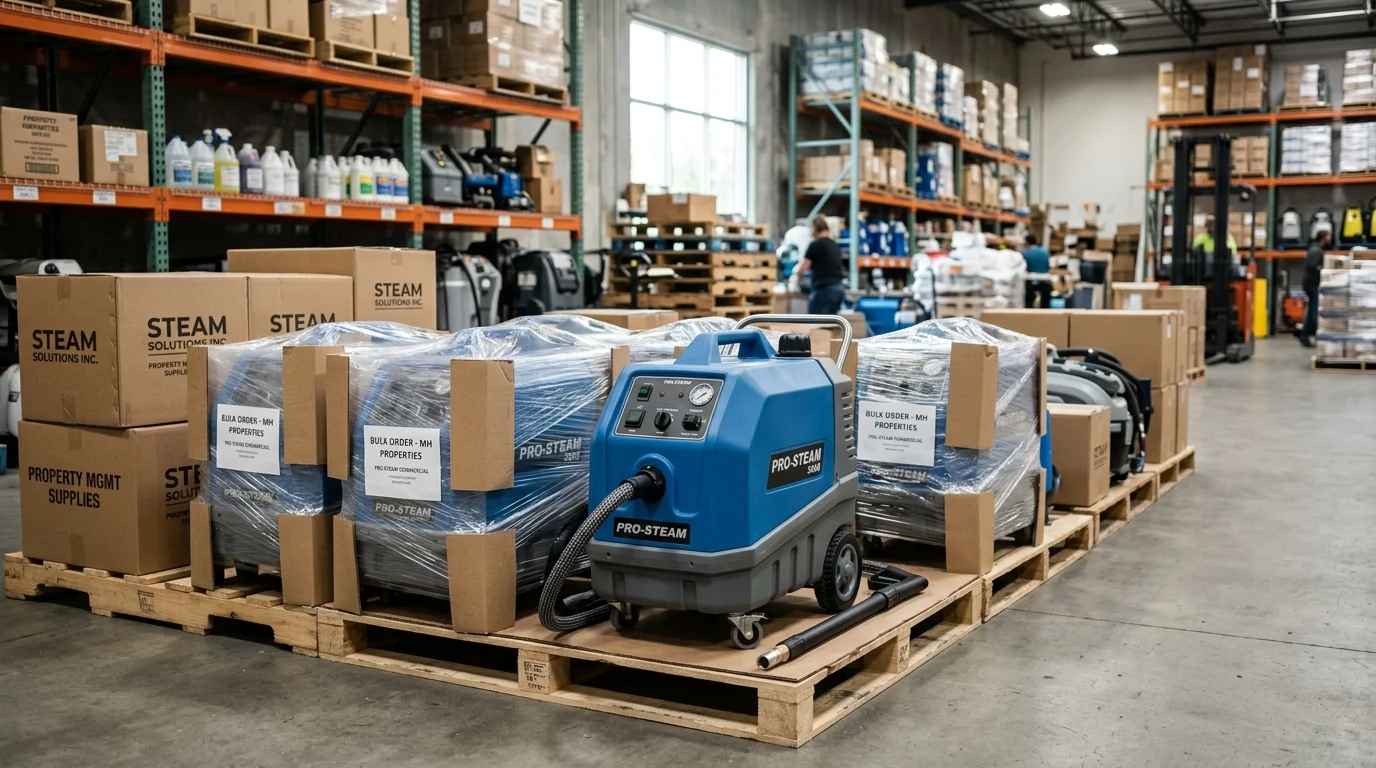
You can negotiate the best FOB price in the world, but poor logistics and inefficient packaging will eat your margins alive. Steam cleaners are inherently bulky items, and shipping a lot of dead air inside a 40HQ container is a rookie mistake that I see far too often. I spend a significant amount of time optimizing carton sizes with my suppliers.
Understanding your true landed cost is the only way to price your products competitively for B2B buyers. This means meticulously calculating everything from ocean freight and customs duties to final-mile delivery and warehousing costs long before placing the purchase order.
How to calculate landed cost using unit price, freight, duties, packaging density, and handling
Landed cost isn’t just the factory price. I calculate it by taking the FOB unit price, adding the per-unit ocean freight (total freight divided by carton density in the container), import duties (based on the specific HS code for steam cleaners), port handling fees, and domestic LTL freight.
| Cost Component | Impact on Landed Cost |
|---|---|
| FOB Unit Price | Base cost of goods |
| Ocean Freight | Varies heavily by container utilization |
| Import Duties | 0% – 25%+ depending on origin/HS Code |
| Warehousing/Handling | Palletizing and storage fees |
Which export packaging, pallet planning, and drop-test requirements protect shipments
To prevent transit damage, I require 5-ply double-wall corrugated export cartons that pass ISTA 1A drop tests. Proper pallet planning is also crucial; cartons must be stacked efficiently to avoid overhang and crushing. Using edge protectors and shrink-wrapping the pallets ensures the units arrive at the distributor’s warehouse in pristine, retail-ready condition.
How to align reorder planning, spare parts, and seasonal demand with margin targets
Multi-unit housing experiences peak turnover during the summer and early fall, particularly in student housing markets. I align my reorder planning to ensure containers land 60 days before this rush. Factoring inventory carrying costs and the shipment of seasonal spare parts into the margin targets ensures profitability isn’t eroded by rush-shipping emergency stock by air.
How to Build a Profitable Channel Strategy
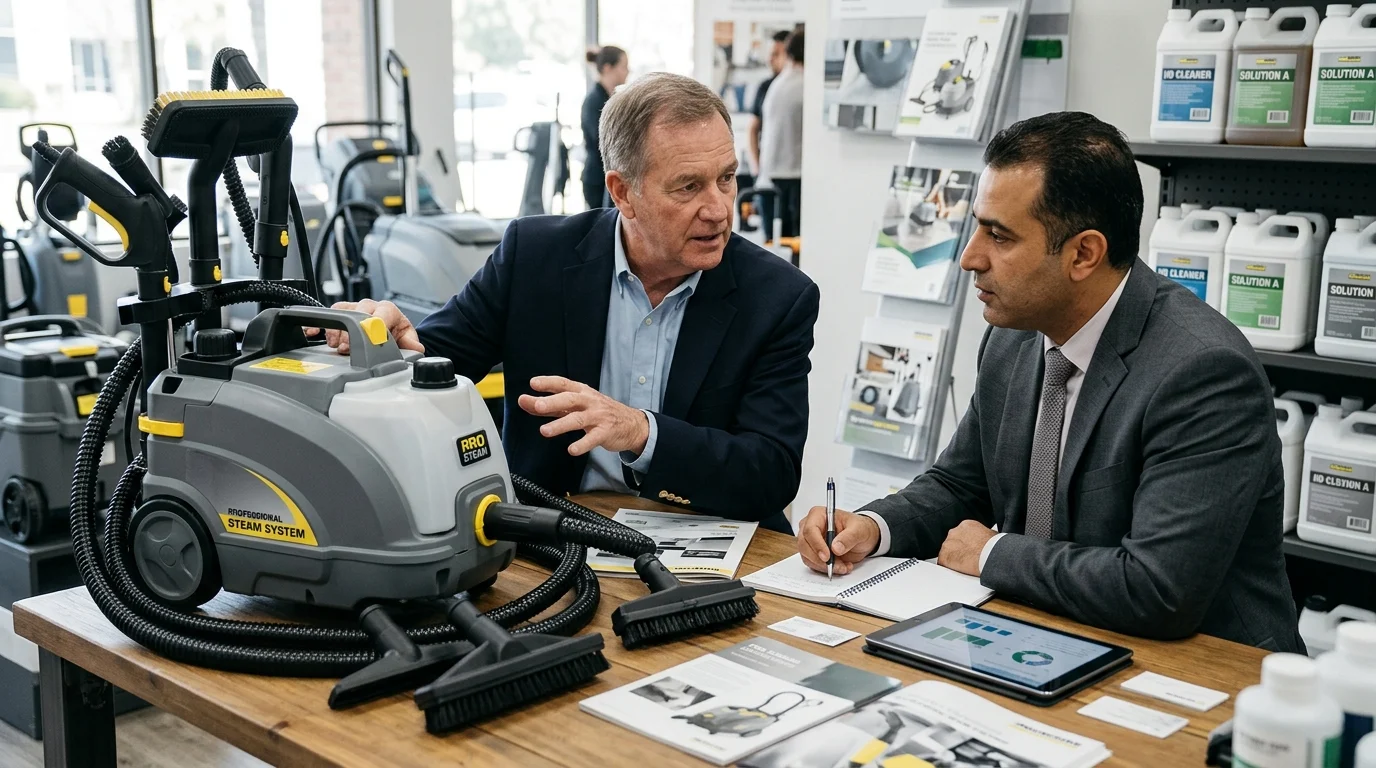
Once the goods are safely in your warehouse, you need a rock-solid plan to move them. I’ve found that selling into the multi-unit housing sector requires a highly targeted channel strategy. You aren’t pitching to casual homeowners; you’re pitching to regional facility directors, commercial distributors, and professional cleaning contractors.
Structuring your pricing and product tiers is crucial for success here. You want to offer a compelling margin to your sub-distributors and dealers while keeping the final end-user price competitive. It’s all about creating a sticky, recurring B2B relationship where buyers return to you for fleet replacements and accessories.
Which buyer segments to target: property managers, contractors, distributors, and dealers
I focus my efforts on selling Wholesale Janitorial Gear to MRO (Maintenance, Repair, and Operations) distributors who already hold contracts with large property management groups. Direct sales to regional property managers and specialized turnover contractors are also highly profitable segments, provided you have the inventory to support their immediate needs.
How to position good-better-best assortments, accessory bundles, and account pricing
I structure my catalog using a “good-better-best” model: a basic canister for small apartment complexes, a mid-range continuous-fill unit, and a premium high-pressure system for heavy commercial use. Bundling these with consumable accessories—like extra microfiber pads, brass brushes, and descaling powder—creates excellent upsell opportunities and allows for flexible, volume-based account pricing.
How to choose between branded import, private label, or exclusive distributor arrangements
If you want to build long-term equity, private labeling your own brand of steam cleaners is the way to go. However, if a factory already has strong brand recognition in your region, negotiating an exclusive distributor arrangement can give you an immediate market foothold while protecting your territory from pricing races to the bottom.
FAQ and Key Takeaways Before Placing an Order
Sourcing commercial equipment is a complex, multi-step process, but it’s incredibly rewarding when you get it right. Before I ever sign off on a proforma invoice, I run through a strict mental checklist to ensure I haven’t missed any critical technical or logistical details.
To wrap things up, let’s look at the most common questions and the final steps you should take before wiring that initial 30% deposit to your factory partner overseas.
What MOQ, lead time, and compliance documents should be required
Expect a standard MOQ of 500 pieces for custom branding, with production lead times around 45 to 60 days. Always require the supplier to provide valid, verifiable certificates for UL/ETL (US) or CE/RoHS (Europe) before the order is placed, and ensure the factory holds a current ISO 9001 audit report.
How to evaluate warranty risk, spare-parts coverage, and supplier responsiveness
Evaluate warranty risk by testing the supplier’s responsiveness during the sampling phase. If they are slow to answer technical questions now, they will be invisible when you have a warranty claim. Always negotiate a 1-2% free spare parts allowance to be shipped inside your main container to mitigate immediate field repair costs.
Final sourcing checklist for multi-unit housing procurement
Before ordering, verify that the pressure and temperature specs meet commercial standards. Confirm that the factory has passed your third-party audits and that all safety certifications are authentic. Finally, calculate your exact landed costs, finalize your export packaging requirements, and ensure your channel strategy is locked in to move the inventory profitably once it arrives.
Related Reading: Portable Steam Cleaner
Key Takeaways
- Wholesale sourcing and supply-chain implications for Steam Cleaner
- Specifications, compliance, and commercial terms buyers should validate
- Actionable recommendations for distributors and procurement teams