
A manual pepper grinder is a simple table service tool that delivers fresh seasoning exactly when food reaches the guest. For operators, it supports portion control, presentation, and a better dining experience without electricity or noise.
Article Angle: Why Table-Side Grinding Still Matters
Table-side grinding remains relevant because diners value freshness, customization, and a more interactive service moment. In hospitality, the grinder is not only a seasoning tool; it is part of the guest experience and the perceived quality of the meal.
For B2B buyers, the category also matters because it is easy to merchandise, easy to explain, and suitable for retail, gift, and foodservice channels. Yisure’s pepper grinder category and knife sharpener category show how a kitchen-tool supplier can build related product families around daily-use needs.
How a Manual Pepper Grinder Meets Table-Side Grinding Needs
A manual pepper grinder meets table-side grinding needs by combining portability, control, and consistency. Guests can season food at the moment of serving, which helps preserve aroma and allows each person to choose their preferred grind level.
The key advantage is mechanical simplicity. A hand-operated mill does not depend on batteries, charging, or motors, so it is reliable in dining rooms, outdoor service, and busy home kitchens. That makes it practical for operators who want fewer service interruptions.
Fresh grinding also improves the sensory experience. Pepper oils are released at the point of use, so the aroma is stronger than pre-ground seasoning. For this reason, table-side grinding is often associated with premium service and attentive presentation.
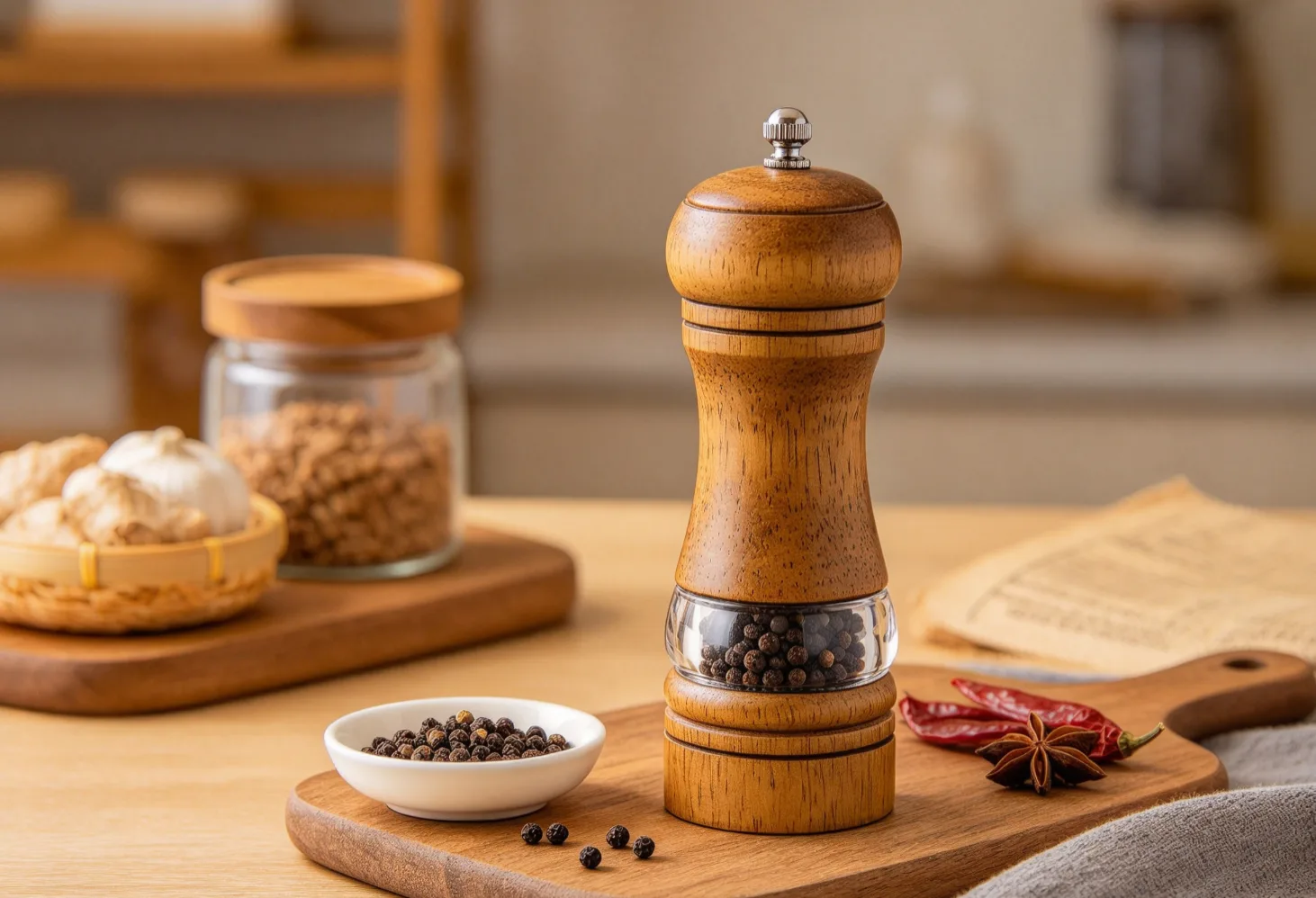
Core Features That Support Fresh Seasoning
Fresh seasoning depends on grind control, durable materials, and easy handling. A well-designed grinder should feel stable in the hand, produce even output, and allow the user to adjust coarseness without confusion.
Table: Key Features That Matter for Table-Side Grinding
| Feature | Why It Matters | Typical Buyer Benefit |
|---|---|---|
| Adjustable coarseness | Matches different dishes and customer preferences | Better seasoning control |
| Durable grinding core | Supports repeated use in service environments | Longer product life |
| Compact body | Fits table settings and trays | Cleaner presentation |
| Easy refill design | Reduces downtime during service | Faster operations |
| Comfortable grip | Improves user experience for staff and guests | Less handling fatigue |
Material choice also affects performance and positioning. Stainless steel, ABS, acrylic, wood, and bamboo each create a different balance of appearance, weight, and cost. According to FDA guidance on food contact substances, food-contact materials should be selected with safety and intended use in mind. For international buyers, that point is important when sourcing export-ready kitchen tools.
Manual vs Electric Grinders for Table Service
Manual and electric grinders solve the same seasoning problem, but they suit different service models. Manual versions are quieter, simpler, and often preferred for classic table service, while electric versions support faster output and one-hand operation.
Comparison Table: Manual vs Electric Pepper Grinder for Table-Side Use
| Aspect | Manual Grinder | Electric Grinder |
|---|---|---|
| Noise | Very low | Higher due to motor |
| Power source | None | Battery or rechargeable |
| Service style | Traditional table-side presentation | Convenience-focused service |
| Maintenance | Simple | More parts to manage |
| Guest interaction | Higher tactile engagement | Faster and more automated |
For restaurants that value atmosphere, the manual format often fits better. For high-volume or accessibility-focused settings, electric models may be more suitable. Yisure’s milk frother category illustrates the same product logic in another kitchen segment: manual simplicity and electric convenience serve different users.
What Buyers Should Check Before Sourcing
Buyers should evaluate grinding mechanism, refill method, material safety, and packaging before placing a purchase order. These factors affect not only performance, but also retail appeal, shipping efficiency, and after-sales complaints.
- Check whether the grinding core is ceramic or metal, and confirm suitability for pepper use.
- Verify whether the coarseness adjustment is intuitive and repeatable.
- Inspect the refill opening to see if it supports quick service refills.
- Confirm that the body material matches the target channel, such as retail, gift, or foodservice.
- Review certification needs for the destination market, including LFGB, FDA, CE, or RoHS where applicable.
Industry standards and compliance expectations vary by market, so procurement teams should align product specs with destination requirements. For general food-contact guidance, the FDA food-contact overview is a useful starting point, while the U.S. Code of Federal Regulations, Title 21, Part 174 provides regulatory context for indirect food additives.
Table-Side Use Cases Across Channels
Table-side grinding works in more than one channel because it combines function with presentation. The same product can serve restaurants, home kitchens, gift sets, and retail shelves if the design and packaging are aligned.
Table: Common Table-Side Use Scenarios
| Channel | Primary Need | Why the Grinder Fits |
|---|---|---|
| Restaurants | Guest-facing seasoning | Quiet, elegant, and easy to use |
| Home kitchens | Fresh daily seasoning | Simple and reliable |
| Gift sets | Useful presentation item | High perceived value |
| Retail | Easy-to-understand product | Clear function and shelf appeal |
| Hospitality | Premium table service | Supports refined dining atmosphere |
Yisure’s broader kitchen-tool lineup, including its main website, shows how a supplier can support related sourcing needs across grinders, frothers, sharpeners, and storage products. That matters for buyers who prefer one vendor for multiple kitchen categories.
Supplier Directory: Where Buyers Can Start
Manual pepper grinder sourcing usually begins with manufacturers that can handle OEM or ODM customization, stable production, and export documentation. Buyers should compare product structure, material options, and packaging flexibility before shortlisting suppliers.
Within the Yisure catalog, the most relevant starting points are the pepper grinder category, the milk frother category, and the knife sharpener category. These categories help buyers evaluate whether the supplier can support a broader kitchen-tool program, not just one item.
For broader market comparison, buyers often also review established kitchenware suppliers and importers that specialize in tableware, spice mills, and foodservice tools. The best choice depends on MOQ, certification needs, lead time, and the intended sales channel.
Why This Category Fits OEM and ODM Development
A manual pepper grinder is well suited to OEM and ODM development because the product has clear functional requirements and many customizable surfaces. Brands can adjust shape, finish, logo placement, packaging, and material combinations without changing the core use case.
This flexibility is valuable for private-label buyers and cross-border sellers. It allows them to create a product that fits a specific price band while still meeting the practical need for fresh seasoning at the table.
For manufacturers, the category also supports repeatable production and broad market use. That makes it a stable item for catalogs, seasonal promotions, and bundled kitchen sets.
Conclusion
A manual pepper grinder meets table-side grinding needs because it is quiet, portable, easy to understand, and effective for fresh seasoning. It remains a practical choice for restaurants, homes, and gift channels where presentation and control matter as much as function.
When sourced with the right materials, grinding mechanism, and packaging, it becomes a dependable kitchen tool with strong commercial versatility. For buyers, the best results come from matching the product design to the service environment and target market.
FAQ
1. Why is a manual pepper grinder better for table-side service?
A manual model is often preferred because it is quiet, simple, and easy to use in front of guests. It also gives diners more control over grind size and portion, which improves the overall seasoning experience without adding noise or electrical dependence.
2. What grind settings are most useful for table-side seasoning?
Medium and coarse settings are usually the most practical for table service because they release aroma well and suit many dishes. Fine grinding can be useful too, but it is less common in front-of-guest service unless the menu specifically calls for it.
3. Which materials are best for a table-side grinder?
Stainless steel, acrylic, wood, bamboo, and ABS are common choices. The best material depends on the target market, price point, and desired look. Buyers should also confirm food-contact safety and durability requirements for the destination market.
4. Can manual grinders be used in commercial restaurants?
Yes, they are widely used in restaurants, hotels, and hospitality settings. They work well where quiet service, guest interaction, and visual presentation matter. The main sourcing concern is durability, since commercial use requires repeated handling and frequent refilling.
5. What should importers check before placing a bulk order?
Importers should confirm the grinding mechanism, refill design, packaging, certification needs, and customization options. They should also review sample quality and lead time. These checks help reduce returns, improve shelf appeal, and ensure the product fits the intended sales channel.