
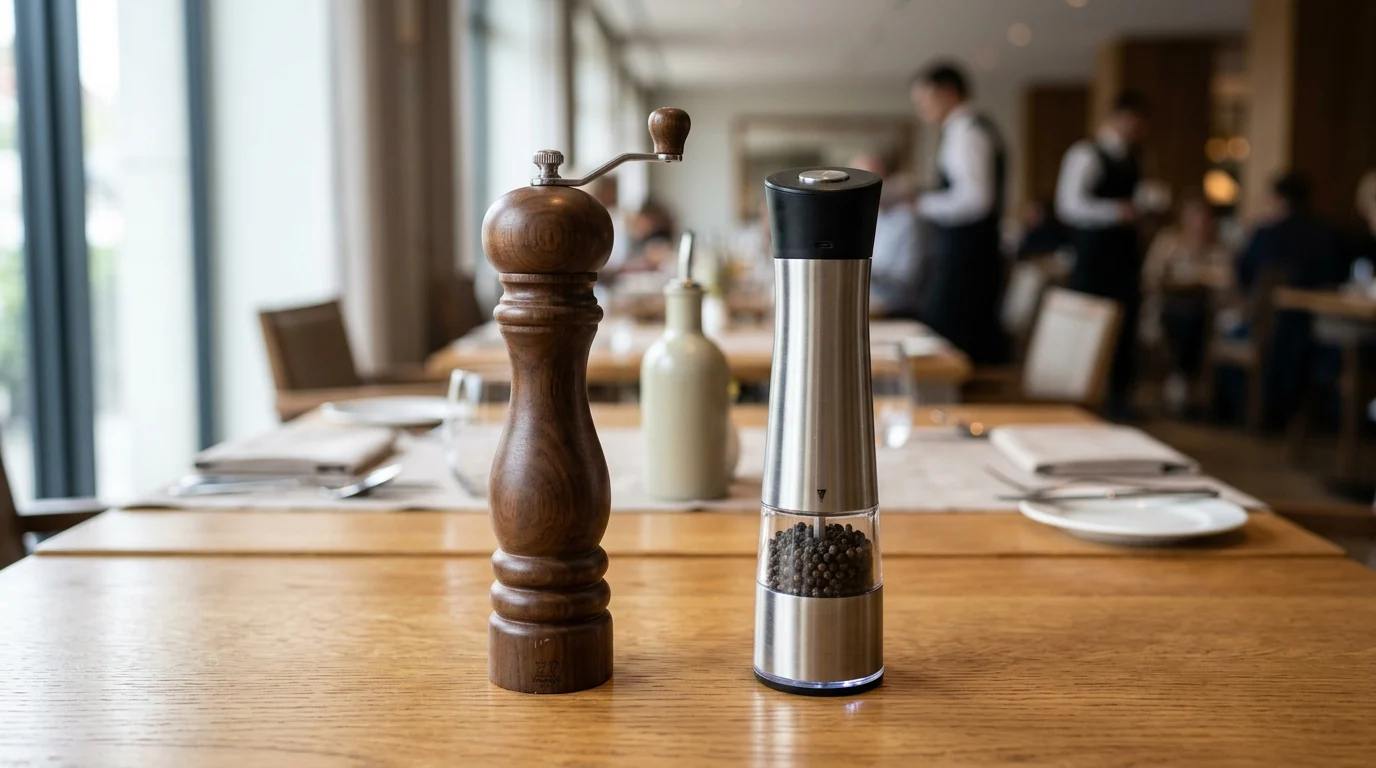
Pepper service may seem like a small detail, but in restaurants and hotels it affects labor flow, guest perception, hygiene, and replacement budgets. A grinder used dozens—or even more than 100 times—per day must do more than look good on the table; it has to deliver consistent output, withstand commercial wear, and fit the service style. Manual mills still offer ceremony and reliability, while electric and gravity-operated models bring speed, accessibility, and modern convenience to high-volume environments. This guide compares performance, cost, maintenance, and use cases so procurement teams, F&B directors, and operators can choose grinders that support both brand standards and operational efficiency.
Why Pepper Grinder Selection Matters
In the hospitality sector, tabletop accessories directly reflect a brand's operational standards. Selecting the right seasoning equipment requires balancing aesthetics with commercial demands. Procurement directors must evaluate upfront capital expenditures (typically ranging from $10 to $45 per commercial unit) against long-term operational costs, considering how frequent usage (often 50–150 actuations daily) in high-volume environments impacts equipment lifespan (typically 2–5 years) and labor efficiency.
Manual vs Electric Grinder Basics
The primary difference lies in the mechanics: manual twisting versus motorized operation. Traditional manual mills rely on a hand-crank or twisting mechanism that forces peppercorns through a burr set. This requires two-handed operation and physical effort, yielding an output that varies depending on the coarseness setting and burr geometry (typically dispensing 0.5–1.0 grams per twist cycle).
Conversely, motorized units use battery-powered or USB-rechargeable motors to drive the grinding mechanism. These devices often feature single-handed push-button operation or gravity-tilt sensors, allowing waitstaff or guests to dispense seasoning with minimal effort. High-torque electric models accelerate output (often dispensing 1.5–2.0 grams per second), rapidly dispensing consistently sized pepper, which reduces the time required for tableside service by an estimated 5–10 seconds per table interaction.
Use Cases by Service Model
The choice of mechanism depends heavily on the restaurant or hotel's service model. In traditional fine dining, the manual wooden mill remains an iconic element of tableside service, offering a deliberate, personalized touch. Furthermore, manual grinders offer superior reliability in high-humidity environments and operate independently of charging infrastructure—key factors for outdoor or tropical hotel venues.
In high-turnover casual dining or banquet settings, the speed and one-handed convenience of an electric model offer distinct labor advantages. Self-service environments, such as hotel breakfast buffets or executive lounges, present unique challenges regarding hygiene and ease of use. A gravity-operated private label pepper grinder is increasingly preferred in these settings. By eliminating the need for guests to physically twist the device, venues can significantly reduce cross-contamination touchpoints while providing a modern user experience.
Manual vs Electric Pepper Grinder Comparison
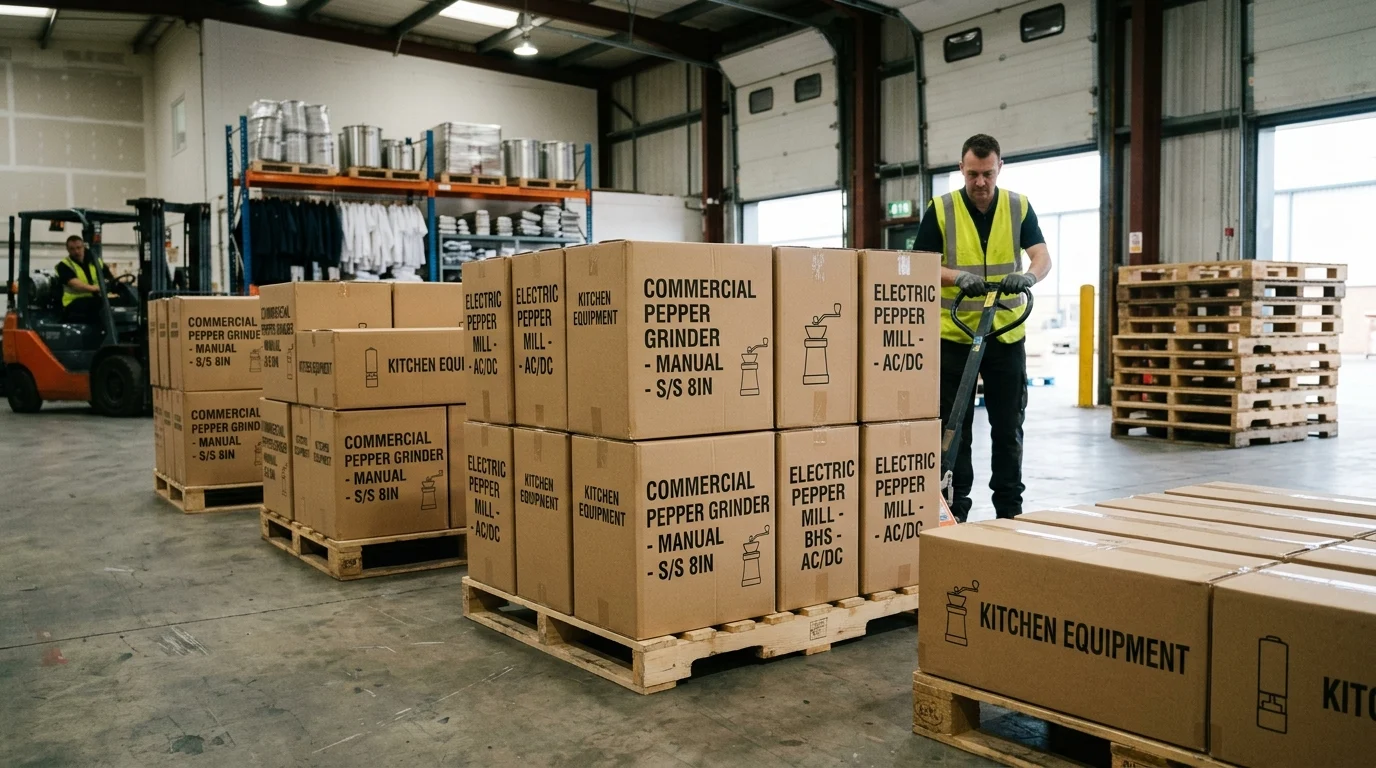
Comparing manual and electric grinders reveals distinct operational trade-offs beyond basic mechanics. Facility managers and food and beverage (F&B) directors must analyze performance metrics, maintenance requirements, and the total cost of ownership (TCO) over a standard 36-month depreciation cycle to determine which technology aligns best with their commercial kitchen and dining room environments.
Performance, Speed, and Consistency
Grind consistency is paramount in professional kitchens, as uniform particle size directly influences flavor extraction and visual presentation. Both manual and electric grinders achieve high consistency when equipped with premium ceramic or carbon steel burrs. Ceramic burrs are particularly favored in commercial settings due to their immunity to oxidation and long-term wear resistance (rating near 9 on the Mohs hardness scale).
While manual grinders offer tactile control over grinding speed, electric models provide high efficiency. Motorized units maintain a constant RPM (typically 60–80 RPM), ensuring the burrs engage the peppercorns at a uniform velocity. This prevents the shattering effect sometimes caused by erratic manual twisting, resulting in a highly uniform grind. However, electric grinders are not without drawbacks: they can struggle with moisture clumping in steamy kitchens, carry inherent risks of motor failure (typically a 2–4% annual failure rate), and create unwanted mechanical noise (often registering between 55–65 decibels) that may disrupt the ambiance in quiet, fine-dining rooms.
Restaurant and Hotel Trade-Offs
The decision often hinges on balancing initial procurement costs against ongoing maintenance. Manual grinders generally present a lower barrier to entry and require virtually zero maintenance beyond regular cleaning and refilling. However, in fast-paced environments, the labor time spent manually grinding pepper across hundreds of covers per night can accumulate into measurable inefficiency (costing up to 15–20 labor hours annually per venue).
Electric models introduce power management into the equation. Traditional battery-operated units require frequent battery replacements (often 4–6 AAA batteries per unit every 2–3 months), adding hidden operational costs of $10–$15 per grinder annually and environmental waste. Transitioning to a custom pepper grinder with an integrated lithium-ion battery (typically 300–500 mAh rated for 500+ charge cycles) and USB recharging capabilities mitigates this recurring expense, centralizing power management to back-of-house charging stations.
| Operational Metric | Recommended Grinder Type | Typical Unit Cost Range | Key Decision Factors |
|---|---|---|---|
| High-Humidity / Outdoor Venues | Manual | $15 – $35 | Immune to electrical moisture damage; no charging infrastructure needed. |
| High-Volume Casual Dining | Electric (Rechargeable) | $20 – $45 | One-handed operation speeds up service; reduces staff fatigue. |
| Fine Dining / Quiet Ambiance | Manual | $30 – $80+ | Silent operation (<30 dB); supports personalized tableside service theater. |
| Self-Service / Buffets | Electric (Gravity-Tilt) | $15 – $40 | Minimizes physical contact points; lowers cross-contamination risks. |
| Strict Budget Constraints | Manual | $5 – $15 | Lower initial unit cost; zero ongoing power or battery replacement costs. |
How Procurement Teams Should Decide
For procurement teams managing national restaurant chains or large-scale hotel properties, sourcing tabletop equipment extends beyond selecting a mechanism. The process involves evaluating material specifications, negotiating Minimum Order Quantities (MOQs, typically ranging from 500 to 2,000 units), and ensuring the chosen hardware aligns seamlessly with the brand's aesthetic and operational workflows.
Materials, Durability, and Maintenance
Durability is a non-negotiable specification in the hospitality industry. Tabletop items are subjected to constant handling, chemical sanitizers, and accidental drops. Commercial procurement standards require housings to survive significant impacts (standardized 1.0 to 1.5-meter drop tests) onto hard tile surfaces without catastrophic failure. Consequently, materials like heavy-gauge 304 stainless steel, impact-resistant acrylic, and dense hardwoods are prioritized over brittle plastics.
Partnering with a specialized pepper grinder OEM allows hospitality groups to specify these robust materials while customizing finishes to match flatware or interior design elements.
Key Takeaways
- Match grinder type to the service model: use manual mills for traditional fine dining and electric models for fast-paced dining rooms, banquets, buffets, and lounges.
- Evaluate total ownership cost, not just the $10–$45 unit price, because commercial grinders may see 50–150 daily actuations and typically last 2–5 years.
- Choose electric grinders when labor efficiency matters, as motorized models can dispense about 1.5–2.0 grams per second and reduce tableside service time by 5–10 seconds.
- Select ceramic burrs for heavy hospitality use because they resist oxidation and long-term wear while supporting consistent grind quality.
- Use manual grinders in humid, outdoor, or remote service areas where battery replacement, USB charging, or power management may complicate operations.
- Consider gravity-operated electric grinders for self-service environments to reduce touchpoints and improve hygiene in shared guest areas.
Frequently Asked Questions
Which grinder type is better for fine dining restaurants?
Manual wooden mills often suit fine dining because they support a traditional tableside ritual and offer tactile control. They also avoid charging concerns and perform reliably in humid or outdoor service areas.
When should a restaurant choose an electric pepper grinder?
Choose electric models for high-turnover dining rooms, banquets, buffets, and hotel lounges where speed, one-handed operation, and consistent output can reduce service time and improve guest convenience.
How much should hotels budget for commercial pepper grinders?
Commercial units commonly range from about $10 to $45 each. Buyers should also factor in lifespan, maintenance, charging or battery needs, and replacement planning over a 36-month cost-of-ownership cycle.
Are electric pepper grinders more hygienic for buffets?
They can be, especially gravity-operated models that reduce twisting and repeated hand contact. This makes them practical for self-service hotel breakfast areas, executive lounges, and shared condiment stations.
What burr material is best for commercial use?
Ceramic burrs are a strong choice because they resist oxidation and wear, making them suitable for frequent restaurant and hotel use. Carbon steel burrs can also perform well when properly maintained.