
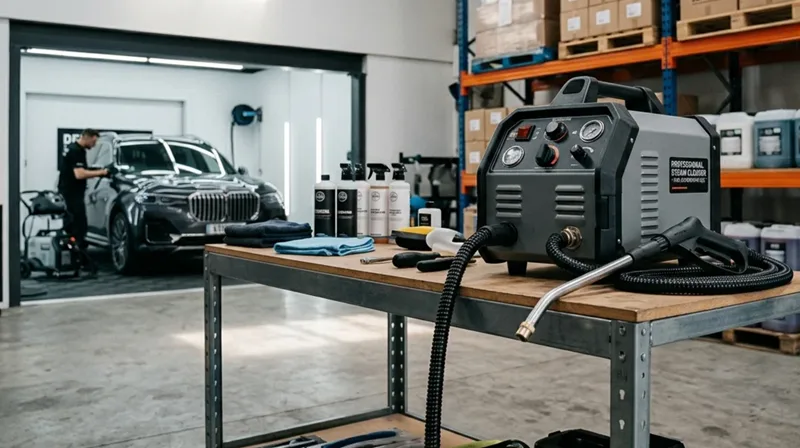
Automotive Detailing: The Growing Demand for High-Temperature Steam Cleaners
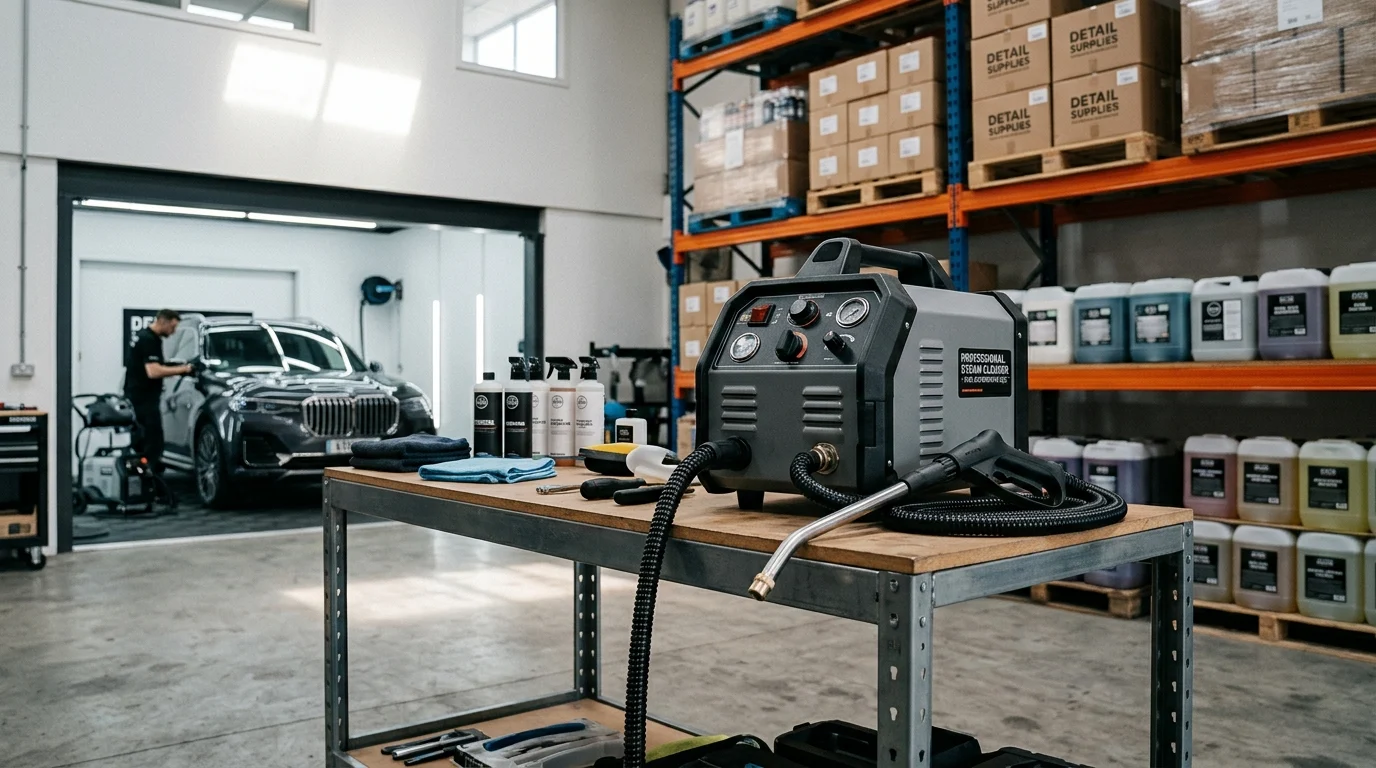
Why High-Temperature Steam Cleaners Are a B2B Opportunity in Automotive Detailing
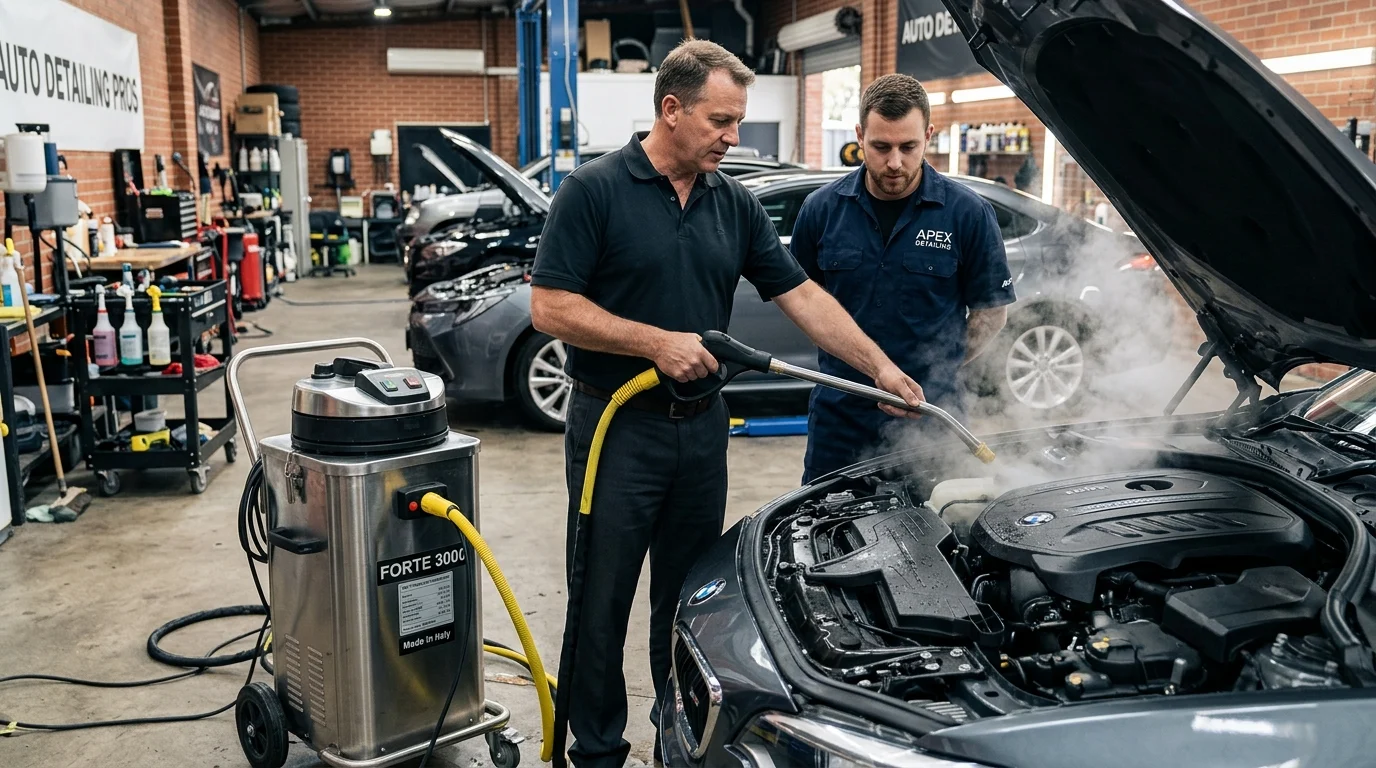
If you’ve been watching the professional auto care market lately, you’ve probably noticed a massive shift in how vehicles are being cleaned and prepped. I’ve spent years analyzing procurement trends in the commercial cleaning sector, and I can tell you that the days of flooding a car interior with gallons of water and harsh chemicals are rapidly ending. Today, the focus is on efficiency, eco-compliance, and premium results. This is exactly where the Auto Detailing Steam Cleaner steps in as a game-changing category for distributors and wholesalers.
For B2B buyers, this isn’t just a fleeting trend; it’s a structural change in how automotive workshops operate. Steam cleaning cuts down on water usage by up to 90%, reduces chemical spend, and allows detailers to clean hard-to-reach areas like AC vents and engine bays without risking water damage to sensitive electronics. When you offer a reliable, commercial-grade steam cleaner to your B2B clients, you are essentially selling them a tool that pays for itself in labor and chemical savings within a few months.
The margins in this category are incredibly attractive for importers who know how to source the right specifications. Because these are capital equipment purchases for detailing businesses, buyers are willing to pay a premium for durability, continuous operation, and strong after-sales support. Let’s break down exactly where this demand is coming from and how you can capitalize on it.
Demand shifts across detailing chains, mobile operators, dealerships, and reconditioning centers
I’m seeing a massive surge in demand from mobile detailing operators. Because they work out of vans, carrying hundreds of gallons of water is a logistical nightmare. A high-quality steam cleaner allows them to perform full exterior washes and interior deep cleans using just a few liters of water. Meanwhile, fixed-location detailing chains and high-volume dealership reconditioning centers are adopting steam to speed up interior drying times, allowing them to turn around cars faster and increase their daily throughput.
Commercial pressures driving alternatives to chemical-heavy cleaning
Environmental regulations are getting stricter globally. Municipalities are cracking down on wastewater runoff from commercial car washes and detailing shops, forcing them to install expensive water reclamation systems. By pivoting to steam, these businesses bypass heavy wastewater regulations entirely. Furthermore, the rising cost of specialized detailing chemicals is pushing shop owners toward steam, which relies primarily on heat and pressure to break down grime, grease, and odors.
Opportunities for distributors, importers, and private-label programs
If you are a distributor, the opportunity here goes way beyond just selling the machine. Creating a private-label program for a High-Temperature Steamer allows you to build brand equity and lock in recurring revenue. You aren’t just selling the core unit; you are securing an ongoing pipeline for high-margin consumables like microfiber bonnets, specialized nozzle attachments, replacement hoses, and descaling solutions that keep the machines running smoothly.
What Defines a Commercial Automotive Detailing Steam Cleaner
When you are sourcing equipment for professional buyers, you have to clearly distinguish between a $150 consumer-grade mop and a $1,500+ commercial workhorse. I’ve seen too many importers make the mistake of sourcing underpowered units, only to face a wave of returns when the machines fail under the stress of an eight-hour detailing shift. Commercial units are built around heavy-duty boilers, continuous heating elements, and industrial-grade casings.
A true commercial unit is designed for “duty cycles” that consumer units simply can’t handle. When a detailer is working on an engine bay, they need sustained pressure, not a quick burst of steam followed by a two-minute wait for the boiler to reheat. Understanding the internal architecture of these machines is critical before you even start talking to factories.
Let’s look at the specific configurations and metrics that define a machine capable of surviving in a professional detailing environment.
Key specifications: boiler temperature, pressure, steam flow, tank capacity, and recovery time
For a commercial unit, you generally want to see boiler temperatures exceeding 300°F (150°C) to ensure the steam is hot enough to sanitize and dissolve grease. Operating pressure should consistently sit between 65 to 115 PSI (4.5 to 8 Bar). Steam flow rates, usually measured in grams per minute, dictate how fast a detailer can work. Finally, a large water tank (or a continuous-fill system) and a rapid recovery time are non-negotiable for professionals who can’t afford to stand around waiting for pressure to rebuild.
Dry steam, wet steam, continuous-fill, and steam-vac unit comparisons
Here is a quick breakdown of how these technologies differ for the end-user:
| Technology | Best Application | Key B2B Selling Point |
|---|---|---|
| Dry Steam (5% moisture) | Interiors, leather, electronics | Leaves seats dry almost instantly; safe for dash wiring. |
| Wet Steam | Engine bays, heavy wheel grease | Higher moisture flushes out heavy, caked-on dirt. |
| Continuous-Fill | High-volume detail shops | Dual-tank system allows refilling without depressurizing. |
| Steam-Vac | Upholstery deep cleaning | Combines steam injection with powerful extraction. |
I always recommend distributors start with continuous-fill dry steam models, as they hit the sweet spot for 80% of detailing tasks.
Minimum configurations buyers should request before pricing discussions
Before you ask a supplier for a quote, give them a strict baseline. I usually demand a minimum of 8 Bar pressure, a stainless steel boiler (AISI 304 or 316), continuous-fill capability, and a heavy-duty 3-meter hose. If a factory quotes you based on an aluminum boiler and a single-tank system, they are quoting a prosumer unit, and the price will be deceptively low. Set your baseline first to ensure an apples-to-apples price comparison.
Which Specifications Matter Most for Buyer Comparison
When you have three quotes sitting on your desk, how do you choose? It’s rarely about the lowest price; it’s about the total value and the lack of headaches post-sale. I always tell my procurement teams to look past the glossy marketing brochures and dig into the raw engineering data.
You are buying a pressure vessel wrapped in electronics. The specifications you prioritize will directly impact your warranty claim rate. If you buy a machine with a weak heating element, the pressure will drop the moment the trigger is pulled. If you buy one with cheap plastic casters, it will break as it’s dragged across a concrete workshop floor.
Here is exactly what you need to scrutinize when comparing supplier spec sheets.
Temperature range, pressure stability, heating power, duty cycle, and accessories
Heating power is paramount. Look for machines in the 1500W to 3000W range (depending on the target market’s voltage limits). Higher wattage means faster recovery times and better pressure stability. The duty cycle should allow for near-constant use. Furthermore, check the accessory kit: brass-bristle brushes for engine blocks and horsehair brushes for leather seats are a must-have in Professional Car Care.
Boiler grade, hose length, cord length, caster design, and machine footprint
The boiler is the heart of the machine. Stainless steel resists scaling far better than aluminum. Hose length is surprisingly critical; a 10-foot (3-meter) hose is the minimum so the detailer can reach around a vehicle without constantly moving the heavy base unit. Look for non-marking rubber casters that can roll over air hoses and extension cords, and a compact footprint that fits easily into a mobile detailing van.
Performance claims for interiors, engines, wheels, vents, leather, fabric, and odor removal
Factories will claim their machines can clean everything, but you need to verify the steam quality. Dry steam is essential for odor removal in AC vents and cleaning leather without over-saturating it. Wet steam is better for blowing brake dust off wheels. Machines that offer a variable moisture control valve give your buyers the best of both worlds, making it a strong selling feature for your sales team.
Durability and serviceability indicators that reduce total cost of ownership
Total cost of ownership is what keeps B2B clients coming back to you. I look for machines with easily accessible internal layouts. If a heating element or a pressure switch fails, can a technician replace it in 15 minutes, or do they have to dismantle the entire chassis? Machines built with standard, off-the-shelf internal plumbing and electrical relays are vastly superior to those with proprietary, molded internals.
How Importers and Procurement Teams Should Source Steam Cleaners
Sourcing high-pressure steam equipment requires a different approach than buying standard car wash mitts or plastic buckets. You are dealing with heat, pressure, and electricity—a combination that demands strict vetting of your manufacturing partners. I’ve found that the best suppliers are often those that specialize exclusively in steam technology, rather than generalist appliance factories.
Your sourcing strategy needs to be methodical. You can’t just wire a 30% deposit to a factory you found online and hope for the best. You need to build a relationship, verify their engineering capabilities, and protect your downside with a phased purchasing plan.
Let’s walk through the exact steps procurement teams should take to secure reliable Automotive Cleaning Equipment.
Supplier screening: factory capability, OEM or ODM support, testing records, and spare-parts policy
Start by asking for the factory’s ISO 9001 certification and their internal testing protocols. Do they run every boiler at 1.5x its rated pressure before assembly? Are they an OEM (building to your exact specs) or an ODM (offering you their existing designs to rebrand)? Crucially, demand their spare-parts policy. A good factory will guarantee the availability of replacement parts for at least five years after the production run.
MOQ, sample policy, lead times, private-label packaging, and payment terms
Most reputable commercial steam cleaner factories will have an MOQ (Minimum Order Quantity) of around 50 to 100 units for standard models, and up to 200 units for custom private-label colors and packaging. Always buy a sample at full price and test it to destruction. Standard lead times are usually 35-45 days. I recommend negotiating payment terms of a 30% TT deposit and 70% against the Bill of Lading, but only after a successful third-party inspection.
Risk-reduction steps from pilot order to container booking
Never jump straight from a single sample to a 40HQ container. I always execute a pilot order of 10 to 20 units first. Put these units in the hands of friendly, local detailing shops and get their honest feedback after a month of heavy use. Once you are confident the machine holds up and the factory hasn’t swapped out components, you can confidently book a full container load.
Packaging requirements for wholesale, e-commerce, and after-sales support
Because these machines are heavy (often 20-50 lbs empty), standard brown-box packaging will not survive the courier network. If you are shipping via UPS or FedEx to your B2B buyers, demand double-corrugated cartons with custom-molded EPE foam inserts (not cheap EPS styrofoam, which crumbles). Include clear, English-language manuals with exploded parts diagrams to make after-sales support easier for your team.
Compliance, Safety, and Quality-Control Risks
I cannot stress this enough: importing non-compliant pressure vessels is a massive liability. If a boiler explodes in a client’s shop, the legal fallout will land squarely on the importer. Therefore, compliance isn’t just a bureaucratic hurdle; it is the foundation of your business’s survival.
Different markets have very specific, legally binding standards for electrical appliances and pressure equipment. You must ensure the factory isn’t just slapping a fake CE or UL sticker on the back of the machine. You need to see the actual test reports from recognized laboratories like SGS, TUV, or Intertek.
Here is what your quality control checklist needs to cover before any product leaves the factory floor.
Electrical safety, pressure requirements, plug standards, and labeling by market
For the US market, UL or ETL certification is practically mandatory for commercial equipment, alongside a heavy-duty 15A or 20A NEMA plug. For Europe, you need CE marking, specifically complying with the Pressure Equipment Directive (PED) and the Low Voltage Directive (LVD). Ensure all warning labels (e.g., “Caution: High Temperature”) are printed in the local language and permanently affixed to the machine.
Inspection protocols for boiler integrity, temperature consistency, leaks, and accessories
Hire a third-party inspector for pre-shipment inspections (PSI). Have them randomly select 10% of the order. They need to fill the machines, heat them up, and check for pressure drops over a 30-minute period. They should use thermal imaging or probe thermometers to verify the steam temperature at the nozzle matches the factory’s claims, and check every connection point for water or steam leaks.
Warranty, spare-parts availability, and technical documentation before scaling orders
Before you scale up to multi-container orders, finalize a watertight warranty agreement. The industry standard is 1 year on electronics and accessories, and 3 to 5 years on the boiler. Ensure the factory provides you with a comprehensive troubleshooting matrix and high-resolution repair videos. This empowers your in-house technicians to fix minor issues locally rather than shipping heavy units back and forth.
How Logistics, Packaging, and Channel Strategy Affect Margins
Getting the product made is only half the battle; getting it to your customer profitably is where the real B2B game is played. High-temperature steam cleaners are bulky, meaning freight costs can quickly eat into your margins if you aren’t optimizing your logistics.
You also need to think carefully about who you are selling to. A high-end auto detailing distributor has different margin expectations and support needs than a broad janitorial supply catalog. Structuring your SKUs and your pricing tiers correctly will protect your profitability across different sales channels.
Let’s look at how to optimize the physical movement of these goods and how to position them in the market.
Carton dimensions, gross weight, palletization, and container loading economics
Work with your factory to optimize carton dimensions. Shaving just two inches off a box design can mean fitting an extra 50 units into a 40-foot container, drastically lowering your landed cost per unit. When shipping out to your B2B buyers, palletize the goods whenever possible to prevent the rough handling that single-carton courier shipments endure.
Channel fit for detailing distributors, workshop equipment dealers, janitorial wholesalers, and B2B platforms
Chart: Typical Channel Margin Expectations
- Detailing Distributors: Expect 30-40% margins; they provide high technical support.
- Workshop Equipment Dealers: Expect 20-30% margins; they bundle steamers with lifts and compressors.
- B2B E-commerce Platforms: Lower margin (15-20%), but high volume and lower touch.
Tailor your sales pitch based on the channel. Detailers care about dry steam for interiors; workshop dealers care about wet steam for engine degreasing.
Entry-level, mid-tier, and premium SKU positioning to protect distributor margin
I always recommend a “Good, Better, Best” strategy.
- Entry-level: Single tank, 65 PSI, basic plastic casing (targets mobile startups).
- Mid-tier: Continuous fill, 85 PSI, stainless casing (the volume driver).
- Premium: Dual-voltage, 115 PSI, integrated vacuum (high margin, flagship product).
This structure prevents your premium Industrial Steam Tools from being cannibalized by your budget offerings.
FAQ for B2B Buyers
I spend a lot of time on calls with procurement managers, and the same questions tend to pop up when they are looking at this category for the first time. To save you some time, I’ve compiled the most critical answers.
If you are negotiating with a factory right now, keep these points in your back pocket.
What MOQ is realistic for branded versus private-label steam cleaners?
For standard factory models with your logo simply stickered on, an MOQ of 50 units is highly realistic. If you want custom plastic injection colors, custom branded boxes, and specific hose modifications, expect the factory to demand an MOQ of 200 to 500 units to cover their setup costs.
How can buyers verify steam temperature claims at the boiler versus the nozzle?
Factories love to quote the internal boiler temperature (often 320°F+), but physics dictates that steam cools as it travels down a 10-foot hose. To verify claims, you need to ask for the tip temperature. A good commercial unit should still deliver steam at around 212°F to 240°F right at the nozzle tip. Use an infrared or probe thermometer during your sample testing to confirm this.
Which consumables, accessories, and spare parts should be included in the first wholesale order?
Always over-order on consumables. For every 100 machines, I order 500 extra brass brushes, 500 nylon brushes, and 200 extra microfiber bonnets. For spare parts, ask the factory for a “recommended spare parts kit” which usually includes extra O-rings, pressure relief valves, heating elements, and thermal fuses. Having these on hand from day one will save your reputation if a client has an issue.
Key Takeaways for B2B Buyers
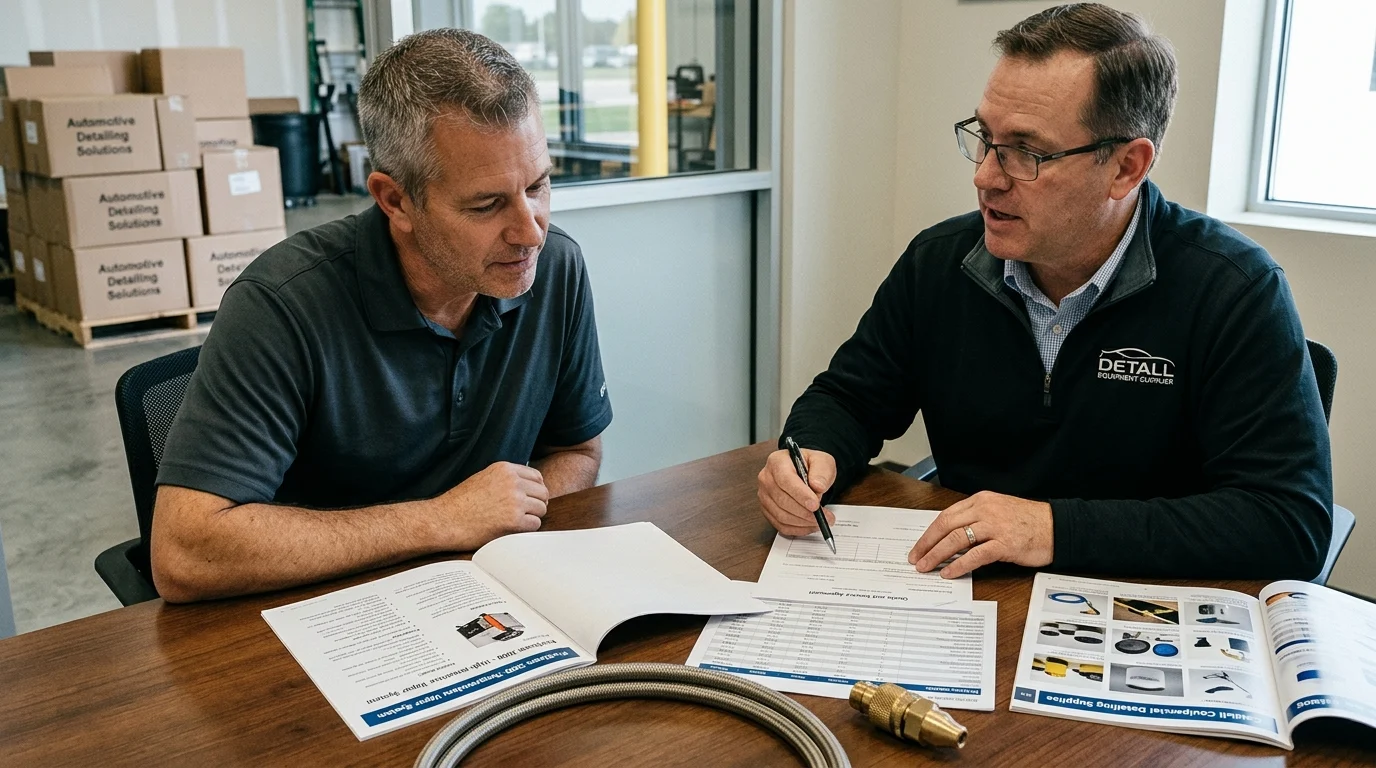
The shift toward steam in the auto detailing world is a massive commercial opportunity, but it requires smart, detail-oriented sourcing. You aren’t just selling a cleaning tool; you are selling an efficiency upgrade to a professional business.
By focusing on commercial-grade specs, rigorous safety compliance, and a smart channel strategy, you can build a highly profitable product line that generates both upfront revenue and recurring consumable sales.
Here is a quick recap of how to win in this category.
Specification shortlist for fast supplier comparison
Always demand: Stainless steel boilers, continuous-fill technology, a minimum of 8 Bar (115 PSI) pressure, heavy-duty 3-meter hoses, and heating elements of at least 1500W. If a supplier can’t meet these baselines, move on to the next factory.
Sourcing, compliance, and logistics decisions with the biggest margin impact
Optimizing your carton sizes for container loading and ensuring you have the correct regional safety certifications (UL/CE) will save you from massive financial losses. A cheaper, non-compliant machine is never worth the liability risk or the customs seizure.
Steps from market testing to repeat orders with stronger commercial leverage
Start with a single sample, move to a 20-unit pilot test with local detailers, and only then commit to container volumes. Once you are ordering consistently, use your volume to negotiate better payment terms and longer warranties, solidifying your position in the market.
Related Reading: Auto Detailing Steam Cleaner
Key Takeaways
- Wholesale sourcing and supply-chain implications for Automotive Detailing: The Growing Demand for High-Temperature Steam Cleaners
- Specifications, compliance, and commercial terms buyers should validate
- Actionable recommendations for distributors and procurement teams