
Introduction
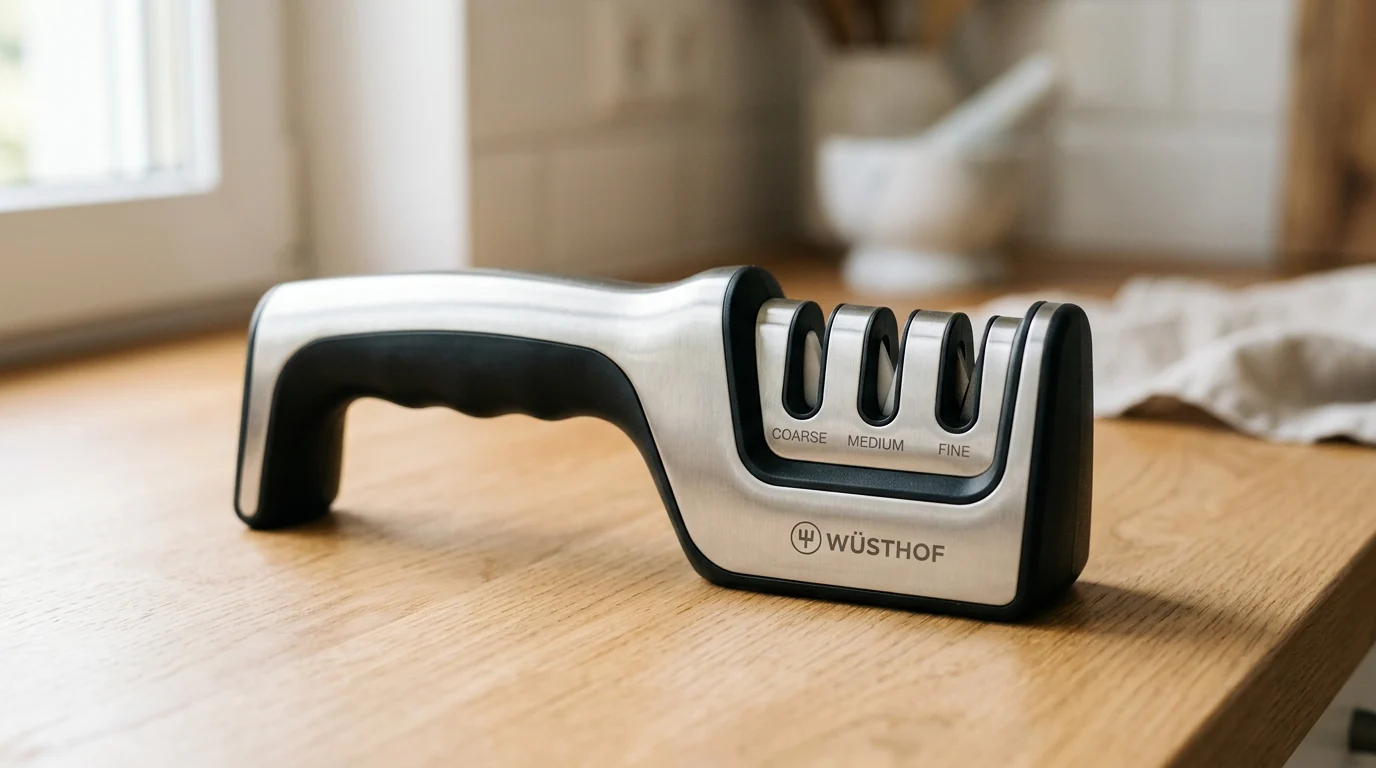
In busy kitchens, sustainability is not only about ingredients and packaging; it also depends on how long essential tools stay in service. A well-designed knife sharpener helps preserve blade geometry, reduce premature wear, and limit the need for frequent replacements. That means less metal waste, lower manufacturing demand, and better performance from the knives already in circulation. This article explains how sharpening fits into a practical sustainability strategy, why blade maintenance affects both cost and safety, and how high-quality sharpeners can extend the useful life of commercial kitchen knives.
Why knife sharpening matters for sustainability in commercial kitchens
When discussing sustainability in commercial kitchens, minds usually jump straight to food waste, biodegradable takeout containers, or energy-efficient fryers. However, having spent enough time behind the line, I know we often ignore a massive source of physical waste: our tools.
Tossing out dull, chipped knives instead of maintaining them is a costly habit. Integrating a reliable Sustainable Kitchenware program is one of the easiest ways to shrink a kitchen’s environmental footprint while protecting the bottom line.
Blade life cycle value
The life cycle of a standard prep knife is surprisingly short if abused. Line cooks can destroy factory edges in less than six months. When an edge rolls or micro-chips, the knife becomes dangerous and inefficient.
However, with consistent maintenance, that same piece of high-carbon steel can easily deliver three to five years of daily service. By keeping the blade geometry intact, we aren’t just saving a tool; we are drastically reducing the raw materials, manufacturing energy, and shipping emissions associated with constantly ordering replacements.
Effects on waste, labor, and replacement
Consider the hard numbers. A decent commercial chef’s knife costs between $45 and $80. If a mid-sized kitchen employs 15 cooks who each burn through a knife every eight months, that sends over 22 large pieces of unrecyclable, mixed-material waste to the landfill every year.
Implementing a proper sharpening routine cuts replacement costs by up to 75%. Beyond physical waste, dull knives crush herbs and tear proteins, increasing food spoilage. A sharp edge also reduces active prep time by roughly 15% to 20%, shaving down labor hours and keeping the kitchen running smoothly.
Which knife sharpener options extend blade life cycles most
We know we need to keep our edges dialed in, but how do we accomplish this without grinding away half the blade? Choosing the right Blade Sharpener is the secret to maximizing longevity.
It is not just about getting the knife sharp; it is about removing the absolute minimum amount of metal required to restore the apex.
Whetstones, honing systems, and electric sharpeners
Different tools serve entirely different purposes. Whetstones (or water stones) are the gold standard for edge retention because they allow for precise, low-abrasion metal removal, though they require serious muscle memory and time.
Electric sharpeners, especially modern two- or three-stage models, are incredibly fast and user-friendly for high-volume environments, though older models can chew up blades if pressed too hard. Finally, honing rods aren’t actually sharpeners—they simply realign the microscopic burr between heavy sharpening sessions. Relying on a Long-lasting Sharpening Tool means knowing when to hone and when to grind.
Key specifications for knife matching
You cannot just run any knife through any abrasive slot; you must match the sharpener’s specifications to the blade’s steel. Most heavy-duty Western knives are tempered to a Rockwell Hardness (HRC) of 56-58 and require a 20-to-22-degree edge angle per side.
Conversely, Japanese precision blades hit HRC 60-62 and need a delicate 15-degree angle. Forcing a 15-degree blade into a 22-degree electric slot will ruin the edge geometry instantly.
Here is a quick breakdown of how different sharpening methods impact blade life:
| Sharpener Type | Typical Grit Range | Edge Angle Control | Metal Removal Rate | Best Kitchen Application |
|---|---|---|---|---|
| Whetstone | 400 to 8000+ | Manual (Variable) | Very Low | High-end / Sushi prep |
| Electric (3-Stage) | 100 to 1000 | Fixed (e.g., 15° or 20°) | Medium to High | High-volume prep lines |
| Pull-Through (Carbide) | Coarse only | Fixed | Very High (Damaging) | Emergency use only |
| Ceramic Honing Rod | 1000 to 2000 | Manual | Near Zero | Daily edge maintenance |
How to choose a knife sharpening program that balances performance

You can buy the most advanced Eco-friendly Sharpener on the market, but if it sits in the manager’s office gathering dust, the investment is wasted.
To truly balance cutting performance with operational costs, you must build a culture around blade maintenance. It has to become as routine as wiping down cutting boards.
Sharpening SOPs, training, and sanitation
The first step is establishing a rock-solid Standard Operating Procedure (SOP) for the staff. A good baseline is mandating a few passes on a honing steel every two hours of active prep work, followed by a full sharpening session every two to three weeks, depending on volume.
Training is non-negotiable; a poorly trained prep cook can easily grind a $100 knife down to a nub in a month. Sanitation is equally important, as sharpening generates microscopic metal dust. Teams must wash and sanitize knives immediately after any Professional Blade Maintenance to meet local health codes and prevent cross-contamination.
Decision criteria for selecting the best option
When deciding whether to handle sharpening in-house or outsource it, look at the math. Hiring a mobile sharpening service often costs around $4 to $6 per knife. If a kitchen has 30 knives sharpened bi-weekly, that totals over $3,100 a year.
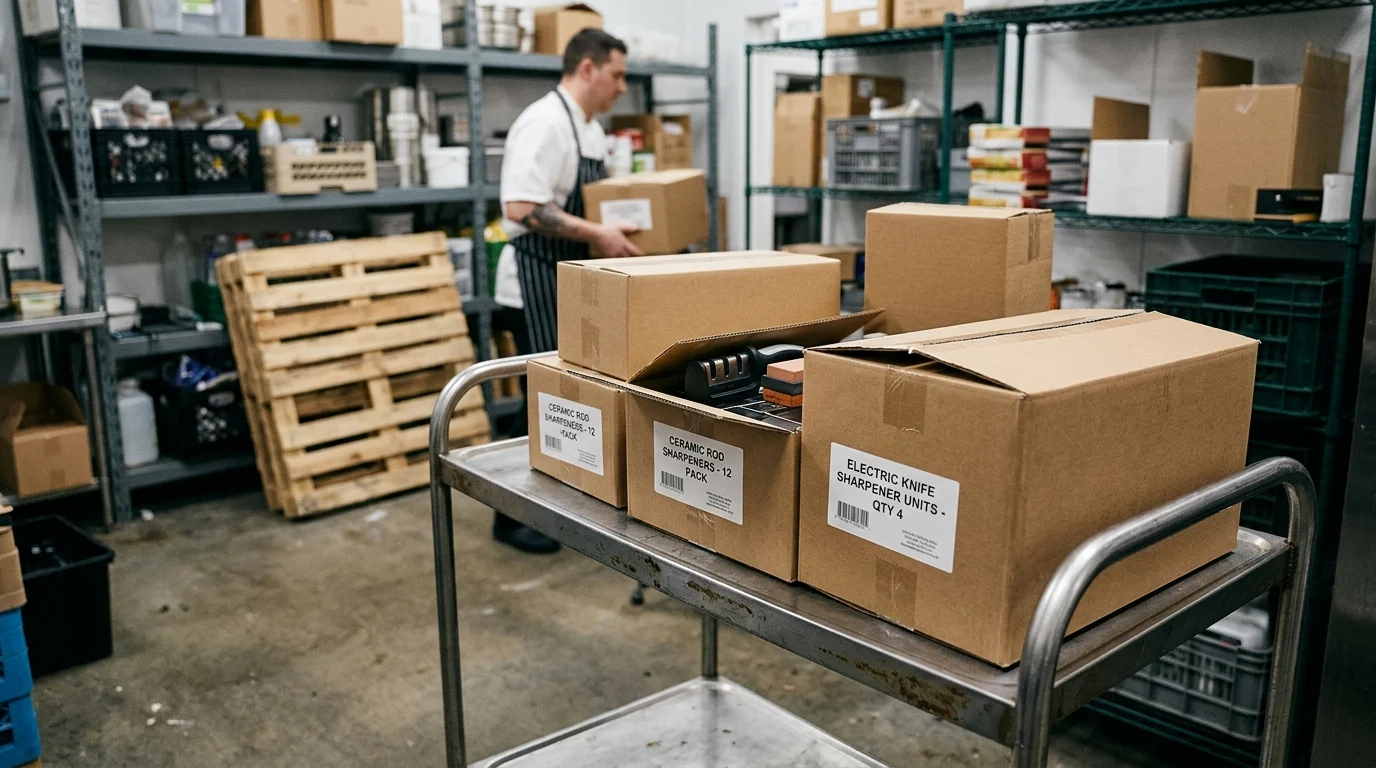
Alternatively, a high-end commercial electric sharpener might have an upfront cost of $150 to $400. Even factoring in replacement abrasive belts or diamond wheels, the return on investment usually hits within the first three months. For multi-unit operators purchasing for a chain, paying attention to supplier MOQs (Minimum Order Quantities) is crucial; buying 50 units at wholesale can drastically lower capital expenditure.
Ultimately, picking a system that staff will actually use is the best way to keep knives out of the trash and the kitchen operating sustainably.
Key Takeaways
- The most important conclusions and rationale for Knife Sharpener
- Specs, compliance, and risk checks worth validating before you commit
- Practical next steps and caveats readers can apply immediately
Frequently Asked Questions
Why is a high-quality knife sharpener more sustainable?
It removes less metal per session, helping knives last 3–5 years instead of being replaced early. That cuts landfill waste, purchasing costs, and shipping-related emissions.
Which sharpener type is best for a commercial kitchen?
Use a 3-stage electric sharpener for speed on busy prep lines, whetstones for maximum edge control, and a ceramic honing rod for daily maintenance between sharpening sessions.
Can I use one knife sharpener for all blades?
No. Match the sharpener to blade hardness and angle: Western knives usually need 20–22°, while many Japanese knives need 15°. Using the wrong slot can damage the edge.
How often should kitchen knives be honed or sharpened?
Hone daily or every shift for frequently used knives. Sharpen only when honing no longer restores performance, which is often every few weeks depending on volume and cutting surfaces.
Where can I find knife sharpeners for sustainable kitchen maintenance?
Yisure offers knife sharpeners suited for commercial kitchen maintenance. Choose models that match your blade types and staff workflow to reduce replacement rates and improve prep efficiency.