
Choosing the right blade sharpening tool can make a big difference in cooking performance, safety, and long-term knife care. For home kitchens, restaurants, and wholesale buyers, the main choice usually comes down to an electric knife sharpener or a manual knife sharpener for kitchen use. Both can restore a dull edge, but they work differently, suit different users, and deliver different levels of speed, precision, and control.
In this guide, we’ll compare electric vs. manual sharpeners in detail so you can decide which option fits your kitchen, your customers, or your product line best.
What Is an Electric Knife Sharpener?
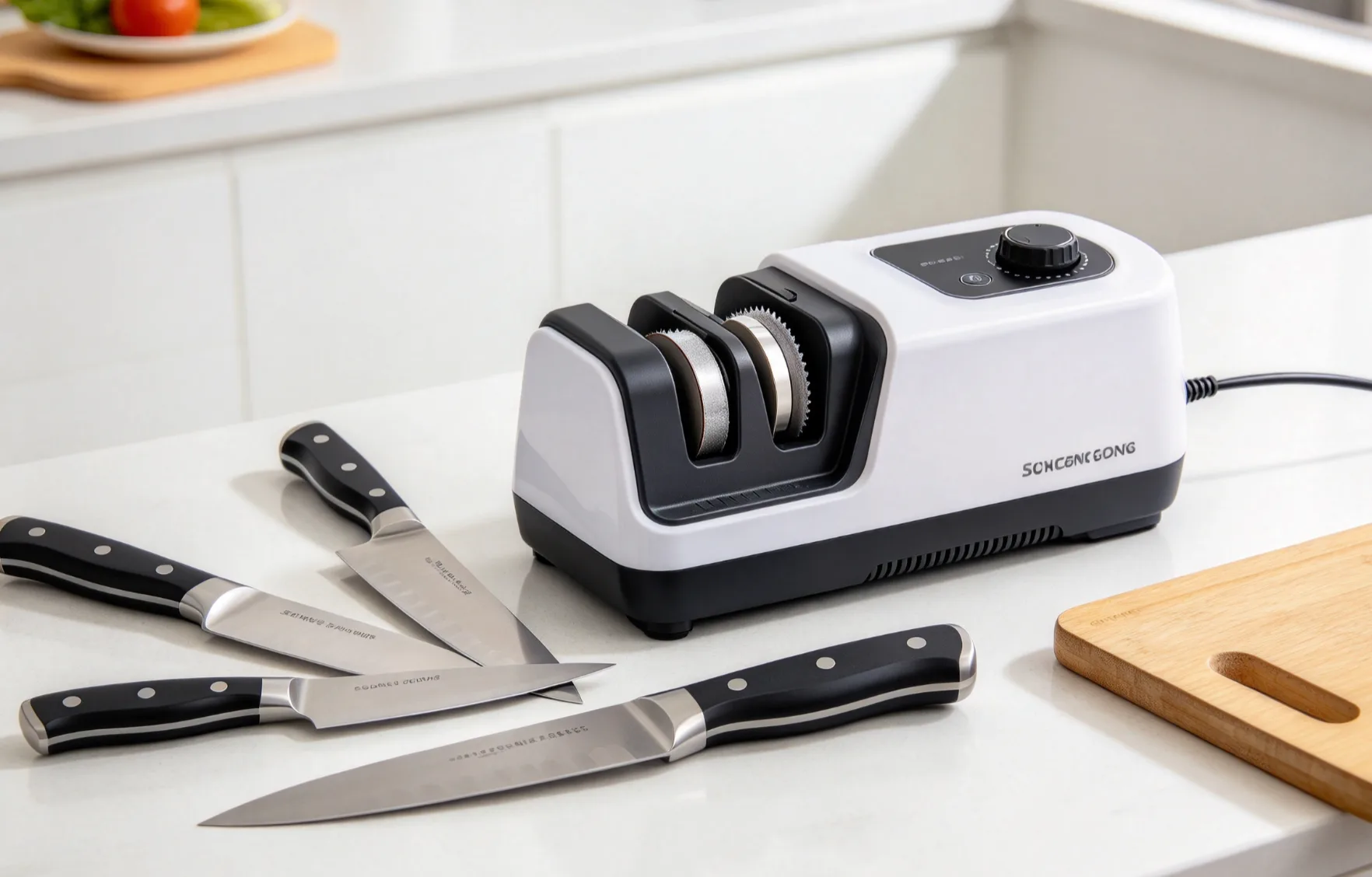
An electric knife sharpener uses a powered motor to guide the blade through sharpening slots or abrasive wheels. The machine does most of the work, helping users sharpen knives quickly with minimal effort.
Electric models are popular in busy kitchens because they are fast, consistent, and easy to use. Many versions include multiple sharpening stages, such as:
- Coarse sharpening for very dull blades
- Fine sharpening for edge refinement
- Polishing stages for smoother cutting performance
For commercial buyers and kitchenware distributors, electric sharpeners are attractive because they offer a modern user experience and strong shelf appeal.
What Is a Manual Knife Sharpener for Kitchen Use?
A manual knife sharpener for kitchen use requires the user to move the blade through the sharpening slot by hand or to pull the knife across a sharpening surface. It does not need electricity, batteries, or charging.
Manual sharpeners are often chosen for:
- Lower cost
- Simple operation
- Portability
- No power dependency
They are especially useful for households, outdoor cooking, gift sets, and wholesale catalogs where price sensitivity matters.
Electric vs. Manual Knife Sharpeners: The Main Differences
1. Speed and Convenience
The biggest advantage of an electric model is speed. A powered sharpener can restore an edge in seconds or a few minutes, which is ideal for frequent kitchen use.
A manual sharpener is slower, but it gives the user more control. This is helpful for people who prefer a hands-on sharpening process and don’t need rapid turnaround.
2. User Effort
An electric knife sharpener requires very little physical effort. The motor and guided slots do most of the work, making it a good choice for beginners or users who sharpen knives often.
A manual knife sharpener for kitchen applications requires more attention and technique. While many manual sharpeners are easy to use, the result depends more on how steadily the knife is drawn through the sharpening path.
3. Precision and Control
Manual sharpeners often provide more tactile control, which some users prefer for maintaining a specific edge angle. This can be useful for people who sharpen different knives and want a more customized approach.
Electric sharpeners offer consistent results, especially for standard kitchen knives. However, they may remove more metal than necessary if used too aggressively or too frequently.
4. Power Source and Portability
Manual sharpeners do not depend on electricity, so they are more portable and practical for travel, camping, catering kits, or places where outlets are limited.
Electric sharpeners are better suited to fixed kitchen locations. Some modern models use USB charging or rechargeable batteries, which improves convenience and fits current product trends in kitchen tools.
5. Maintenance and Durability
Manual sharpeners usually have a simpler structure, which can mean fewer parts to maintain. They are easy to store and often easier to clean.
Electric sharpeners may need more care because they contain motors, wheels, and internal components. For B2B buyers, this can affect after-sales considerations and replacement part planning.
6. Price and Market Positioning
Manual sharpeners are generally more budget-friendly, making them a strong fit for entry-level retail, bundle promotions, and bulk orders.
Electric sharpeners usually sit at a higher price point, but they can support stronger perceived value, especially when marketed as a premium kitchen upgrade.
Which One Sharpens Better?
There is no universal winner. The better choice depends on the knife type, user preference, and how often the knife is used.
- Electric sharpeners are better for fast, repeatable sharpening and busy kitchens.
- Manual sharpeners are better for users who want simplicity, portability, and lower cost.
If you are sharpening standard kitchen knives on a regular basis, an electric model may save time. If you want a compact blade sharpening tool for occasional use, a manual version is often enough.
Pros and Cons of Electric Knife Sharpeners
Pros
- Fast sharpening process
- Very easy to use
- Good for frequent kitchen maintenance
- Often includes multiple stages
- Strong value for premium retail positioning
Cons
- Higher cost than manual models
- Requires power or charging
- Can remove more material if overused
- Usually less portable
Pros and Cons of Manual Knife Sharpeners
Pros
- Lower price point
- No electricity required
- Compact and portable
- Simple structure and easy storage
- Good for basic household use
Cons
- Slower sharpening process
- Requires more user effort
- Results may vary by technique
- May feel less premium in some markets
How to Choose the Right Knife Sharpener
When choosing between electric and manual options, consider the following:
- Usage frequency: Frequent users often prefer electric; occasional users may choose manual.
- Budget: Manual sharpeners are generally more affordable.
- Kitchen size: Electric sharpeners fit better in fixed kitchen setups.
- User experience: Beginners usually like electric; experienced users may enjoy manual control.
- Business model: For wholesale, it can be smart to offer both styles to cover different customer segments.
Buying Tips for Wholesale and B2B Customers
For importers, Amazon sellers, and kitchenware distributors, knife sharpeners can be a practical category because demand is steady and the product is easy to bundle with knives, cutting boards, and other kitchen essentials.
When sourcing an electric knife sharpener or manual knife sharpener for kitchen retail, look for:
- Clear sharpening stages and angle guidance
- Stable product construction
- Easy-to-clean design
- Good packaging for retail display
- OEM/ODM flexibility for branding
- Competitive MOQ and bulk pricing
For suppliers like Yisure, which focuses on high-value kitchen products for global B2B markets, offering both manual and electric sharpening solutions helps cover different channels and pricing tiers.
Related Kitchen Categories That Sell Well Together
Knife sharpeners often perform well when paired with other kitchen tools. Popular cross-sell categories include:
- Salt and pepper grinders
- Oil sprayers
- Cutting boards
- Slicers and peelers
- Coffee tools and milk frothers
These products support a broader kitchen upgrade theme and can improve average order value in retail and wholesale channels.
FAQ
Are electric knife sharpeners better than manual ones?
Not always. Electric sharpeners are faster and easier, while manual sharpeners offer lower cost, portability, and more control. The best choice depends on your needs.
Is a manual knife sharpener for kitchen use good for beginners?
Yes, many manual sharpeners are beginner-friendly. However, they still require some technique to get consistent results.
Can an electric knife sharpener damage knives?
If used too often or too aggressively, it may remove more metal than necessary. Choosing a quality model and following instructions helps protect the blade.
How often should I use a blade sharpening tool?
That depends on how frequently the knife is used. Regular home cooks may sharpen every few months, while heavy-use kitchens may need maintenance more often.
Which sharpener is better for wholesale buyers?
Both can sell well. Manual sharpeners are better for budget and entry-level markets, while electric sharpeners are stronger for premium positioning and convenience-focused customers.
Conclusion
The difference between electric and manual knife sharpeners comes down to speed, effort, control, portability, and price. If you want quick, easy sharpening, an electric knife sharpener is a strong choice. If you prefer a low-cost, no-power manual knife sharpener for kitchen use, a manual model may be the better fit.
For brands and buyers building a kitchen tool lineup, offering both types of blade sharpening tools can help meet the needs of different users and market segments.