
2026 Pepper and Salt Mill Specs to Check Before RFQ
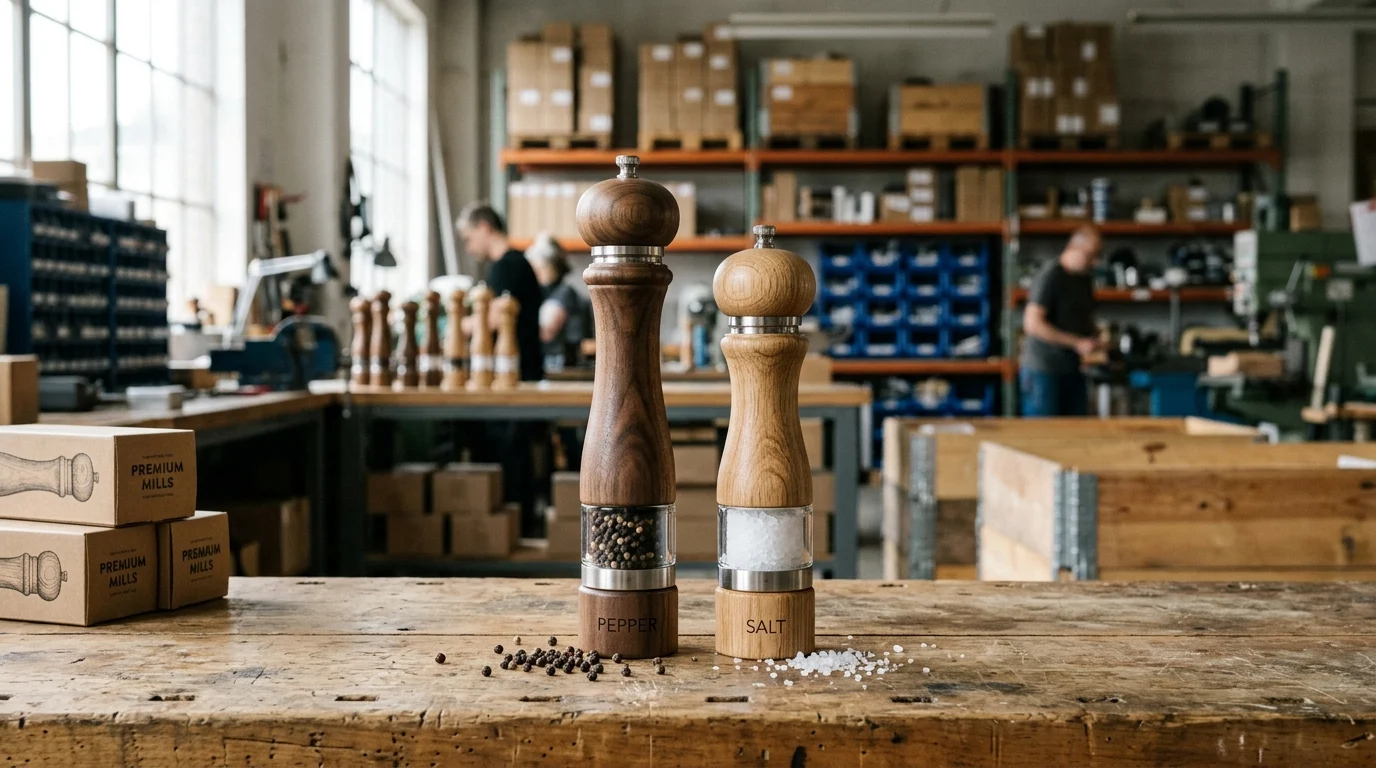
Why Review Pepper and Salt Mill Specs Before a 2026 RFQ
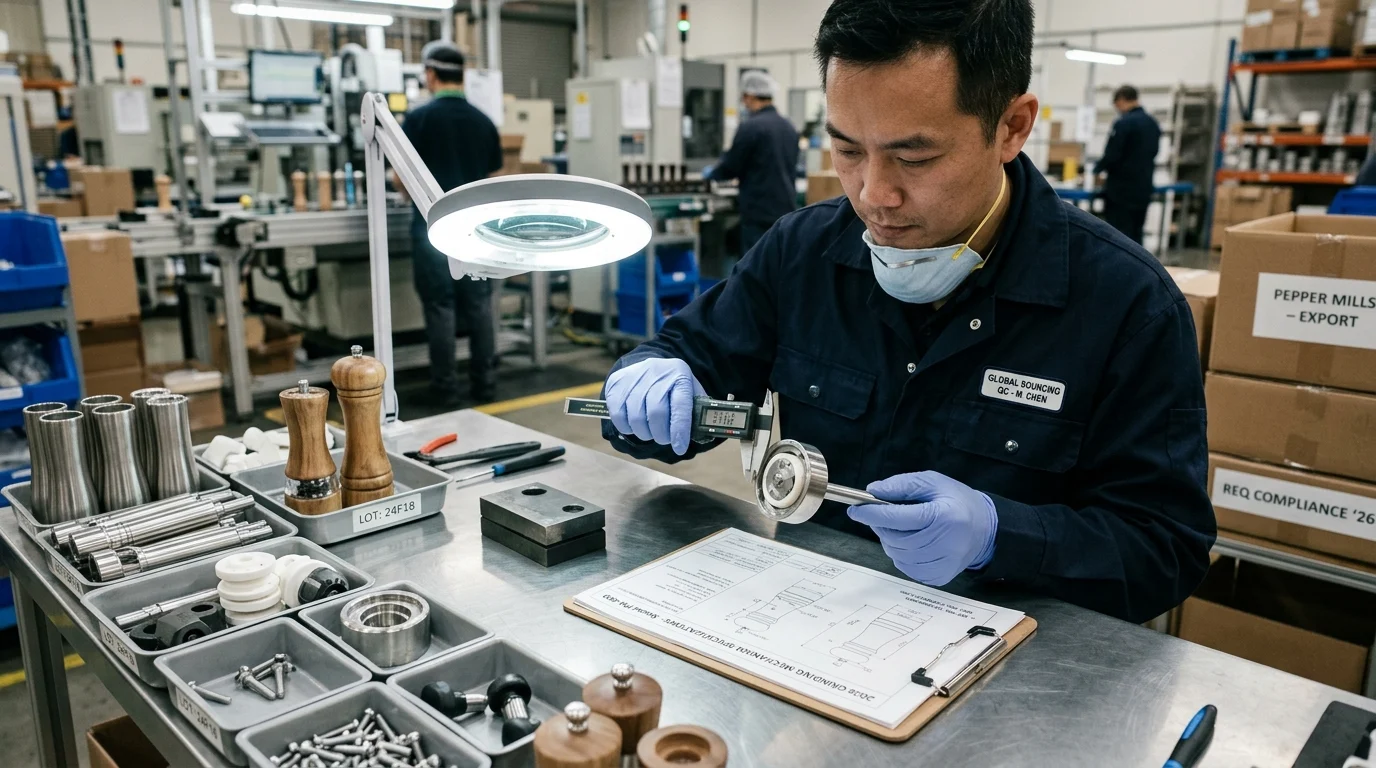
As you gear up your procurement strategy for the upcoming year, you already know that blindly sending out a Request for Quotation (RFQ) is a recipe for disaster. I’ve seen too many wholesale buyers and importers get burned by assuming a Pepper and Salt Mill is just a simple commodity. The reality is that minor specification changes can drastically alter your landed cost, product lifespan, and ultimately, your profit margins.
As we approach 2026, the supply chain landscape continues to evolve. Material costs for premium woods, food-grade acrylics, and stainless steel are fluctuating, and freight optimization has never been more critical. By thoroughly reviewing your specs before hitting “send” on that RFQ, you lock in quality expectations early, filter out unqualified factories, and give yourself a true apples-to-apples baseline for comparing supplier bids.
Taking the time to define your exact requirements also signals to suppliers that you are a serious, knowledgeable buyer. In our own production facilities, when we receive a highly detailed RFQ, we instantly know we are dealing with professionals, which streamlines the entire quoting and sampling process.
2026 Market Shifts Affecting Sourcing and Margins
Looking ahead to 2026, we are tracking several macro shifts. Raw material costs for high-grade acrylic resins have seen historical fluctuations of up to 12% year-over-year, while the demand for FSC-certified wood continues to drive up timber premiums. Additionally, volatile ocean freight rates mean that lightweight, space-efficient designs are paramount to protecting your margins.
Specs That Commonly Cause RFQ Misalignment
The most common RFQ mistakes I see revolve around vague mechanism requests. Simply asking for a “ceramic grinder” isn’t enough. Is it high-alumina ceramic? What is the thickness of the central aluminum or stainless steel shaft? Failing to specify these details often results in suppliers quoting the cheapest, thinnest internal components to win the bid, leading to high defect rates later.
How to Structure an RFQ Around Price and Channel Goals
Your RFQ needs to explicitly state your target channel. A mill destined for a discount retail shelf has vastly different cost parameters than one heading to a high-end steakhouse. Structure your RFQ by breaking down the non-negotiable specs (like FDA/LFGB compliance) versus the flexible specs (like outer finish) to give suppliers room to offer value-engineered alternatives.
Core Product Specs to Compare by Target Market
When sourcing Commercial Kitchenware, you have to match the product’s build to the end user’s daily reality. A home chef might use a pepper mill three times a week, while a restaurant line cook will use it three hundred times a night. This discrepancy dictates everything from the housing material to the core grinding mechanism.
I always advise my procurement clients to build a spec sheet matrix based on their specific distribution channels. If you are supplying the hospitality industry, durability and quick-refill capabilities trump delicate aesthetics. If you are selling to premium e-commerce brands, the tactile feel of the adjustment knob and the unboxing experience take center stage.
Understanding these core specs allows you to communicate effectively with factory engineers. It bridges the gap between marketing desires and manufacturing realities, ensuring you don’t overpay for unnecessary features or under-spec critical components.
Body Materials, Grinder Mechanisms, and Adjustment Systems
Body materials typically range from rubberwood and acacia to 304 stainless steel and BPA-free acrylic. For the mechanism, carbon steel is excellent for pepper (sharpest cut) but will corrode if used for salt. Ceramic is the industry standard for dual-use mills. You also need to specify stepped (pre-set grind sizes) versus stepless (infinite adjustment) systems.
Size, Fill Capacity, Durability, and Grind Consistency
Size matters for both ergonomics and shipping. Standard retail mills sit around 6 to 8 inches, while catering models push 12 inches or more. A larger hopper capacity reduces refill frequency for restaurants. Durability is heavily reliant on the shaft stability; a wobbly shaft leads to inconsistent grind sizes, which is a major source of negative customer reviews.
Private Label and Packaging-Ready Customization Details
For OEM/ODM buyers, customization is key. Specify whether you need laser-etched logos, pad printing, or custom pantone-matched finishes. You should also outline your retail packaging needs—whether it’s a premium magnetic closure box or a simple hang-tag for physical retail racks.
Manufacturing Options, MOQ, and Supplier Capability
Finding a supplier who can actually deliver on your specs is just as important as the specs themselves. Not every factory is equipped to handle complex multi-material assemblies. I always look for suppliers who have deep in-house capabilities rather than those who outsource every component to sub-contractors.
When you work with a factory that controls its own injection molding and assembly lines, you inherently reduce your sourcing risk. They have direct oversight of the quality control process, and their ability to pivot or customize is significantly higher. This is a core advantage we focus on: keeping critical manufacturing steps in-house to guarantee consistency across massive production runs.
Furthermore, understanding a supplier’s Minimum Order Quantity (MOQ) and tooling setup will dictate your cash flow. If you are launching a highly customized Professional Grinder, you need a partner willing to amortize tooling costs or offer flexible sampling terms.
MOQ, Tooling, Sampling, and Customization Terms
Standard MOQs for off-the-shelf designs usually hover around 1,000 to 3,000 pieces per color. However, if you require custom injection molds for a proprietary shape, expect to pay tooling fees upfront, which can range from $2,000 to $5,000+ depending on mold complexity. Always negotiate a tooling rebate based on future order volumes.
How to Assess Quality Control and Production Flexibility
Ask potential suppliers for their standard Operating Procedures (SOPs) for inline and final inspections. Do they perform 100% functional testing, or just AQL batch testing? A reliable supplier should welcome third-party inspections and be transparent about their defect rate tolerances.
Factory Capabilities That Reduce Sourcing Risk
Factories with in-house tooling, plastic injection, and wood turning capabilities offer much tighter lead times. When a supplier doesn’t have to wait on a third-party component manufacturer, your risk of production delays drops significantly, ensuring your goods ship on time for peak seasonal selling.
Compliance and Quality Checks Before RFQ
Navigating international compliance is non-negotiable. You cannot afford to have a container of goods held up at customs because the plastic components off-gas harmful chemicals or the metal parts fail heavy-metal testing. Before you even draft your RFQ, you must know the exact regulatory standards of your destination market.
I strongly recommend making compliance a mandatory field in your RFQ. If a supplier hesitates or asks you what LFGB is, cross them off your list immediately. Experienced export factories will already have a library of recent test reports from reputable labs like SGS, TUV, or Intertek.
Quality checks go beyond legal compliance; they dictate the functional lifespan of the product. Setting strict testing parameters in your RFQ ensures the factory uses high-grade materials rather than cutting corners with cheap, recycled plastics or low-grade alloys.
Food-Contact, Safety, and Labeling Requirements
If importing to the US, the mill must meet FDA food contact standards. For Europe, LFGB is the gold standard, and it is notoriously stricter, especially regarding plastics and silicone seals. Ensure your RFQ specifies that all materials (acrylic, metal, wood finishes) must pass these specific tests.
Testing for Corrosion, Durability, and Mechanism Lifespan
Specify your testing requirements clearly. For example, demand a 24-hour salt spray test for all exterior metal components to check for rust resistance. For the grinder itself, stipulate a minimum lifespan—such as a 10,000-cycle grind test without mechanical failure or significant dulling of the burrs.
Documents Needed for Compliance and Traceability
Require your suppliers to provide a Declaration of Conformity (DoC), raw material certificates, and valid third-party test reports dated within the last 12-24 months. Traceability is increasingly important, so ensure the factory can track batch numbers back to specific material lots.
Packaging, Logistics, and Landed Cost Factors
Many buyers fixate entirely on the unit price of the mill and completely ignore the packaging and logistics, only to watch their margins evaporate during shipping. The physical footprint of your packaged product directly impacts how many units you can fit into a 40HQ container.
I’ve helped clients redesign their packaging to shave just a few millimeters off the box dimensions, which allowed them to fit an extra 2,000 units per container. In today’s freight market, that translates to massive savings on landed cost per unit.
Furthermore, the packaging must protect the product. A broken acrylic mill or a dented stainless steel housing renders the product unsellable. Balancing presentation, protective structural integrity, and cubic volume is an art form that must be addressed at the RFQ stage.
Retail and Bulk Packaging Options by Market
Wholesale distributors might prefer bulk egg-crate packing (highly efficient, low cost), while retail buyers need individual PET boxes, color boxes, or blister packs. Specify the paper weight (e.g., 350g cardboard) and whether you need inner cartons for easier warehouse distribution.
Shipping Variables That Impact Landed Cost
| Variable | Impact on Logistics | Mitigation Strategy |
|---|---|---|
| Box Dimensions | Dictates CBM per master carton | Optimize custom box inserts to reduce empty air. |
| Product Weight | Heavy glass/wood limits container weight max | Mix heavy and light SKUs in shipments if possible. |
| Master Carton | Affects palletization and warehouse handling | Standardize to double-wall, 5-ply corrugated cartons. |
Balancing Presentation, Freight Savings, and Damage Control
For e-commerce channels, packaging must pass ISTA drop tests to survive the parcel network. You have to balance the high cost of molded pulp or EVA foam inserts against the cost of customer returns due to transit damage. Include your drop-test requirements right in the RFQ.
How to Compare Supplier Offers Across Channels
Once the quotes roll in, the real work begins. Rarely will two suppliers quote exactly the same way. Supplier A might offer a lower unit cost but use cheap 201 stainless steel, while Supplier B is slightly more expensive but uses premium 304 stainless steel and includes premium packaging.
To make sense of this, you must normalize the data. I build comprehensive comparison tables that strip away the marketing fluff and look purely at the data points. This is especially crucial when sourcing a Restaurant Grade Mill, where failure rates directly impact B2B client retention.
Beyond the hard numbers, you also have to evaluate the supplier’s intangible value. Do they communicate clearly? Are they proactive in pointing out potential design flaws in your custom requests? A good factory acts as a partner, not just an order-taker.
Build an RFQ Comparison Table
Create a spreadsheet comparing FOB Price, MOQ, Lead Time, Mechanism Material, Shaft Thickness, Housing Material, and Packaging Type side-by-side. This visual breakdown instantly highlights outliers—whether a price is suspiciously low (indicating poor quality) or uncompetitively high.
Channel Requirements by Retail, Wholesale, Horeca, and E-Commerce
E-commerce buyers need to focus on lightweight, drop-proof designs. Horeca (Hotel/Restaurant/Café) buyers should prioritize high-capacity, heavy-duty commercial builds. Retail buyers need high-visibility packaging and barcoding. Evaluate each supplier’s quote through the lens of your specific channel’s demands.
Supplier Value Beyond Unit Price
Don’t underestimate the value of favorable payment terms (e.g., 30% deposit, 70% against copy of BL), fast sample turnaround times, and English-speaking sales engineers. A supplier who catches a potential flaw in your logo file before printing is worth a few extra cents per unit.
RFQ Checklist Before Supplier Nomination
Before you officially nominate a supplier and wire a deposit, you need to run through a final, rigorous checklist. Skipping steps here usually leads to the dreaded “bait and switch,” where the mass production quality doesn’t match the golden sample you approved.
I always enforce a strict step-by-step approval process. Every detail, from the color of the adjustment knob to the specific glue used in the wood joints, must be documented and signed off. This leaves no room for ambiguity or factory excuses later.
This checklist is your ultimate insurance policy. It protects your capital, ensures your supply chain remains uninterrupted, and guarantees that the product arriving at your warehouse matches your original vision perfectly.
Spec Fields to Finalize Before RFQ
Double-check that your RFQ clearly states:
- Exact material grades (e.g., 304 vs 201 SS, FSC wood).
- Grinder mechanism specifics (ceramic density, carbon steel grade).
- Shaft material and thickness.
- Required certifications (FDA, LFGB, RoHS).
Step-by-Step Sourcing Process From Samples to Booking
- Initial RFQ & Quote Review: Shortlist 2-3 factories.
- Pre-Production (PP) Sample: Pay for custom samples. Test them rigorously.
- Gold Seal Approval: Sign and date the approved sample; send it back to the factory.
- PO Issuance & Deposit: Contract signed with attached spec sheets.
- Inline & Final Inspection: Third-party QC before container booking.
Common RFQ Mistakes to Avoid
The biggest mistake is using generic terms. Asking for “wood” instead of “FSC-certified Rubberwood coated in food-safe NC lacquer” invites suppliers to use whatever cheap scrap wood they have lying around. Precision is your best defense against poor quality.
Final Buying Decisions Before Placing a 2026 Order

Making the final call on your 2026 orders requires synthesizing all the data you’ve gathered. You are no longer just buying a product; you are investing in Durable Seasoning Tools that represent your brand’s reputation in the market.
At this stage, you should have physical samples on your desk, detailed lab reports in your inbox, and a clear breakdown of your landed costs. The final decision usually comes down to trusting the supplier’s consistency and their ability to scale with your business as you grow.
By applying the rigorous RFQ framework discussed above, you set yourself up for a highly profitable and headache-free year. You’ve mitigated the risks, optimized the logistics, and locked in a product that your B2B clients or end-consumers will love.
Best-Fit Mechanism, MOQ, and Packaging Setup
Review your channel strategy one last time. Ensure the mechanism matches the spice (carbon steel for pepper only, ceramic for salt/spices). Confirm the MOQ aligns with your cash flow and inventory turnover goals, and verify the packaging is optimized for your freight setup.
Samples, Tests, and Approval Stages to Require
Never skip the final sign-off on the physical Pre-Production sample. Run it through a dishwasher (if applicable), drop it off a table, and grind a full hopper of tough peppercorns. If it survives your worst-case scenario testing, it is ready for mass production.
Key Criteria for Final RFQ Selection
Ultimately, choose the supplier that offers the best total landed cost combined with the highest reliability. A factory that provides transparent communication, robust in-house quality control, and verifiable compliance documentation will always outperform a supplier who simply offers the lowest FOB price.
Related reading: Professional Grinder
Key Takeaways
- Wholesale sourcing and supply-chain implications for Pepper and Salt Mill
- Specifications, compliance, and commercial terms buyers should validate
- Actionable recommendations for distributors and procurement teams