
How to Choose a Milk Frother Manufacturer in 2026
Why the Right Milk Frother Manufacturer Matters
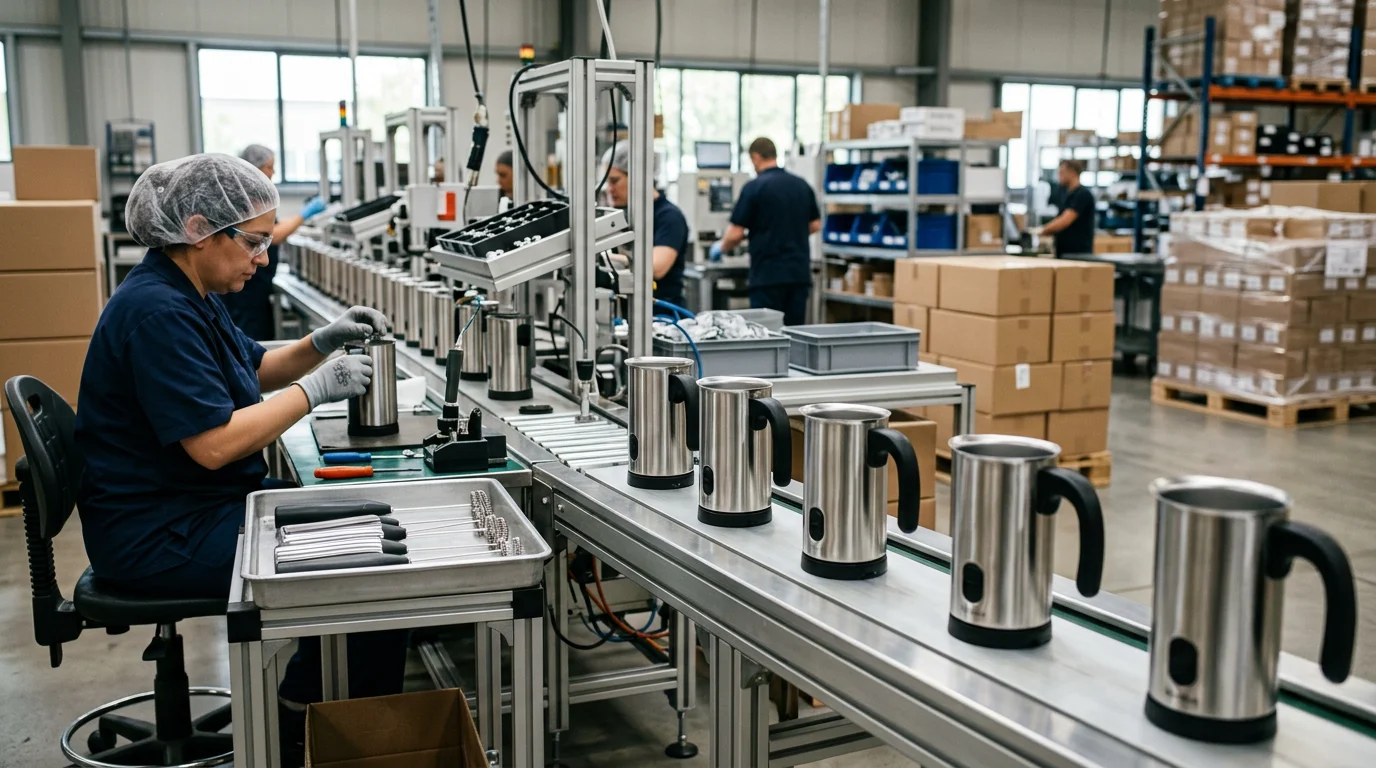
When I talk to procurement teams and wholesale buyers, I always emphasize that the coffee accessories market is no longer a race to the bottom. Consumers in 2026 expect café-quality beverages at home, which means the hardware needs to perform flawlessly. Choosing the right Milk Frother Manufacturer isn’t just about getting a good price per unit; it’s about securing your brand’s reputation and ensuring smooth scaling.
I’ve seen firsthand how partnering with an unverified factory can derail a product launch. A manufacturer acts as your extended operations arm. If their quality control slips or their supply chain shatters, your margins take the direct hit. That’s why we always push buyers to look for partners who offer transparency, robust engineering, and scalable production lines.
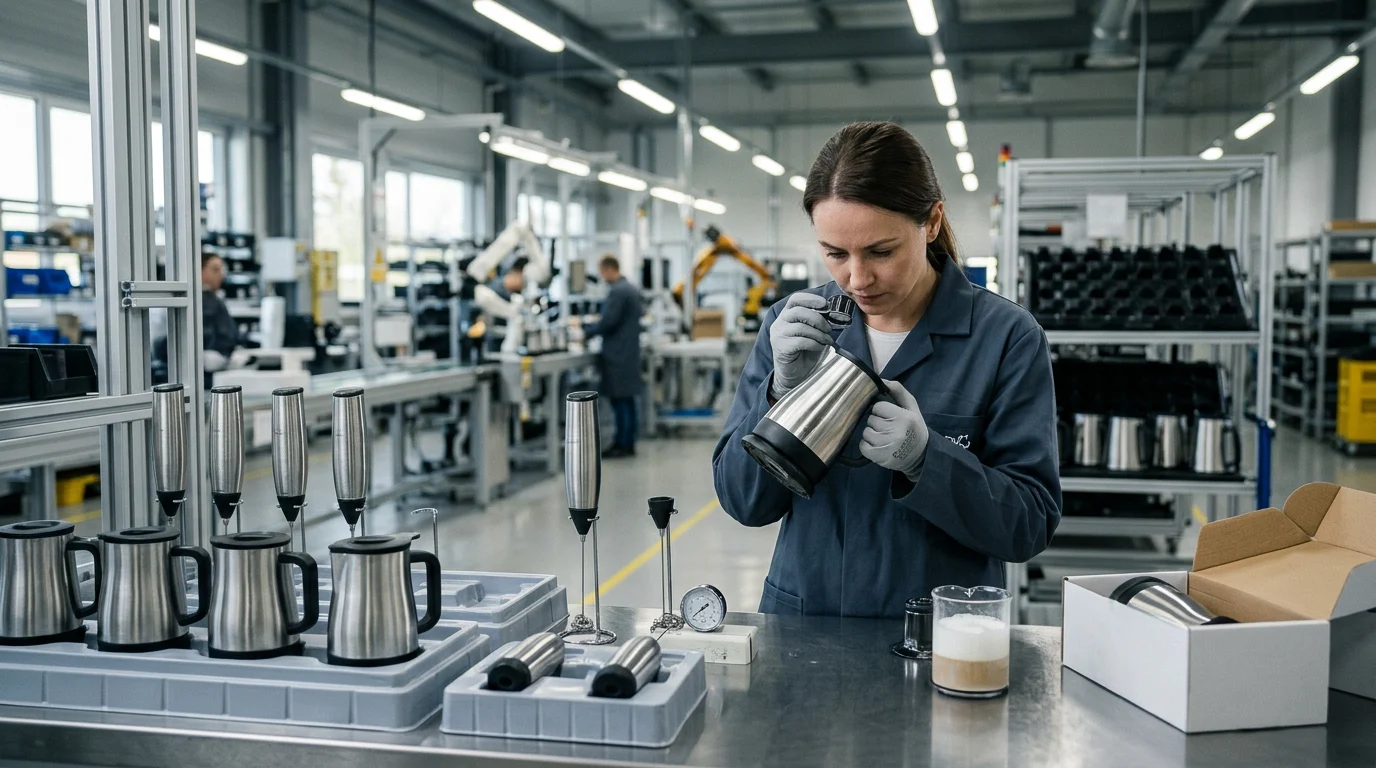
Top-tier manufacturers, like Yisure, have adapted to these modern demands by vertically integrating their production. This means they control everything from the motor sourcing to the final plastic injection molding, dramatically reducing the risks associated with third-party component failures. Let’s break down exactly why this level of control matters.
Sourcing risks in 2026
The global supply chain remains volatile. In 2026, we are seeing fluctuating costs for raw materials like copper (essential for motors) and food-grade ABS plastics. Relying on a factory that buys components on the spot market exposes you to sudden price hikes and inconsistent quality between batches.
Target product segments
Not all frothers serve the same customer. You need to align your sourcing with your target market—whether that’s budget-friendly home baristas, high-end specialty coffee enthusiasts, or commercial cafes. A factory focused on cheap promotional gifts will struggle to produce a high-torque, durable frother needed for the premium segment.
Cost of choosing on price alone
I always warn buyers: the cheapest FOB price often carries the highest hidden costs. When you select a supplier based purely on a low quote, you typically pay for it later through skyrocketing defect rates, costly customer returns, and irreversible damage to your brand’s reviews.
Section Summary & Key Data:
Selecting a manufacturer solely on price can increase defect rates from a standard 1% to over 5%. While a premium supplier might charge $0.30 more per unit, saving that 4% in return rates and protecting your brand equity delivers a far higher ROI.
Milk Frother Types to Compare
Before you start sending out RFQs, you need a crystal-clear understanding of the product landscape. The category has expanded significantly, and trying to source a generic Milk Frother without specifying the mechanics is a rookie mistake. I always sit down with buyers to map out their exact catalog needs first.
Different models require completely different manufacturing competencies. A factory that excels at winding tiny motors for battery-operated wands might not have the heating element expertise required for an electric jug frother. Understanding these differences helps you filter out incompatible suppliers early in the sourcing process.
Here is a quick breakdown of what you should be looking at when comparing the main types of frothers on the market today.
Handheld vs electric vs commercial models
Handheld wands are battery-operated, highly portable, and cost-effective. Electric jug frothers (which heat and froth simultaneously) require advanced thermal controls and non-stick coatings. Commercial models demand heavy-duty motors and stainless-steel housing designed for continuous, back-to-back usage in cafes.
| Feature | Handheld Frother | Electric Jug Frother | Commercial Frother |
|---|---|---|---|
| Power Source | AA Batteries / USB Rechargeable | AC Wall Plug (110V/220V) | AC Wall Plug (High Wattage) |
| Wholesale Cost | Low ($1 – $4) | Medium ($10 – $25) | High ($40+) |
| Key Factory Skill | Motor durability, battery safety | Heating elements, waterproofing | Continuous torque, metalwork |
Key specs for wholesale buyers
When writing your spec sheet, pay attention to the motor RPM (revolutions per minute), battery capacity (e.g., 500mAh vs 1200mAh for USB models), and the grade of stainless steel used (304 vs 316). Waterproofing (IPX rating) is also becoming a non-negotiable feature for premium buyers.
Product mix and sell-through
Offering a good, better, best hierarchy in your catalog drives higher sell-through. I recommend sourcing a reliable handheld model as an entry-level volume driver, while stocking premium electric models to capture higher profit margins from dedicated coffee enthusiasts.
Section Summary & Key Data:
Market data shows that while handheld models account for roughly 65% of total unit volume due to their low price point, electric jug frothers generate over 70% of the category’s total revenue. Partnering with a supplier like Yisure, who can manufacture both, simplifies your supply chain.
How to Evaluate Manufacturers Beyond Unit Price
Finding a Reliable Supplier on B2B directories is easy, but verifying their actual capabilities takes work. I never judge a factory by their Alibaba storefront alone. You have to dig into their operational infrastructure, engineering team, and their ability to scale with your business.
A great manufacturer doesn’t just assemble parts; they actively help you engineer a better product. When I audit factories, I look for those that have in-house R&D and tooling capabilities. This shows they are invested in the product lifecycle, not just churning out generic white-label goods.
Let’s look at the specific criteria you should use to separate the real manufacturers from the trading companies masking as factories.
Factory capabilities to verify
Always ask for video tours or send a third-party auditor to check for in-house injection molding, motor testing stations, and assembly line organization. If a factory outsources its core components, they lose control over quality and lead times.
MOQ, samples, and private label options
Flexible Minimum Order Quantities (MOQs) are a lifesaver for new product launches. Look for suppliers willing to do a pilot run of 1,000 units before demanding a 5,000-unit commitment. Also, clarify their private label capabilities—can they customize the housing color, or just laser-engrave a logo?
Customization and launch risk
If you are developing a custom mold, understand the tooling costs and IP protection. A strong manufacturer will sign an NNN (Non-Disclosure, Non-Use, Non-Circumvention) agreement and offer clear timelines for tooling, reducing your go-to-market risk.
Section Summary & Key Data:
Factories with in-house tooling and molding capabilities typically reduce custom product launch times by 30% (launching in 60 days instead of 90). They also offer much better IP protection since your designs never leave their facility.
Compliance and Quality Checks to Require
I can’t stress this enough: in the world of kitchen appliances and Quality Coffee Tools, compliance is not optional. Regulatory bodies and major e-commerce platforms have cracked down hard on uncertified electronics and food-contact items. Ignorance is not an excuse when customs seizes your container.
A professional manufacturer will have a library of up-to-date test reports for their base models. If a supplier hesitates when you ask for a CE certificate or a food-grade test report, that is an immediate red flag. You must build strict quality control (QC) gates into your purchasing contracts.
Here are the specific compliance and quality metrics you need to enforce before wiring any deposits.
Required certifications and testing
For electric frothers, you absolutely need CE, RoHS, and FCC (for the US market). Any part touching the milk must pass FDA or LFGB (Europe) food-contact testing. For lithium-battery models, UN38.3 and MSDS reports are mandatory for shipping.
QC process and defect benchmarks
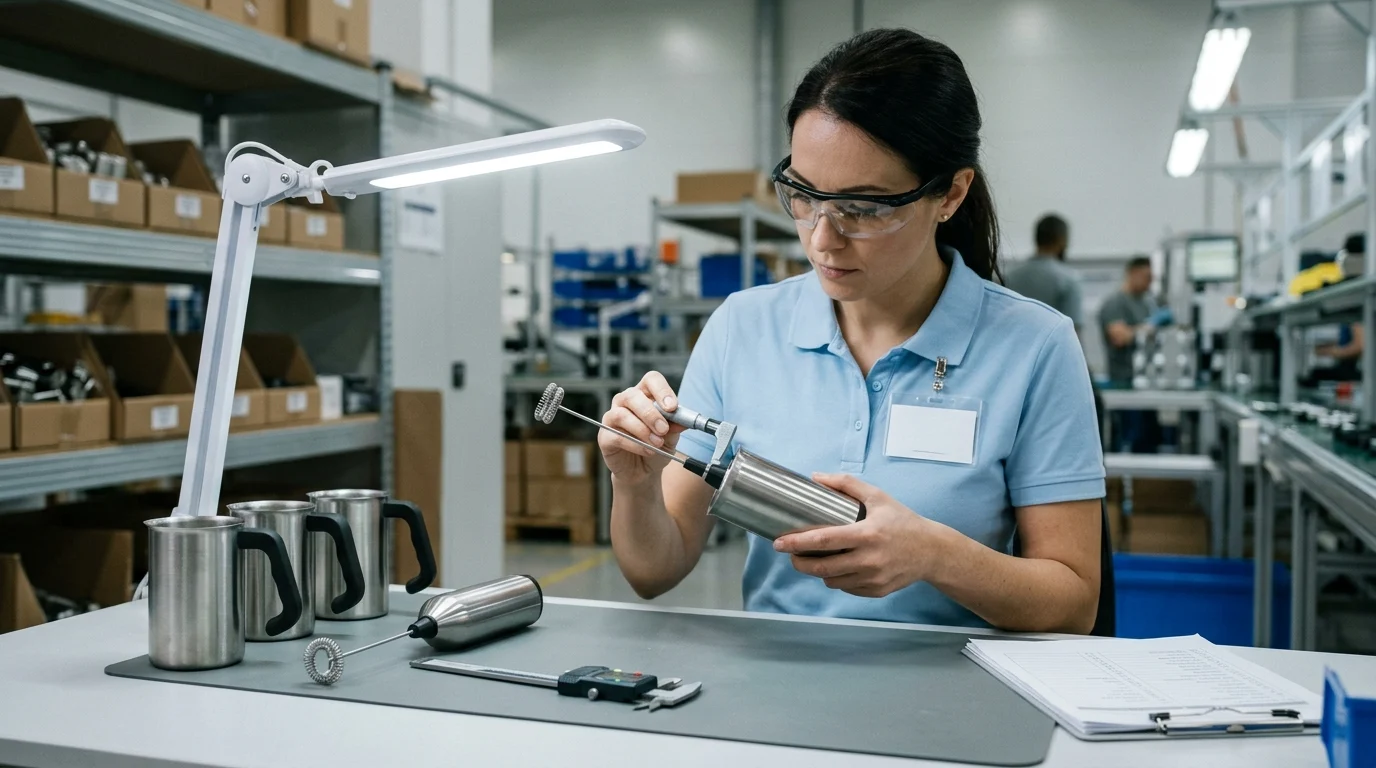
Implement an AQL (Acceptable Quality Limit) standard—typically AQL 1.5 for major defects and 4.0 for minor defects. Ensure the factory conducts incoming material inspections, in-line testing (like motor RPM checks), and final pre-shipment inspections.
Risks of missing compliance
Failing to secure the right paperwork can lead to inventory being destroyed at the port, Amazon listing takedowns, or worse, consumer safety recalls. The legal liability of selling a non-compliant electronic device is simply not worth the risk.
Section Summary & Key Data:
Proper compliance testing might add $0.20 to $0.50 to your unit cost, but the cost of a product recall or an Amazon suspension averages between $15,000 and $50,000. Verified manufacturers like Yisure maintain up-to-date certifications, saving buyers significant upfront testing fees.
How to Compare Quotes and Landed Cost
One of the biggest mistakes I see procurement teams make is comparing EXW (Ex Works) prices and making a decision. The factory gate price is only part of the story. To protect your margins, you have to calculate the total landed cost—which includes freight, duties, packaging, and defect allowances.
When you receive quotes from multiple suppliers, you need to standardize them. A quote for $3.00 might actually be more expensive than a quote for $3.20 once you account for the fact that the cheaper option uses flimsy packaging that will require you to pay for poly-bagging at your 3PL.
Here is my methodology for tearing down a quote and finding the true cost of sourcing.
Quote line items to review
Always clarify the Incoterms (FOB vs EXW). Check if the quote includes spare parts (I usually negotiate 1% free spare units for warranty claims). Ensure the currency exchange rate validity period is clearly stated to avoid last-minute price hikes.
Packaging impact on cost and margin
Packaging eats into your margins twice: once in material costs and again in shipping volume. A sleek, compact color box might cost $0.15 more than a standard white box, but it can reduce your cubic meter (CBM) footprint, saving you thousands in ocean freight.
Supplier comparison scorecard
I recommend building a weighted scorecard. Give price a 40% weight, communication/responsiveness 20%, factory capabilities 20%, and lead times 20%. This prevents you from being blinded by an unrealistically low price.
Section Summary & Key Data:
Optimizing packaging dimensions can reduce shipping volume by up to 15%. For bulky electric frothers, ocean freight and duties often add 20-30% to the EXW unit cost, making landed cost the only metric that truly matters for margin calculation.
Logistics and Supply Chain Risks
Moving goods across the world is incredibly complex, especially when you are dealing with electronics and batteries. A great product sitting in a warehouse in Shenzhen does you no good if you miss your Q4 holiday sales window because of a logistics bottleneck.
I always advise buyers to treat their logistics strategy with the same importance as their product development. You need a supplier who understands international freight, packages goods securely for transit, and provides accurate packing lists and commercial invoices without being chased.
Let’s look at the specific supply chain hurdles you need to plan for when importing these devices.
Lead times and replenishment planning
Standard production lead times range from 30 to 45 days. However, during peak seasons (like the months leading up to Chinese New Year), this can stretch to 60+ days. You must build a buffer into your inventory forecasting to avoid stockouts.
Shipping terms and battery transport rules
If you are sourcing USB-rechargeable frothers, they contain lithium-ion batteries. These are classified as dangerous goods. Your supplier must provide valid UN38.3 test reports and proper battery handling labels on the master cartons, or freight forwarders will refuse the cargo.
Inventory and delivery risk examples
Risks include port strikes, customs holds, and container shortages. I’ve seen entire shipments delayed by three weeks simply because the manufacturer formatted the commercial invoice incorrectly. Partnering with experienced exporters mitigates these administrative delays.
Section Summary & Key Data:
Lithium battery UN38.3 certification takes about 2 to 3 weeks if not already on file. Factoring this into your timeline is critical. Companies with strong export experience, like Yisure, ensure all battery documents are pre-cleared, reducing customs delays by an average of 14 days.
How to Choose the Best Manufacturer
We’ve covered the specs, the compliance, and the logistics. Now comes the final step: pulling the trigger. Choosing a B2B Mixer Provider is a long-term marriage. You want a partner who will grow with you, suggest product improvements, and stand by their quality when things occasionally go wrong.
I categorize suppliers based on who they usually sell to. This helps me match the buyer’s channel strategy with the factory’s DNA. If you are a high-volume retail brand, you need a factory used to dealing with big-box compliance. If you are an agile e-commerce brand, you need a factory with low MOQs and fast tooling.
Here is the step-by-step framework I use to make the final decision.
Supplier types by channel strategy
- E-commerce/Amazon focused: Agile, low MOQs, understands premium packaging.
- Big-Box Retail focused: High capacity, strict social compliance (BSCI), lower prices but high MOQs.
- Promotional Goods focused: Very cheap, basic quality, fast turnaround.
Step-by-step selection process
- Shortlist 3-5 suppliers based on verified capabilities.
- Order off-the-shelf samples to test base quality.
- Request a customized “golden sample” with your branding.
- Conduct a third-party factory audit.
- Place a small trial order (e.g., 1,000 units) to test their production communication.
Final decision criteria
Beyond the physical product, look at their financial stability and English communication skills. If a supplier takes three days to answer a simple email during the quoting phase, imagine how hard it will be to communicate during a production crisis.
Section Summary & Key Data:
In recent B2B procurement surveys, over 80% of buyers stated they would choose a supplier with excellent communication and reliability over a competitor offering a 5% cheaper price. Yisure stands out by combining competitive pricing with dedicated, fluent account management.
FAQ and Key Takeaways
To wrap things up, I want to address the most common questions I get from procurement teams when they are finalizing their sourcing strategy for coffee tools.
The landscape is competitive, but armed with the right data, you can negotiate better terms and secure a product that your customers will love.
Typical MOQ for private label orders
For standard handheld frothers, expect an MOQ of 1,000 to 3,000 units for basic logo printing and custom packaging. For custom injection molding (a completely new shape), MOQs usually start at 5,000 to 10,000 units to amortize the tooling costs.
Samples, tests, and documents needed
Always demand a “Golden Sample”—a final, signed-off prototype that represents exactly what will roll off the mass production line. You will also need the Bill of Materials (BOM), CE/RoHS certificates, and FDA/LFGB test reports for the exact materials used in your model.
Top decision criteria for buyers
Ultimately, your decision should rest on three pillars: verified manufacturing capabilities (in-house assembly and QC), transparent landed costs (including smart packaging), and a proactive approach to compliance.
Section Summary & Key Data:
To succeed in 2026, buyers must transition from merely hunting for cheap quotes to building strategic partnerships. Partnering with an integrated, highly capable manufacturer like Yisure ensures you get a premium product, stable pricing, and a scalable supply chain—giving you the ultimate competitive edge in the market.
Related Reading: Milk Frother Manufacturer
Key Takeaways
- Wholesale sourcing and supply-chain implications for Milk Frother
- Specifications, compliance, and commercial terms buyers should validate
- Actionable recommendations for distributors and procurement teams