
Introduction
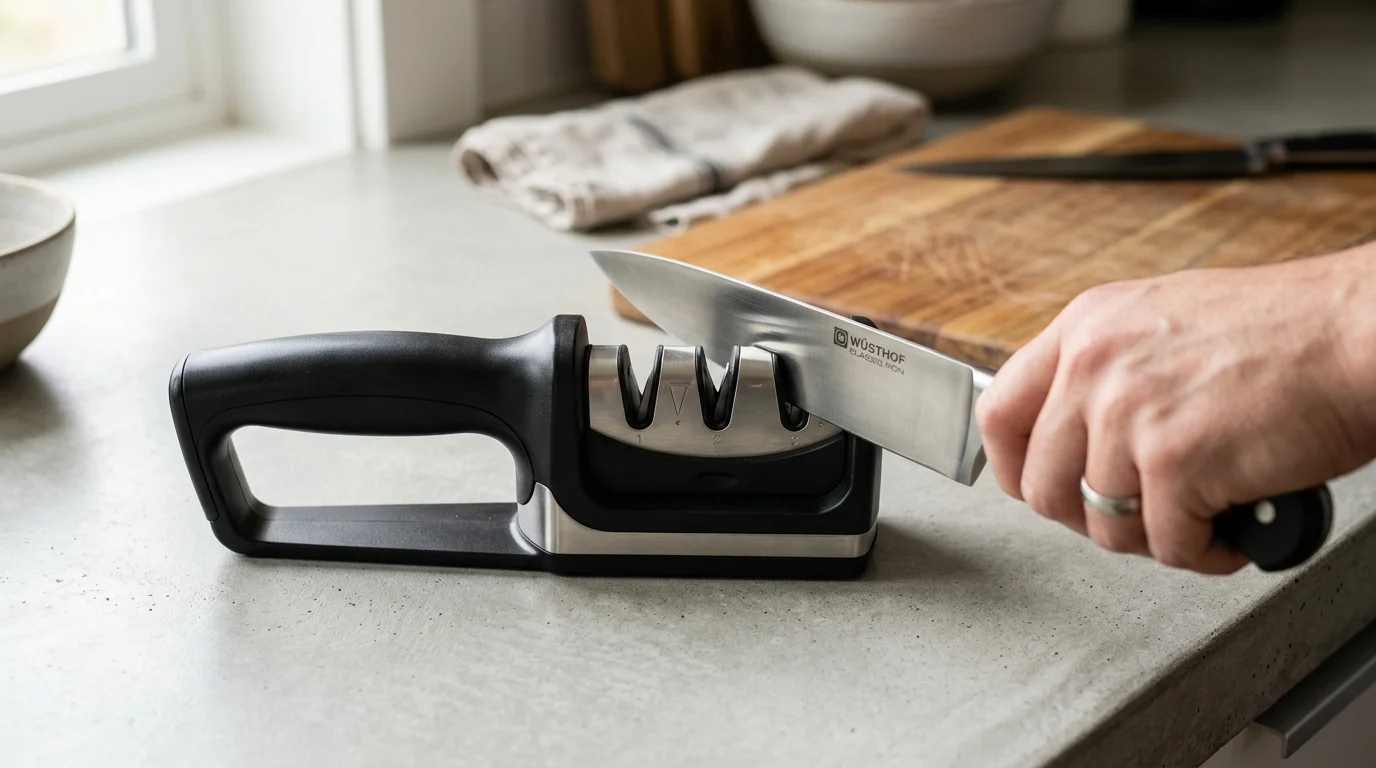
Across home kitchens and food-service operations, sharp blades are now seen as a basic requirement rather than a luxury, and that shift is expanding demand for ergonomic manual knife sharpeners. Buyers want tools that restore edge performance quickly, cost less than electric models, and are simple enough for everyday use without specialized skill. At the same time, the growing adoption of premium cutlery has created a recurring need for maintenance, making sharpening products a regular purchase rather than a one-time accessory. This article examines the forces behind that growth, the practical advantages driving adoption, and what the trend means for the wider knife sharpener market.
Why the Global Market for Ergonomic Manual Knife Sharpeners Is
I have been keeping a close eye on the culinary tool space recently, and the momentum behind manual knife sharpeners is impossible to ignore. We are not just seeing a temporary spike; this is a sustained shift in consumer and commercial behavior.
As kitchenware buyers and distributors, we must look past the surface to understand exactly what is driving this surge in demand. It comes down to a perfect storm of at-home culinary upgrades and the need for cost-effective, reliable maintenance.
What demand signals are pushing the knife sharpener category
The demand signals are loud and clear. During the recent home cooking boom, amateur chefs invested heavily in premium cutlery. Now, those high-end Japanese and German steel blades are dulling, and consumers are realizing they need maintenance. A Manual Knife Sharpener hits the perfect sweet spot—it is far more affordable than a $200 electric unit, and it skips the steep, frustrating learning curve of traditional whetstones.
Statistically, the average household needs to touch up its blades four to six times a year, while commercial prep kitchens require edge maintenance almost daily. This high frequency of use creates a massive, recurring market for reliable, user-friendly sharpening tools that do not require an apprenticeship to master.
How ergonomics, safety, and repeat-use performance are changing
The days of clunky, dangerous sharpening blocks are over. Today, Ergonomic Design is a non-negotiable requirement for buyers. I consistently look for units featuring TPR (Thermoplastic Rubber) bases, which must deliver a slip-resistance friction coefficient of at least 0.6 to keep the tool anchored safely on wet granite countertops.
Safety has also evolved significantly. Modern guards now extend 1.5 to 2 inches above the abrasive slots to keep fingers well away from the blade path. On the performance side, longevity is the name of the game. Premium tungsten carbide blades are engineered to withstand over 10,000 sharpening strokes before showing significant wear, ensuring the end-user gets years of consistent edge restoration without the tool degrading.
Which Specs and Comparison Points Matter Most in a Professional
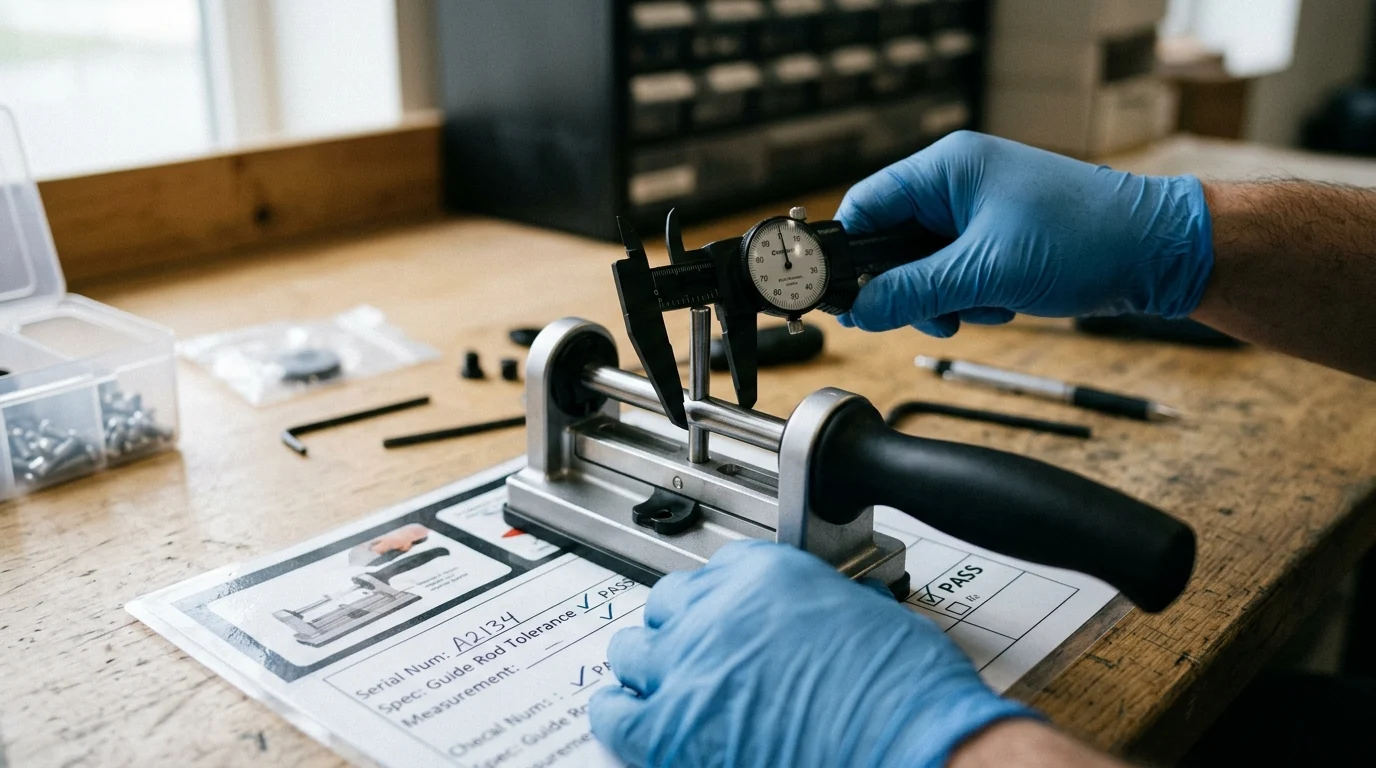
When I evaluate a new sharpener for my product line, I completely ignore the marketing fluff and go straight for the spec sheet. You simply cannot fake material hardness or abrasive grit.
Understanding the physical mechanics is the only way to separate a mediocre tool from a Handheld Sharpener that will actually generate five-star reviews and repeat wholesale orders.
Which design features separate basic manual sharpeners from high
-performing ones
The biggest differentiator between a bargain-bin sharpener and a high-performing unit is the staging system. A basic sharpener usually just scrapes metal off with a single, aggressive V-notch. High-end models utilize a refined three-stage system: diamond dust abrasives (around 400 grit) for repairing damaged edges, ultra-hard tungsten carbide (rated HRC 85-90) for coarse reshaping, and fine ceramic rods (1,000+ grit) for final honing and polishing.
Furthermore, the sharpening angle is a critical spec. Most factory knife edges sit between 15 and 20 degrees per side. The best professional manual units now offer adjustable angle knobs, allowing users to dial in exact degrees from 14 to 24. This flexibility is vital for accommodating both delicate 15-degree Asian santokus and rugged 20-degree Western chef’s knives.
Which comparison table points should I use for edge
quality
To truly understand edge quality, I always break down the abrasive materials in a comparison matrix. This helps instantly highlight the trade-offs between lifespan and cutting aggression when reviewing factory samples.
| Abrasive Material | Grit Rating / Finish | Material Hardness | Est. Lifespan (Cycles) | Primary Function |
|---|---|---|---|---|
| Diamond Coated | 300 – 600 Grit | 10 Mohs | ~2,500 | Repairing chips & extreme dullness |
| Tungsten Carbide | Coarse Shaving | HRC 85 – 90 | ~5,000 | Setting a new V-edge profile |
| Fine Ceramic | 1,000 – 2,000 Grit | 9 Mohs | ~10,000 | Daily honing & micro-polishing |
Using a table like this makes it incredibly easy to verify if a manufacturer is actually using the right components for a multi-stage sharpener. If they claim a ceramic rod is meant for heavy metal removal, I immediately know they do not understand the physics of edge geometry.
How Should I Source, Evaluate Compliance, and Decide on the
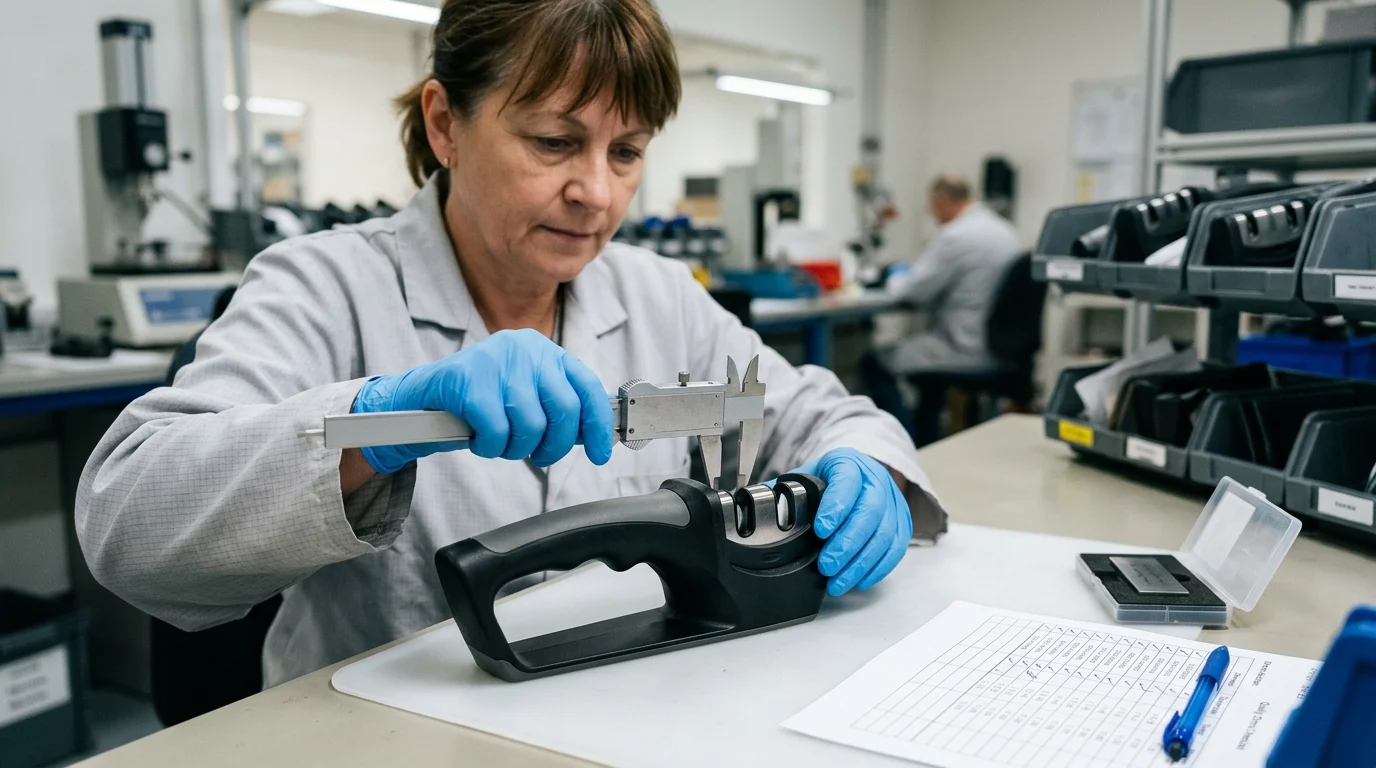
Sourcing these tools is not just about hunting down the lowest per-unit cost. I have learned the hard way that a cheap factory run without proper oversight can lead to disastrous defect rates and massive returns.
When vetting a new Kitchen Tool Supplier, you must dig deep into their quality control protocols, material certifications, and logistical capabilities.
What practical steps help me assess suppliers, materials, packag
ing, and quality
My first practical step is always to negotiate the Minimum Order Quantity (MOQ). A reliable factory will typically set an MOQ of around 1,000 to 3,000 units for custom colorways and logo branding. Next, I demand to see their historical defect rate—anything creeping over 1.5% is a massive red flag.
You also need to verify the bill of materials. The ABS plastic housing must be durable, and the grip materials should ideally carry LFGB or FDA compliance to ensure they are food-safe and free of toxic plasticizers. Finally, do not overlook the packaging. If you are ordering Bulk Kitchenware for e-commerce distribution, insist on ISTA 1A drop-test certified packaging to minimize transit damage and protect your margins.
How do regional compliance, logistics, and channel strategy affe
ct sourcing decisions
Regional compliance can make or break your sourcing strategy. If you are importing into the EU, REACH compliance for the plastics and rubber handles is absolutely mandatory to ensure there are no restricted chemicals. Over in the US, California’s Prop 65 requires strict material vetting to avoid warning labels.
On the logistics front, current production lead times from top Asian manufacturers are hovering between 35 and 45 days, with ocean freight adding another
Key Takeaways
- The most important conclusions and rationale for Knife Sharpener
- Specs, compliance, and risk checks worth validating before you commit
- Practical next steps and caveats readers can apply immediately
Frequently Asked Questions
Why is demand for ergonomic manual knife sharpeners increasing?
More home cooks and commercial kitchens now need affordable, easy blade maintenance. Manual sharpeners are cheaper than electric units, simpler than whetstones, and fit frequent touch-up use.
What ergonomic features should buyers look for?
Look for a stable TPR base, slip resistance, and a finger guard that protects hands during use. These features improve safety and make sharpening easier on wet countertops.
How often do knives need sharpening?
Most households need sharpening about 4 to 6 times per year. Commercial prep kitchens may need edge maintenance almost daily, making manual sharpeners a recurring need.
What makes a high-performing manual sharpener better than a basic one?
A three-stage system works best: diamond for repairs, tungsten carbide for reshaping, and ceramic for honing. Adjustable angle settings also help match different knife types.
What specs matter most when comparing knife sharpeners?
Check abrasive material, grit level, blade hardness, and expected lifespan. For example, tungsten carbide and fine ceramic usually offer better durability and repeat-use performance.