
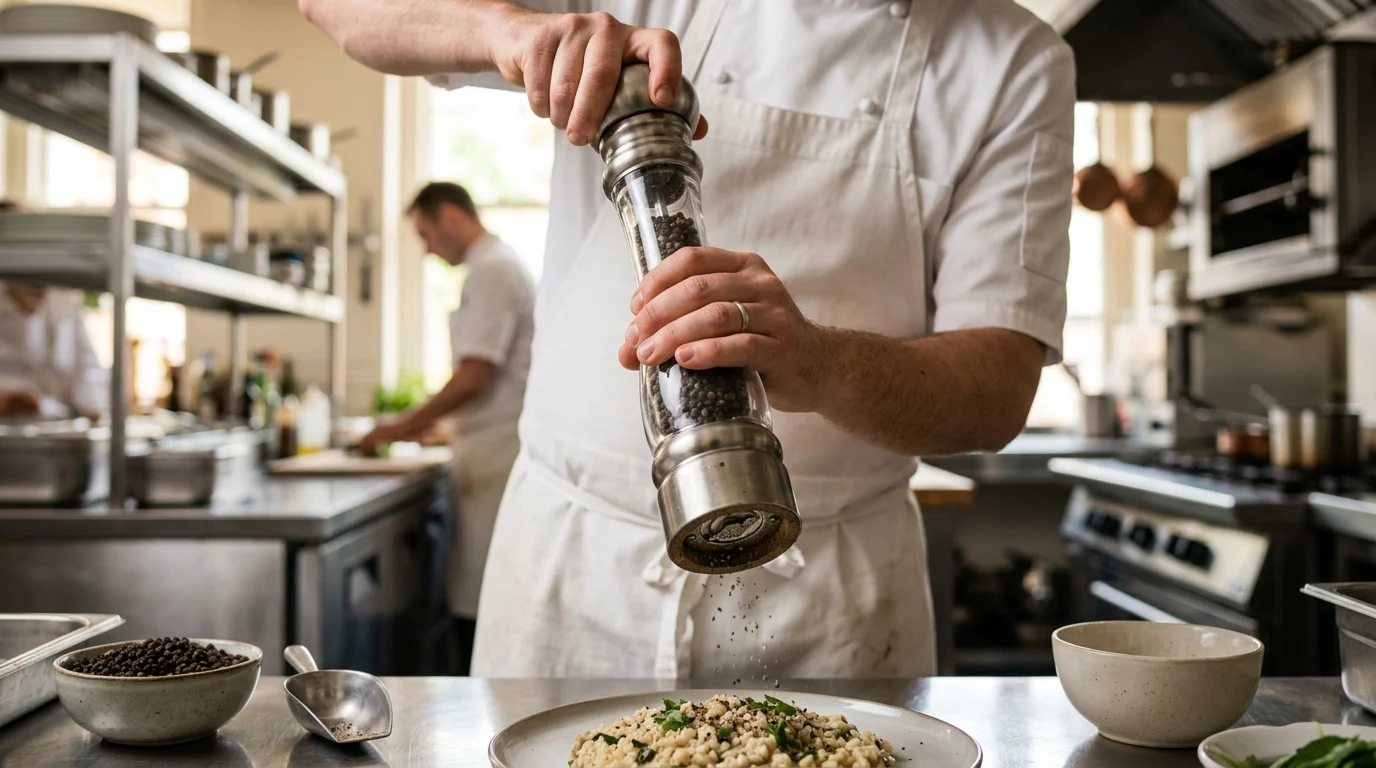
In a busy restaurant, a pepper grinder is not a minor accessory—it is a repeat-use tool that can affect prep speed, seasoning precision, tableside presentation, and even sanitation workflow. High-volume kitchens need equipment that can withstand repeated grinding, maintain consistent particle size, and minimize refill interruptions during peak service. This guide explains how to evaluate commercial-grade pepper grinders by use case, capacity, throughput, burr durability, electric versus manual operation, and procurement considerations. Whether outfitting a prep line, steakhouse dining room, catering operation, or centralized production kitchen, the right specification helps reduce downtime, improve consistency, and support safer, more efficient service.
High-Volume Pepper Grinding Requirements
As part of a broader smallwares and equipment procurement framework, commercial kitchens operate under rigorous demands where tool durability directly impacts operational efficiency. Among the most frequently utilized tabletop and back-of-house tools, the pepper grinder requires careful selection to withstand continuous use. Upgrading to commercial-grade units prevents mechanical failure during peak service hours and maintains proper food safety practices. (Note: Product links in this guide highlight Yisure, a representative commercial manufacturer, for illustrative purposes.)
Restaurant Use Cases and Daily Output
Restaurant environments dictate specific functional requirements based on their service models. Back-of-house prep kitchens often process large volumes of whole peppercorns daily, necessitating high-capacity mills or automated grinding stations to keep up with production schedules. Conversely, front-of-house operations, such as steakhouses offering tableside service, prioritize aesthetic appeal alongside ergonomic functionality.
When selecting a commercial pepper grinder, procurement managers must account for peak service volumes. In a busy dining room, tableside units see frequent use per shift, requiring robust internal mechanics that can endure repetitive stress without binding or jamming.
Throughput, Grind Consistency, and Refill Frequency
Throughput—often measured in grams per minute—and grind consistency are critical for precise flavor extraction and culinary presentation. Commercial mechanisms must deliver a uniform particulate size, reliably adjustable from coarse for meat crusts to extremely fine for delicate sauces, without mechanism slippage during operation.
Furthermore, refill frequency heavily influences labor efficiency and sanitation on the line. Handling loose peppercorns during mid-shift replenishment increases the risk of cross-contamination, particularly if the same stations handle multiple allergens or distinct spice blends. Commercial units should feature adequate hopper capacities to minimize this downtime. Transparent or semi-transparent hopper windows are also highly recommended, ensuring that staff can monitor inventory levels at a glance and maintain an uninterrupted workflow during peak rushes.
Key Commercial Pepper Grinder Specifications
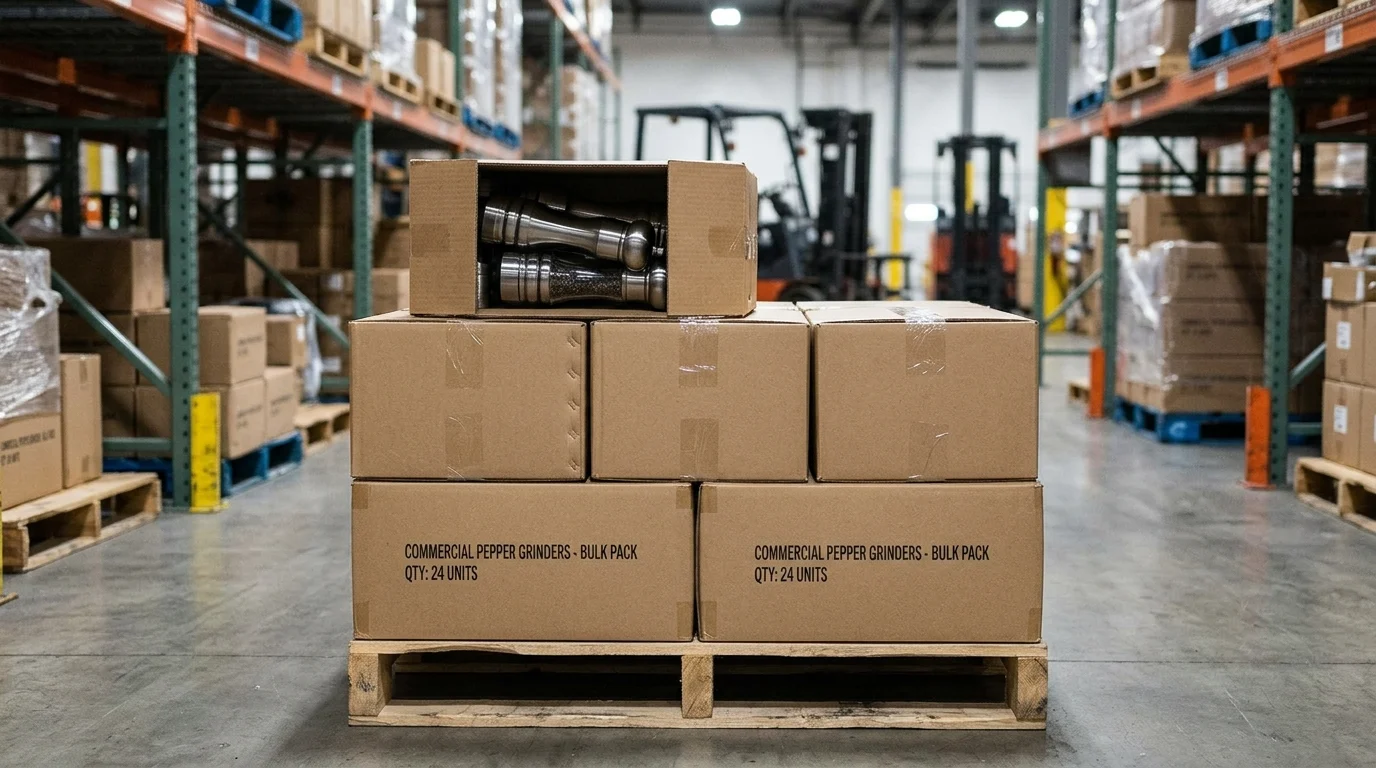
Evaluating the technical specifications of grinding mechanisms is paramount when outfitting a high-volume kitchen. The distinction between consumer gadgets and professional tools lies heavily in measurable metrics like motor torque capabilities, burr hardness ratings, and material durability.
Manual, Electric, and Bulk-Prep Options
Operators must choose between manual mills, battery-operated electric grinders, and bulk-prep stations based on station requirements. Manual mills remain the standard for tableside service due to their tactile reliability, while electric models significantly reduce repetitive strain injuries for prep staff working long shifts. A high-quality electric salt and pepper mill often utilizes high-torque motors powered by standard batteries or rechargeable lithium-ion cells, designed specifically to prevent stalling under heavy loads. However, battery-powered grinders introduce new logistical requirements, including charging station management, ingress protection (IP) ratings against kitchen moisture, and safe disposal or recycling protocols for lithium-ion cells.
For large-scale procurement and customized branding, partnering with a specialized equipment manufacturer ensures access to commercial-grade specifications tailored to specific operational needs.
| Grinder Type | Typical Environment | Illustrative Capacity Range* | Key Advantage |
|---|---|---|---|
| Manual Wooden/Acrylic | Front-of-House | 50ml – 150ml | High aesthetic value, zero motor failure risk |
| Electric/Battery-Operated | Prep / Line Cooking | 100ml – 200ml | Ergonomic, efficient one-handed operation |
| Bulk-Prep Station | Back-of-House | 300ml+ | Maximum throughput, lowest refill frequency |
*Note: Capacity ranges are illustrative and vary by manufacturer.
Burr Materials, Body Construction, and Food Safety
The grinding mechanism, or burr, is the core component dictating longevity and performance. Carbon steel burrs (often targeting industry benchmarks around 55-60 HRC for hardness) offer exceptional sharpness, making them ideal for cracking dense peppercorns. However, they require strict moisture control to prevent oxidation. Alternatively, advanced ceramic burrs are highly favored for their anti-corrosive properties, especially when utilized near steaming pots or in high-humidity kitchens.
Body construction must also adhere to food safety and durability standards, commonly utilizing BPA-free acrylics, sustainably sourced hardwoods, or commercial-grade stainless steel. Sourcing from a reliable vendor ensures proper material certification for these components.
How to Choose the Right Pepper Grinder
Strategic procurement of commercial kitchen equipment extends well beyond analyzing specification sheets. Selecting the optimal pepper grinder requires a comprehensive evaluation of supplier reliability, long-term maintenance costs, and practical usability in a live, high-stress kitchen environment.
Practical Testing and Supplier Evaluation
Before committing to bulk orders, operators should conduct practical testing on sample units. This includes simulating accidental drops from standard counter heights (e.g., 36 inches) to assess shatter resistance, and checking the grind adjustment knob for smooth, secure operation. Ensuring that the adjustment mechanism does not slowly loosen due to vibration during use is a critical pass/fail metric.
When sourcing directly from a factory supplier, buyers must independently verify FDA, NSF, or LFGB compliance certificates for food-contact surfaces. Additionally, electric models require CE, RoHS, or FCC documentation depending on the target market. Buyers should ask suppliers for their quality assurance protocols and target defect rates for mechanical failures. Negotiating Minimum Order Quantities (MOQs) for custom-branded commercial models is an essential step in establishing a scalable supplier relationship.
Total Cost, Spare Parts, Warranty, and Maintenance
Analyzing the Total Cost of Ownership (TCO) provides a more accurate financial picture for high-volume operations. While initial wholesale acquisition costs vary widely, the true operational cost includes maintenance, labor efficiency, and replacement cycles. For example, replacing a cheap $20 consumer electric unit every three months costs significantly more over a two-year period than investing $100 upfront in a durable commercial model that requires only occasional battery replacements.
Commercial buyers must prioritize models with readily available spare parts, particularly replacement hoppers, battery housings, and burr sets. Furthermore, a commercial warranty should be standard to protect against premature motor burnout in electric models.
Proper maintenance and safety protocols are vital to prevent cross-contamination and equipment failure. Kitchens should clearly designate and visually distinguish salt grinders from pepper grinders, as well as separate units for distinct spices to avoid allergen transfer. For electric units, preventing moisture ingress and monitoring for battery corrosion in humid kitchen environments are real operational concerns that must be managed.
Key Takeaways
- Match the grinder type to the workstation: manual mills suit tableside service, while electric or bulk-prep units are better for repetitive back-of-house grinding.
- Evaluate throughput, grind consistency, and adjustment stability before purchasing, because uneven particles can affect seasoning accuracy and presentation.
- Choose grinders with adequate hopper capacity and visible fill indicators to reduce mid-shift refills and limit unnecessary peppercorn handling.
- For electric models, confirm motor torque, battery runtime, charging logistics, and moisture resistance before deploying units in a commercial kitchen.
- Commercial-grade grinders reduce the risk of mechanical failure during peak service and can improve staff efficiency in high-volume operations.
Frequently Asked Questions
What makes a pepper grinder suitable for high-volume kitchen use?
A commercial grinder should offer durable burrs, consistent grind adjustment, adequate hopper capacity, and mechanics that resist jamming during repeated service. For electric models, motor torque, battery life, charging workflow, and moisture resistance are also important.
Should restaurants choose manual or electric pepper grinders?
Manual grinders work well for tableside service because they are reliable and visually appealing. Electric grinders are better for prep stations where staff need speed, consistency, and reduced repetitive strain during long shifts.
How important is hopper capacity in a commercial pepper grinder?
Hopper capacity directly affects labor efficiency. Larger or easy-monitor hoppers reduce mid-shift refills, limit peppercorn handling, and help lower cross-contamination risk in busy kitchens.
Why does grind consistency matter in professional cooking?
Consistent particle size improves flavor control, seasoning accuracy, and presentation. A grinder should hold settings reliably from coarse grinds for steak crusts to fine grinds for sauces without slipping.
Are battery-operated pepper grinders practical for restaurants?
Yes, if they have sufficient torque, dependable battery life, and a clear charging plan. Kitchens should also consider moisture protection, battery replacement costs, and safe recycling procedures for lithium-ion cells.