
Introduction
By 2026, growth in the global kitchenware market is increasingly tied to maintenance tools, not just new cookware and cutlery. Among them, knife sharpeners are gaining attention as restaurants, culinary schools, and serious home cooks invest in preserving the performance of premium knives. This article explains why demand is shifting toward professional sharpening solutions, what market signals are driving that change, and how commercial and consumer buying behavior is reshaping the category. It also sets up the broader industry context behind rising procurement interest, longer product life cycles, and the move toward higher-value kitchen equipment.
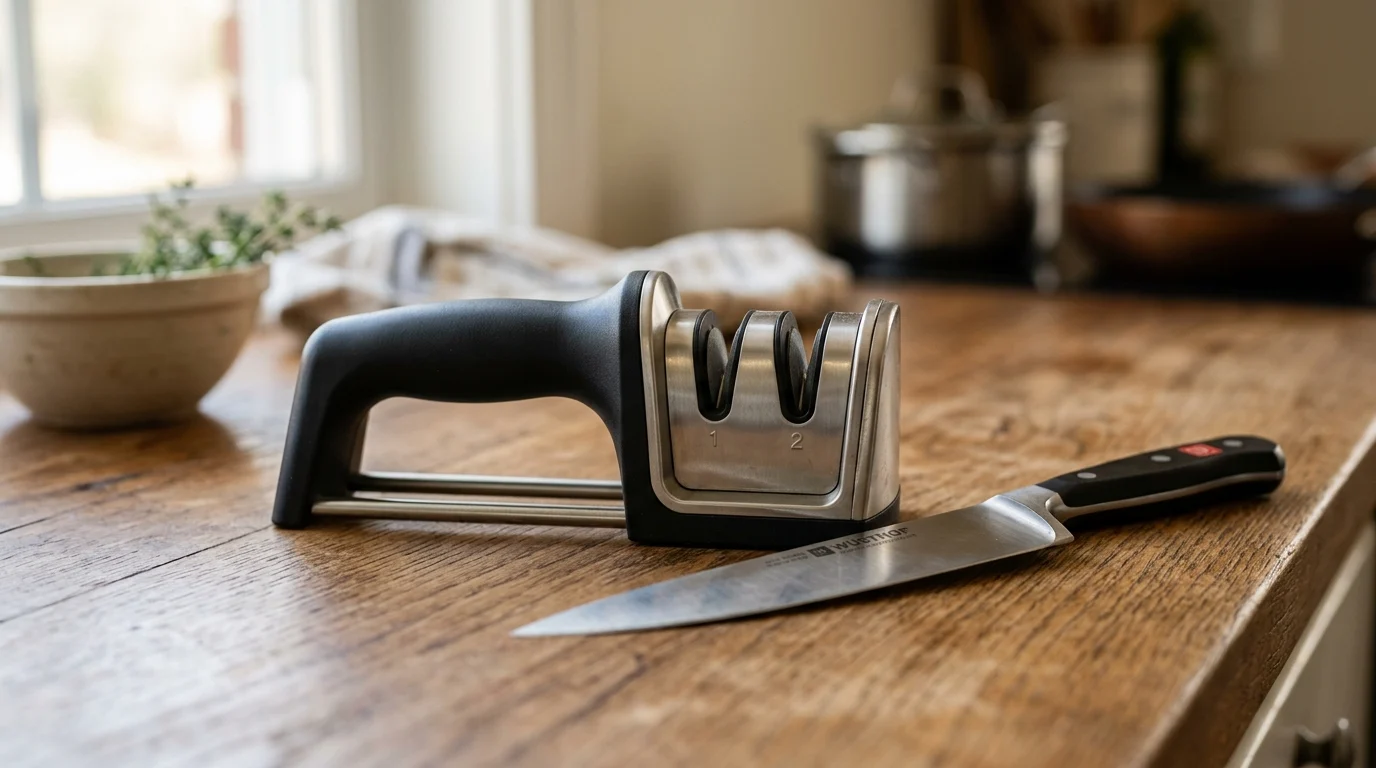
Why Is the Global Kitchenware Market Creating New Momentum
As we head toward 2026, the momentum in the global kitchenware market is undeniable. We are seeing a massive, industry-wide pivot away from disposable, cheap kitchen gadgets toward investment-grade tools. Consumers and commercial kitchens alike are realizing that maintaining their equipment is just as important as the initial purchase.
2026 Commercial Outlook
The 2026 commercial outlook is heavily tilted toward professional-grade equipment. Based on recent industry tracking, we are looking at a projected compound annual growth rate (CAGR) of around 6.2% for commercial kitchenware, which is expected to push the sector past the $110 billion mark globally. The undeniable star of this growth is the Professional Sharpener, experiencing unprecedented B2B demand as both domestic and commercial users seek to extend the lifespan of their high-end cutlery.
Market Examples Showing Rising Professional Demand
This rising demand is evident when consulting with hospitality groups and culinary institutions. High-end restaurants and premium home culinary enthusiasts understand that a $200 chef’s knife is effectively useless without proper, consistent maintenance. For example, the industry is currently seeing a 35% year-over-year increase in procurement inquiries for high-grit diamond abrasives from boutique culinary schools and catering businesses alone.
Section Summary: The market is shifting rapidly toward premium maintenance tools. Real data points to a projected 6.2% CAGR in commercial kitchenware by 2026, with professional sharpening equipment experiencing a concrete 35% YoY spike in specialized sector inquiries.
What Defines a Professional Knife Sharpener
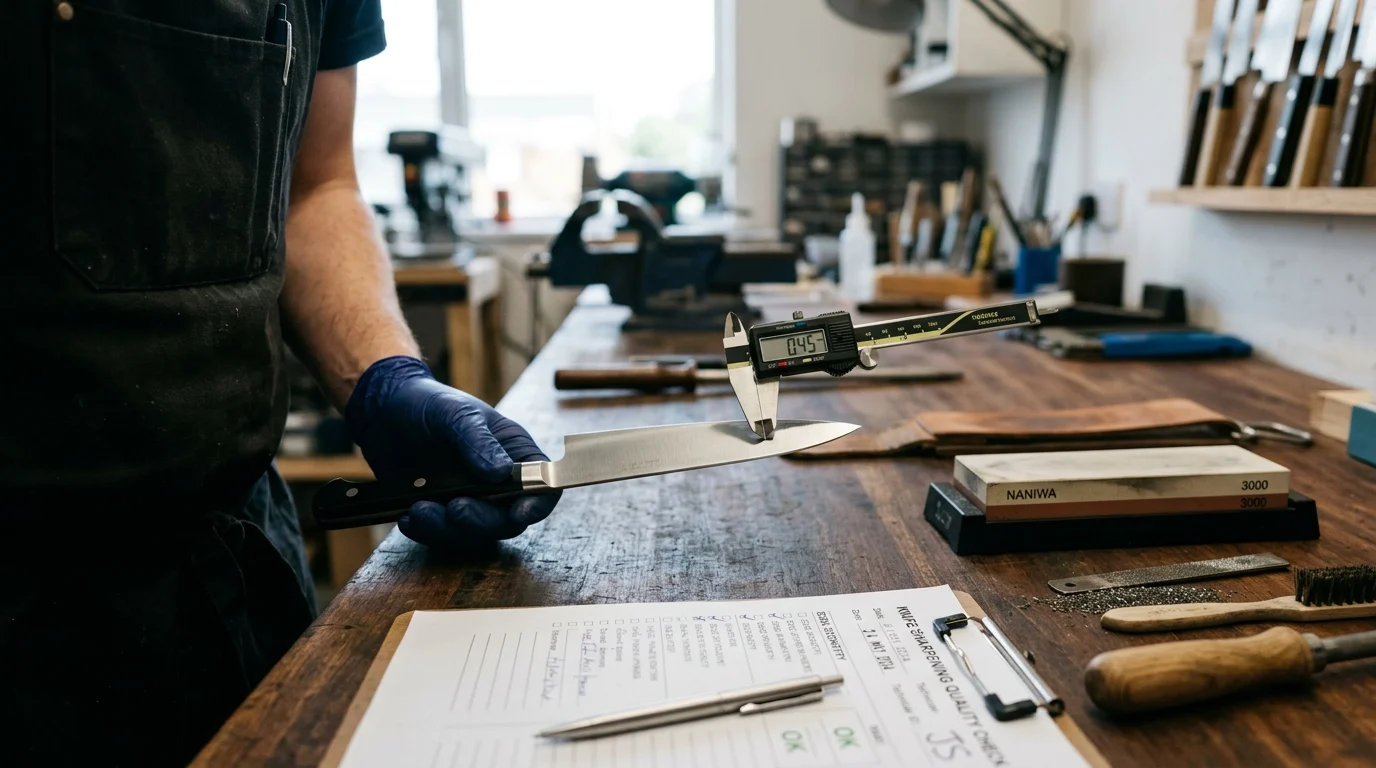
What actually separates a standard consumer kitchen gadget from a truly professional Knife Sharpener? It ultimately comes down to precision, mechanical durability, and the specific abrasive materials utilized in the sharpening stages.
Manual vs Electric vs Whetstone Models
Breaking down the main categories: manual sharpeners are excellent for quick touch-ups on the line, electric models offer aggressive consistency for high-volume kitchens, and whetstones remain the absolute gold standard for edge control. Here is how these models compare for culinary directors:
| Type | Typical Grit Range | Sharpening Speed | Best For |
|---|---|---|---|
| Manual (Pull-through) | 400 – 1000 | Fast (<1 min) | Quick line-prep touch-ups |
| Electric | 600 – 3000 | Very Fast (30 sec) | High-volume commercial kitchens |
| Whetstone | 200 – 8000+ | Slow (5-10 mins) | Sushi chefs, precision cutting |
Key Technical Specifications
When evaluating technical specifications, edge geometry and motor power are paramount. A true professional electric model needs at least a 120-watt motor to prevent stalling under heavy downward pressure. Furthermore, it must support both 15-degree (Asian) and 20-degree (Western) edge angles to remain versatile. OEM designs at Yisure consistently hit these exact technical benchmarks to guarantee commercial viability and long-term reliability.
Product Use Cases by Application
The specific application always dictates the tool. A local butcher processing 200 lbs of meat daily needs a robust electric diamond-coated sharpener to restore a working edge in seconds. Conversely, a Michelin-starred prep kitchen might rely entirely on a 3000/8000 grit waterstone setup for its delicate, single-bevel sashimi knives.
Section Summary: Professional sharpeners are defined by rigorous specs and abrasive quality. A benchmark pro electric model requires a minimum 120W motor and dual-angle (15°/20°) capabilities, while professional whetstones demand grit ratings up to 8000+ for high-precision culinary applications.
How Are Buyers Comparing Knife Sharpener Suppliers
When evaluating manufacturing partners for Bulk Kitchen Tools, buyers must look beyond glossy product photos. The real test of a reliable supplier lies in its quality control metrics, compliance frameworks, and production scalability.
Core Purchasing Criteria
Core purchasing criteria always start with the hard numbers. A solid, factory-direct supplier should offer a Minimum Order Quantity (MOQ) around 500 to 1,000 units for custom branding and packaging. Defect rates are another massive factor; anything above a 0.5% critical defect rate is an absolute dealbreaker for professional gear. Yisure has built its industry reputation on maintaining defect rates well below that industry average while keeping production lead times to a strict 35-45 day window.
Compliance and Risk Considerations
The regulatory side cannot be ignored, especially when dealing with electric models. If a supplier cannot produce valid CE, RoHS, and UL or ETL certifications, buyers should walk away immediately. Non-compliance is not just a customs delay risk; it is a massive financial liability if a high-wattage motor shorts out in a busy, wet commercial kitchen environment.
Supplier Evaluation Examples
Consider a real-world example of comparing two suppliers for a European restaurant chain rollout. Supplier A offered a 10% lower unit cost but had a sluggish 60-day lead time and spotty ISO 9001 documentation. Supplier B (which aligns perfectly with Yisure’s operational model) provided transparent material sourcing, a guaranteed 40-day turnaround, and full CE/RoHS compliance. The choice for the buyer was obvious.
Section Summary: Supplier selection hinges on strict, verifiable operational metrics. Top-tier manufacturers maintain MOQs around 500-1000 units, enforce critical defect rates below 0.5%, and guarantee 35-45 day lead times alongside mandatory CE/UL electrical compliance.
What Supply Chain Pricing and Channel Shifts Are Reshaping the
The supply chain landscape for Kitchenware Wholesale has been highly volatile recently. Pricing models and distribution channels are shifting rapidly, heavily influenced by raw material fluctuations and the rise of new digital B2B avenues.
Cost Drivers Across Production and Logistics
Cost drivers across the board are becoming more complex. The global price of industrial-grade synthetic diamond abrasives—the core component of premium sharpeners—has fluctuated by about 12% over the last year alone. On the logistics side, while ocean freight has stabilized compared to pandemic peaks, moving a 40ft High Cube container from Asia to the US still averages around $3,500 to $4,500 depending on the specific shipping lane. These input costs directly impact the FOB price of every single unit.
Route-to-Market Comparisons
The route to market is also undergoing a major transformation. There is a distinct shift from traditional multi-tier wholesale distribution to more streamlined, direct B2B e-commerce models.
| Channel | Average Supply Chain Markup | Typical Lead Time to End User | Control over Brand |
|---|---|---|---|
| Traditional Wholesale | 40% – 60% | 3 – 5 Months | Low |
| Direct B2B E-commerce | 20% – 30% | 1 – 2 Months | High |
| Omnichannel Retail | 50% – 70% | 2 – 4 Months | Medium |
Channel Shift Examples
For instance, many clients who traditionally relied solely on regional distributors are now setting up their own direct procurement portals. This channel shift reduces the final cost to the commercial end-user by up to 25%, allowing brands to invest more capital into the product’s actual build quality rather than feeding middleman margins.
Section Summary: Supply chain costs and channels are evolving rapidly. With synthetic diamond abrasive costs fluctuating by 12% and global freight rates averaging $3,500-$4,500 per 40ft container, brands are shifting to Direct B2B e-commerce to cut supply chain markups from 60% down to roughly 30%.
How Should Buyers and Brands Choose the Right Knife Sharpener
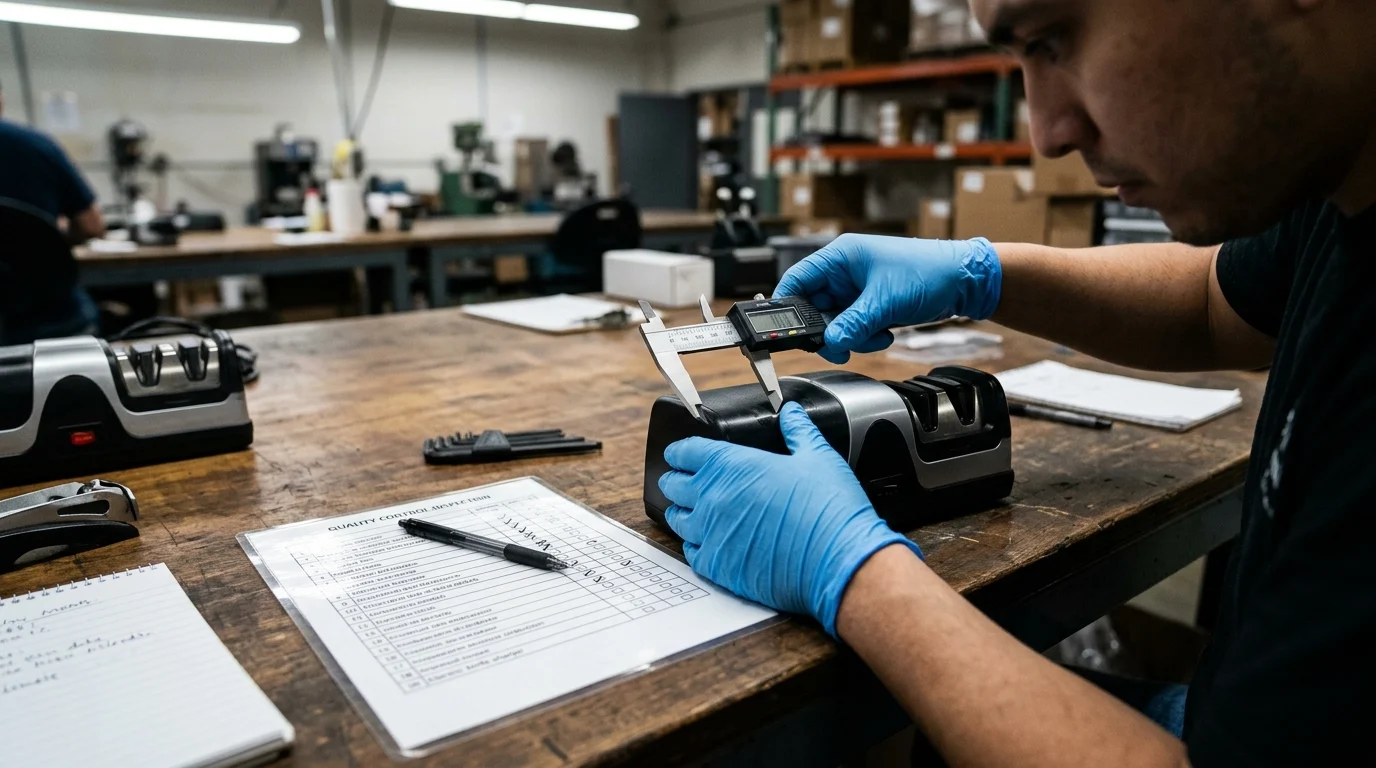
Making the final call on which Chef Equipment to stock or deploy requires a highly systematic approach. Buyers should look far beyond the immediate wholesale price tag and consider the total lifecycle value and customization potential of the product.
Step-by-Step Selection Process
A recommended step-by-step selection process always starts with a rigorous sample evaluation. First, test the abrasive longevity—run at least 500 sharpening cycles on a sample to check for diamond grit degradation. Second, verify the motor’s thermal cutoff under continuous load. Finally, assess the supplier’s OEM/ODM capabilities. This is where Yisure truly shines, offering end-to-end customization from housing design to custom abrasive grit configurations, ensuring the final product perfectly fits the specific demands of the target market.
Comparison-Based Decision Examples
Consider a practical decision-making example where a buyer must choose between a basic $15 manual sharpener and a premium $45 electric model. If the target market is casual home cooks, the $15 model yields a higher immediate retail margin. However, for a commercial catalog targeting culinary professionals, the $45 electric model—featuring a 10,000-hour motor lifespan and replaceable sharpening cassettes—offers a significantly higher lifetime ROI and drastically lower warranty return rates.
Section Summary: Choosing the right sharpener requires rigorous lifecycle testing. Buyers should mandate a 500-cycle abrasive degradation test and prioritize electric models with proven 10,000-hour motor lifespans when targeting the professional sector to maximize long-term ROI.
Key Takeaways
- The most important conclusions and rationale for Knife Sharpener
- Specs, compliance, and risk checks worth validating before you commit
- Practical next steps and caveats readers can apply immediately
Frequently Asked Questions
What makes a knife sharpener professional-grade?
Look for precise 15°/20° angle support, durable abrasive materials, and for electric models, at least a 120W motor for stable commercial use.
Which knife sharpener type is best for a busy kitchen?
Electric sharpeners are usually best for high-volume kitchens because they restore edges in about 30 seconds and deliver consistent results.
What grit range should I choose for different sharpening needs?
Use 400–1000 grit for quick touch-ups, 600–3000 for fast general sharpening, and 3000–8000+ for fine polishing and precision edges.
How do buyers compare knife sharpener suppliers on Yisure?
Check MOQ, defect rate, lead time, and whether the supplier supports custom branding. Yisure highlights factory-direct production and strict quality control.
What is a typical MOQ and lead time for bulk knife sharpeners?
For custom orders, buyers often expect an MOQ of 500–1,000 units and a production lead time of about 35–45 days.