
Introduction
Specialty coffee has moved from a café niche to a mainstream expectation, and that shift is changing what buyers look for in beverage equipment. As lattes, cappuccinos, and other milk-based drinks take a larger share of orders in both foodservice and home settings, milk frothers are becoming a core product category rather than an optional add-on. This article explains how rising demand for textured milk beverages is expanding the wholesale market for milk frothers, which buyer segments are driving growth, and what product and sourcing trends matter most for distributors, retailers, and commercial suppliers.
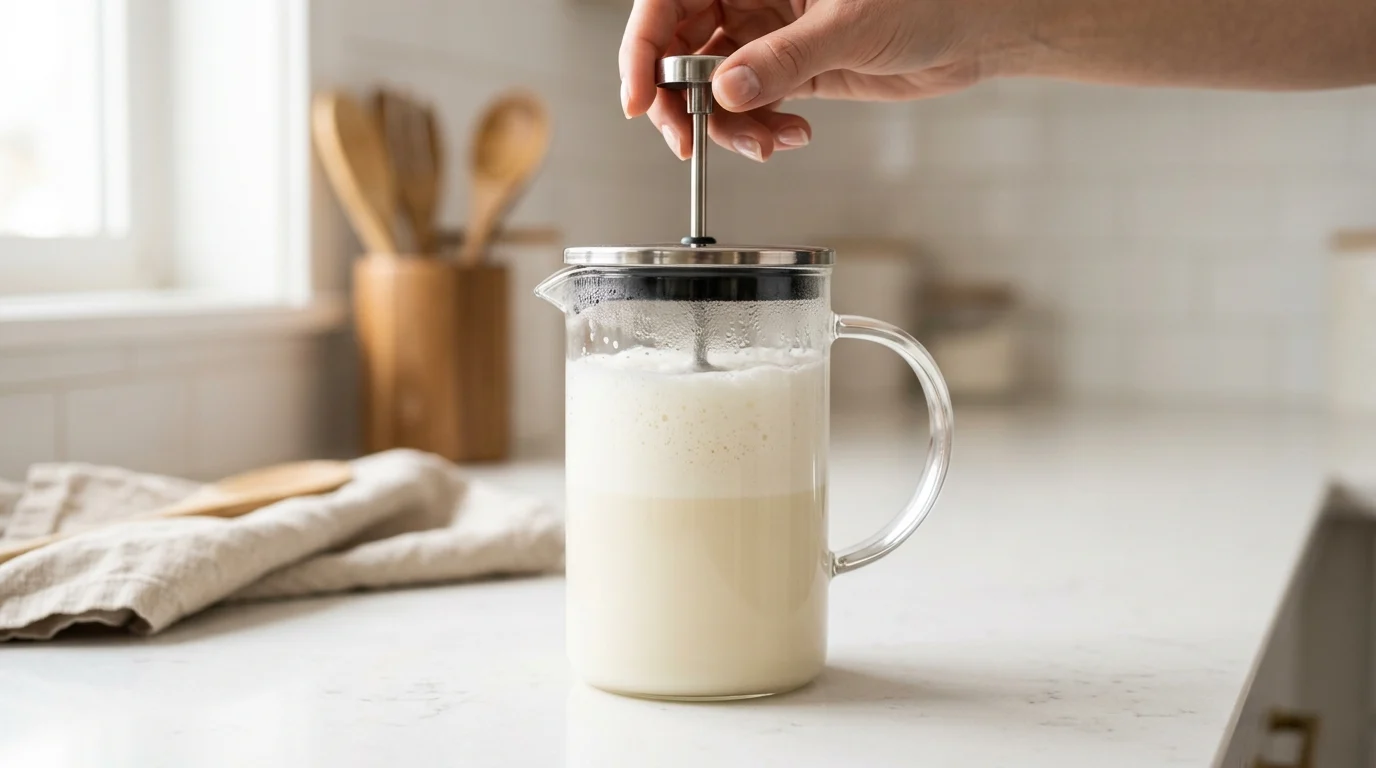
Why Demand for Specialty Coffee Drinks Is Reshaping the Milk
If there’s one thing I’ve learned from watching the coffee industry evolve over the last decade, it’s that the days of simple black drip coffee dominating the market are long gone. Consumers today expect café-quality beverages wherever they go, and that shift is entirely reshaping the wholesale market for coffee gear.
As a result, the humble Milk Frother has transitioned from a niche luxury accessory into an absolute baseline requirement for both home kitchens and commercial setups. Let’s dig into why this demand is exploding and how you can capitalize on it as a wholesale buyer.
Commercial shift from standard coffee to specialty drinks
We are witnessing a massive commercial shift away from standard brewed coffee toward high-margin specialty drinks. Lattes, cappuccinos, and macchiatos now make up over 50% of the daily order volume in many modern cafés. But this isn’t just happening in commercial coffee shops; the “home barista” movement has exploded. Consumers are spending heavily on espresso machines and standalone frothing devices to recreate that $6 morning latte in their own kitchens.
For wholesalers, this means standard drip-coffee accessories are stagnating, while aeration and texturing equipment is flying off the shelves. The market has effectively split into two massive revenue streams: entry-level home users looking for quick aeration, and prosumers/cafés demanding micro-foam perfection.
Fastest-growing specialty drink categories and demand drivers
The biggest catalyst for this equipment boom? The alternative milk revolution. Plant-based milks—especially oat and almond—are notoriously difficult to texturize compared to standard whole dairy milk. They require precise temperature control and specific agitation speeds to avoid separating or burning.
For example, while dairy milk creates optimal micro-foam at around 150°F (65°C), oat milk begins to break down and lose its structural integrity if pushed much past 140°F (60°C). This strict thermal threshold is driving a massive upgrade cycle. Consumers and café owners are aggressively swapping out older, unregulated frothers for modern units that offer specialized temperature profiles and dedicated “cold foam” settings.
Key product definitions buyers should clarify early
Before you start issuing purchase orders, it’s critical to clarify product definitions to match your target demographic. Are your buyers looking for a simple battery-operated whisk, a countertop magnetic induction frother, or a high-pressure commercial wand? Misunderstanding these categories is the fastest way to end up with dead stock.
Section Summary & Key Data Points:
- Market Shift: Specialty espresso-based drinks now account for 50%+ of café orders, driving direct demand for texturing equipment.
- Temperature Constraints: Oat milk requires frothing at a maximum of 140°F, compared to dairy at 150°F, necessitating upgraded hardware with precise thermal cutoffs.
- Our Manufacturing Advantage: We build our units with advanced NTC thermistors to ensure temperature accuracy within ±2°F, preventing burnt milk and ensuring perfect foam consistency every time.
What Milk Frother Features Matter Most to Wholesale Buyers

When I sit down with wholesale buyers, the conversation quickly shifts from broad market trends to hardware specifics. Your retail customers or café clients don’t just want a machine that spins; they want reliable, repeatable results. Understanding the technical features that actually matter is what separates a profitable SKU from a nightmare of customer returns.
Technical specs that affect drink quality and throughput
The quality of the drink and the throughput of the machine come down to a few critical specs. For electric countertop models, heating wattage and magnetic drive design are everything. A standard home unit needs a heating element between 400W and 600W to froth and heat 250ml of milk in under 90 seconds. Anything less, and the user is left waiting; anything more in a small capacity unit, and you risk scorching the milk.
For handheld units, RPM (Revolutions Per Minute) and motor torque dictate performance. A cheap motor will bog down when submerged in dense liquid. You want to source handhelds that maintain a consistent 10,000 to 14,000 RPM under load, powered by high-torque copper motors rather than cheap aluminum alternatives.
Handheld vs automatic vs commercial models
Choosing between handheld, automatic, and commercial models depends entirely on your distribution channel. Handhelds are high-volume, low-margin impulse buys. Automatics are the sweet spot for big-box retail and e-commerce, offering solid margins and high perceived value. Commercial steamers are low-volume but high-ticket items meant for hospitality and B2B supply.
| Feature | Handheld Whisk | Automatic Countertop | Commercial Frother |
|---|---|---|---|
| Wholesale Cost Band | $2.00 – $5.00 | $15.00 – $35.00 | $150.00 – $400.00+ |
| Power / Output | 10,000 – 14,000 RPM | 400W – 600W | 1000W+ / High Pressure |
| Target Market | Budget Home / Travel | Premium Home / Gifting | Cafés / Restaurants |
| Lifespan Expectancy | 6 – 12 Months | 2 – 5 Years | 5+ Years (with maintenance) |
How to assess supplier strengths in product performance
Specs on paper are useless if the supplier can’t deliver consistency. When assessing a factory’s performance, look closely at their defect rates and warranty support. A standard acceptable defect rate for small kitchen appliances is around 2%, but top-tier manufacturers push that well below 1%.
Section Summary & Key Data Points:
- Technical Benchmarks: Target 400W-600W for automatic models and 10,000+ RPM for handhelds to ensure optimal texturing.
- Cost vs. Value: Wholesale costs range drastically from $2 handhelds to $35 automatics, requiring strategic alignment with your retail pricing.
- Our Manufacturing Advantage: We maintain a rigorous quality control process that keeps our defect rate below 0.8%. By using 100% copper-core motors and premium non-stick interior coatings, we ensure longevity and drastically reduce your RMAs (Return Merchandise Authorizations).
How Sourcing, Compliance, and Cost Pressures Are Changing the Market

Sourcing Wholesale Coffee Equipment isn’t just about negotiating the lowest unit price anymore. As global supply chains tighten and regulatory bodies crack down on electronic imports, the hidden costs of compliance and material selection can easily destroy your profit margins if you aren’t paying attention.
Main cost drivers behind milk frother sourcing
The main cost drivers in manufacturing these devices come down to raw materials. For the jug and internal housing, food-grade stainless steel is non-negotiable. However, the difference between using premium 304 stainless steel and cheaper 201 stainless steel can impact the raw material cost by 15% to 20%. While 201 might look identical out of the box, it is highly susceptible to rust when exposed to the daily moisture and heat of steaming milk.
Similarly, the choice of internal wiring and PCBA (Printed Circuit Board Assembly) components dictates whether the machine will survive daily use or fry after a month. Skimping on the PCBA might save $1.50 per unit, but it guarantees a spike in warranty claims.
Compliance and market-entry requirements by region
Compliance is where many inexperienced buyers hit a brick wall. You cannot simply import electrical appliances without the proper certifications for your target region. Customs will seize uncertified shipments, and major retailers like Amazon will delist your products.
| Region | Required Certifications | Key Focus Area | Est. Testing Lead Time |
|---|---|---|---|
| North America | FDA (Materials), UL / ETL | Electrical Safety, Food Contact | 4 – 6 Weeks |
| Europe | CE, RoHS, LFGB | Heavy Metals, Electromagnetic | 3 – 5 Weeks |
| Australia | SAA | High Voltage Safety | 4 Weeks |
How to evaluate suppliers beyond price
Evaluating a supplier requires looking beyond the initial quote. You need to assess their production capacity, their Minimum Order Quantities (MOQ), and their lead times. A factory offering a rock-bottom price is useless if their lead time is 90 days and they require an MOQ of 10,000 units that ties up all your cash flow.
Section Summary & Key Data Points:
- Material Costs: Upgrading from 201 to 304 stainless steel increases costs by ~15-20% but eliminates rust-related returns.
- Compliance Timelines: Budget 3 to 6 weeks for regional certification testing if the factory doesn’t already hold current certificates.
- Our Manufacturing Advantage: We hold ready-to-go CE, RoHS, LFGB, and ETL certifications for our core models. Coupled with an accessible MOQ of 1,000 units and standard 30-to-45-day lead times, we allow you to scale your inventory safely without tying up excessive capital.
Why Channel Strategy and Logistics Matter More Than Ever
You can have the most advanced, beautifully designed product in the world, but if your channel strategy and logistics are inefficient, your margins will evaporate before the product ever reaches the end user. I always urge buyers to think about how the box moves just as much as what’s inside it.
How wholesale sales channels are evolving
The wholesale sales landscape is fragmenting. In the past, you simply sold pallets to big-box retailers. Today, wholesale buyers are supplying a mix of dropshippers, D2C e-commerce brands, specialty coffee roasters, and regional hospitality distributors. Each of these channels requires a different approach to packaging and fulfillment.
For e-commerce channels, the unboxing experience and drop-test durability are paramount. For traditional retail, shelf presence and point-of-purchase display features take priority. You need a product that can adapt to these evolving B2B networks without requiring completely separate manufacturing runs.
Logistics factors that affect profitability
Logistics factors—specifically freight costs—are brutal right now. The physical footprint of your packaged product directly dictates your profitability. CBM (Cubic Meter) optimization is a game-changer. If a supplier can redesign the internal EPS foam or molded pulp to reduce the retail box size by just 10%, the savings are massive.
To put numbers to it: a standard 40HQ shipping container holds roughly 68 cubic meters of usable space. If your packaged unit is 0.008 CBM, you can fit 8,500 units in a container. If we optimize that packaging down to 0.006 CBM, you can fit over 11,300 units in the exact same container. That drastically reduces your landed cost per unit.
How brands and wholesalers can align on product positioning
Brands and wholesalers must align closely with their manufacturing partners to ensure the product positioning matches the logistics reality. If you are selling a premium $80 countertop frother, the packaging must feel substantial, but if you are moving budget Coffee Accessories in high volumes, ultra-compact, lightweight packaging is the only way to survive freight costs.
Section Summary & Key Data Points:
- Container Yields: A 10-15% reduction in packaging volume can increase a 40HQ container yield from 8,500 units to over 11,000 units.
- Channel Flexibility: Adapting packaging for ISTA drop-test standards is critical for e-commerce, reducing transit damage claims by up to 40%.
- Our Manufacturing Advantage: We specialize in intelligent packaging design, utilizing custom molded pulp that protects the unit while minimizing CBM. This ensures your freight costs are optimized and your landed margins stay protected.
How Buyers Can Turn Market Trends Into Action

Alright, let’s bring it all together. Understanding specialty coffee trends, technical specs, and freight logistics is great theory, but executing a profitable purchasing strategy is what actually pays the bills. Here is how I advise buyers to turn this market momentum into a tangible business plan.
Step-by-step decision process for wholesale buyers
First, define your exact target demographic and their price ceiling. Second, map out your required regional compliance (e.g., ETL for the US, CE for Europe). Third, select a manufacturer that can provide a transparent Bill of Materials (BOM) confirming 304 stainless steel and copper motors. Finally, request a sample run and subject it to heavy stress testing—run it 50 times back-to-back to check for thermal overload.
Don’t skip the sampling phase. A reliable factory will encourage you to test their units to the breaking point because they know their engineering will hold up.
Best-fit product and market combinations
Match the hardware to the environment.
Key Takeaways
- The most important conclusions and rationale for Milk Frother
- Specs, compliance, and risk checks worth validating before you commit
- Practical next steps and caveats readers can apply immediately
Frequently Asked Questions
What type of milk frother should I stock for home users?
Choose automatic countertop models for convenience and consistent foam. Handheld frothers work for entry-level buyers, but automatic units better match demand for lattes, cappuccinos, and cold foam.
Why does precise temperature control matter for specialty drinks?
It prevents scorching and improves foam texture. Dairy froths well near 150°F, while oat milk performs better below about 140°F, so accurate control reduces customer complaints.
Which specs matter most when buying milk frothers wholesale?
Focus on heating wattage, motor torque, RPM, capacity, and temperature accuracy. For home electric units, 400W–600W is a practical range for fast, even heating.
Are milk frothers for plant-based milk different from standard models?
Yes. Plant-based milks like oat and almond need gentler, more precise heating and agitation. Models with dedicated settings or accurate thermal sensors usually deliver better foam.
Where can I source milk frothers for wholesale orders?
You can explore Yisure’s milk frother range to compare handheld, automatic, and commercial options. Check product category fit early to avoid mismatched inventory and slow-moving stock.