
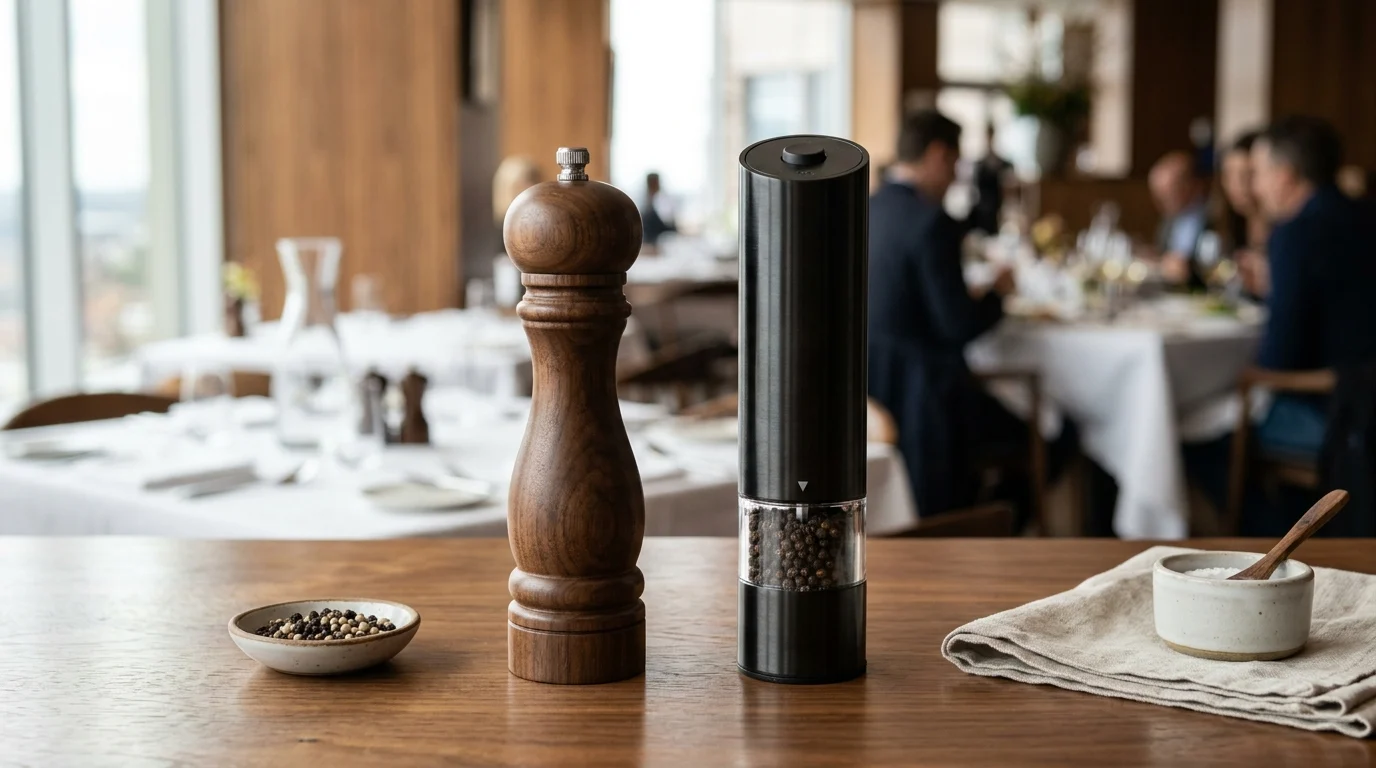
A pepper grinder may look like a small tabletop detail, but in restaurants and hotels it affects service speed, guest perception, accessibility, and replacement costs. The right choice depends on where the grinder is used: a fine dining server needs presentation and control, while a busy line cook may value one-handed operation and steady output. Manual mills offer simplicity and tableside theater; electric models deliver consistency, speed, and reduced strain during repetitive service. This guide compares their operational differences, best-use scenarios, capacity ranges, grind performance, and procurement considerations so hospitality buyers can match the tool to the workflow instead of choosing on appearance alone.
Manual vs Electric Pepper Grinders
Procuring tabletop and culinary accessories in the hospitality sector requires balancing aesthetic appeal with operational efficiency. Among these essential tools, the decision between manual and electric pepper grinders significantly impacts both the guest experience and the daily workflow of culinary staff. A well-chosen grinder elevates the perceived value of a meal, while a poor choice can lead to bottlenecks in service and premature equipment replacement.
Key operational differences
The primary difference between these formats lies in their mechanical actuation and sensory feedback. Traditional manual mills rely on rotational torque generated by the user, transferring kinetic energy directly to a carbon steel or ceramic burr. This provides immediate tactile feedback, allowing the user to feel the resistance of the peppercorns and intuitively adjust their grinding speed. The mechanical simplicity ensures immediate readiness without reliance on external power.
In contrast, modern electric variants utilize a motorized drive shaft to crush the spices. Contemporary commercial models are typically powered by 500mAh to 1200mAh rechargeable lithium-ion batteries or AA battery arrays. They replace physical exertion with a push-button or gravity-tilt activation mechanism. This motorized approach ensures a continuous, governed torque output, completely eliminating the repetitive wrist motion required by manual counterparts and delivering a steady stream of seasoning.
Best use cases in restaurants and hotels
In a commercial hospitality environment, deployment strategies depend heavily on the specific service model and brand positioning. Fine dining establishments frequently favor manual mills for front-of-house operations. Tableside peppering with a tall, traditional wooden mill remains a staple of high-end service theater, signaling personalized attention and traditional culinary values to the guest.
Conversely, electric models excel in high-volume dining settings and back-of-house prep stations. A custom pepper mill featuring one-handed operation allows a line cook to season a dish while simultaneously stirring, flipping, or plating. This multitasking capability can save an estimated 10 to 15 seconds per ticket during peak service hours. Furthermore, electric grinders are increasingly adopted in inclusive dining environments and hotel room service, as they comply with accessibility standards for guests who may have limited hand mobility or grip strength.
Core Comparison Criteria
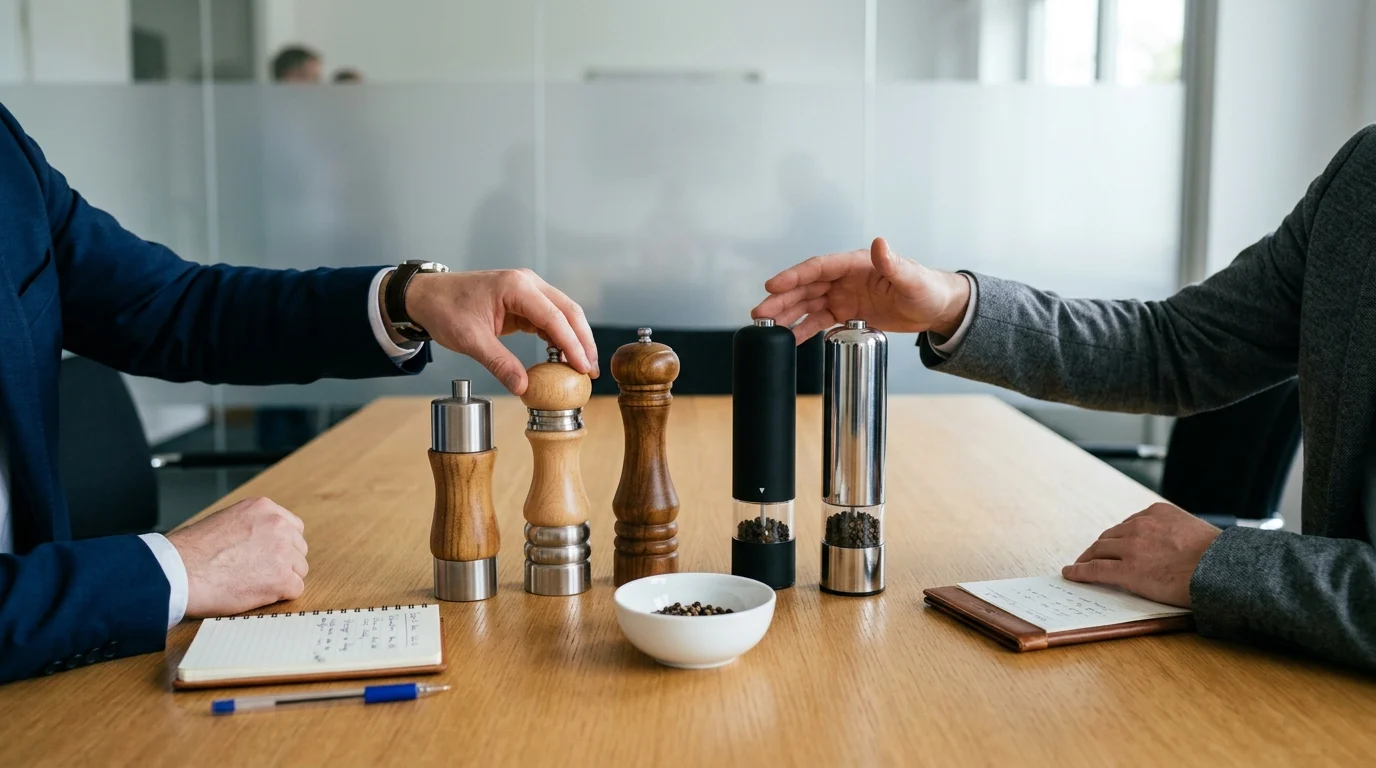
Establishing a standard for commercial pepper grinders requires moving beyond outward appearances to evaluate the underlying mechanics, material quality, and total cost of ownership. Procurement teams must weigh output metrics against long-term maintenance requirements.
Grind consistency, speed, and capacity
Achieving a uniform particle size is critical for proper flavor dispersion in professional kitchens. Both manual and electric grinders achieve this using adjustable ceramic or high-carbon steel mechanisms, but their output metrics differ significantly. Standard commercial hoppers typically accommodate 50g to 120g of whole peppercorns to minimize refill frequency during shifts.
While manual grinders can dispense spice as fast as the operator can turn the crank, electric models offer a highly consistent, governed output. Electric speeds average 1.5g to 2.5g per second, depending on the motor's RPM and the selected coarseness setting. This consistency is particularly valuable in recipe standardization where precise seasoning ratios are mandated.
| Metric | Manual Commercial Grinders | Electric Commercial Grinders |
|---|---|---|
| Typical Hopper Capacity | 50g – 100g | 70g – 120g |
| Output Speed | Variable (user-dependent) | 1.5g – 2.5g / second |
| Power Source | Kinetic energy | 500mAh+ Li-ion or AA/AAA |
| Burr Lifespan | 3 – 5 years (heavy use) | 2 – 4 years (motor-dependent) |
Cost, maintenance, and durability
Financial modeling for these tools must account for both initial capital expenditure and ongoing operational costs. High-quality manual grinders typically present a wholesale acquisition cost between $15 and $40 per unit. When constructed from solid wood or high-grade acrylic, they boast a virtually zero failure rate, with maintenance limited to routine exterior sanitization.
Electric models demand a higher upfront investment, often ranging from $25 to $60 per unit, plus the logistical footprint of managing USB-C charging stations or bulk battery replacements. When sourcing through a pepper grinder OEM, buyers must also factor in the durability of electronic components. Kitchens are high-humidity environments, so prioritizing units with an IP65 water resistance rating can prevent premature circuit failure. Despite the higher operating expenses, the ergonomic benefits of electric models often offset these costs by mitigating repetitive strain injuries (RSI) among culinary staff during heavy prep shifts.
Practical Buying Process
Transitioning from product evaluation to bulk procurement involves rigorous physical testing and aligning the hardware specifications with the venue's operational identity. A structured buying process prevents costly missteps in commercial rollouts.
How to test grinder samples
Procuring a fleet of grinders necessitates a standardized testing protocol for all vendor samples before committing to a large order. Procurement teams should subject an OEM salt and pepper grinder to a 50-cycle continuous grind test. This process rigorously tests battery thermal management, motor fatigue, and burr heat retention.
Grind consistency should be measured by passing the output through a micron sieve at three distinct coarseness settings, ensuring less than a 5% variance in particle size for fine grinds. Additionally, structural integrity must be verified. Conducting a standard 36-inch drop test onto commercial quarry tile will confirm whether acrylic viewing windows, battery compartment latches, and internal motor housings can survive the inevitable impacts of a fast-paced kitchen environment.
When to choose manual or electric
The final procurement decision hinges on the intersection of brand presentation, ergonomic needs, and volume requirements. Restaurants prioritizing traditional tableside service should invest in durable, ergonomically balanced manual mills that enhance the dining atmosphere. Conversely, fast-paced bistros, hotel breakfast buffets, and high-volume catering operations benefit immensely from the speed and accessibility of electric models.
Buyers looking to reinforce their brand identity across multiple franchise locations can leverage a custom pepper grinder or a private label pepper grinder to feature custom logos, bespoke colors, and specific metallic finishes. When pursuing these customized manufacturing routes, procurement managers should anticipate Minimum Order Quantities (MOQs) typically ranging from 500 to 1,000 units per colorway.
Key Takeaways
- Choose manual pepper grinders for fine dining tableside service when guest experience, visual tradition, and tactile control are priorities.
- Use electric pepper grinders in high-volume kitchens to enable one-handed seasoning and reduce repetitive wrist motion during peak service.
- Expect many commercial pepper grinder hoppers to hold 50g to 120g of peppercorns, helping reduce refill interruptions during shifts.
- Evaluate electric models by battery type and capacity, with many commercial units using 500mAh to 1200mAh rechargeable lithium-ion batteries or AA arrays.
- Prioritize adjustable ceramic or high-carbon steel burr mechanisms to maintain consistent grind size and reliable flavor dispersion.
- Consider electric grinders for hotel rooms, buffet areas, and inclusive dining programs where accessibility and ease of use are important.
Frequently Asked Questions
Which is better for fine dining: manual or electric pepper grinders?
Manual grinders are often better for fine dining front-of-house service because they support tableside presentation, tactile control, and a traditional premium feel.
When should restaurants choose electric pepper grinders?
Electric grinders are ideal for high-volume kitchens, buffet stations, room service, and accessibility-focused settings where one-handed use and consistent output improve speed and ease of service.
How much time can an electric pepper grinder save in service?
In back-of-house workflows, one-handed electric grinding can save an estimated 10 to 15 seconds per ticket by allowing cooks to season while stirring, plating, or flipping food.
What capacity should a commercial pepper grinder have?
Most commercial hoppers hold about 50g to 120g of peppercorns, which helps reduce refill frequency during busy restaurant and hotel service periods.
Are electric pepper grinders suitable for guests with limited hand strength?
Yes. Push-button or gravity-tilt electric grinders reduce wrist motion and grip effort, making them a practical option for inclusive dining, hotel rooms, and accessibility-conscious service.