
Key Takeaways
- Wholesale sourcing and supply-chain implications for Air Fryer
- Specifications, compliance, and commercial terms buyers should validate
- Actionable recommendations for distributors and procurement teams
Why the Global Air Fryer Market Is Expanding
I have tracked kitchen appliance trends for years, and the momentum behind the air fryer category is staggering. We are looking at a global market projected to cross $1.8 billion by 2028, growing at a steady 8.7% CAGR. It is no longer a late-night TV novelty; it has become a countertop staple in homes worldwide.
For B2B importers, distributors, and procurement teams, the real action has shifted away from basic, low-capacity models. The market is aggressively pivoting toward high-margin, multi-function units that replace several appliances at once. Understanding why this shift is happening is the first step to capitalizing on it.
Demand shifts across retail, e-commerce, and private label
Retailers are allocating more physical shelf space to these appliances, but e-commerce is where the volume truly explodes. Online sales for smart kitchen appliances have jumped over 45% year-over-year in several major Western markets.
Furthermore, private label brands are aggressively capturing market share. By offering premium features at mid-tier price points, these agile brands are outmaneuvering legacy appliance giants. They leverage direct-to-consumer channels and wholesale marketplaces to scale rapidly.
High-value product keywords and regional demand signals
Digging into search volume data, keywords like “dual zone” and “air fryer oven” have spiked by over 60% in North America alone over the last 18 months. Consumers know exactly what they want, searching for specific capacities and cooking modes.
In Europe, Global Market demand is heavily influenced by energy costs. Buyers are actively sourcing models that consume up to 50% less electricity than traditional built-in convection ovens. Recognizing these regional nuances allows you to tailor your procurement strategy to the specific pain points of your target demographic.
What Makes a Competitive Multi-Function Air Fryer Oven

When evaluating a factory’s lineup, simply slapping a fan over a heating element no longer cuts it. Today’s consumers expect an all-in-one appliance that can bake, roast, dehydrate, and fry. To compete, your product needs to hit specific performance benchmarks.
Core specifications, capacities, and power ranges
For oven-style models, optimal capacities range from 10L to 25L. Anything smaller defeats the purpose of the oven form factor, and anything larger starts competing with built-in ranges.
Power ranges need to sit comfortably between 1500W and 1800W to ensure rapid preheating and crispy results. I always warn buyers: anything under 1500W for a 15L oven will result in soggy food, poor customer reviews, and ultimately, high return rates.
Basket vs. oven-style models
The debate between traditional basket models and oven-style models usually comes down to target demographics and retail price points. Here is a quick breakdown for wholesale planning:
| Feature | Traditional Basket | Multi-Function Oven |
|---|---|---|
| Capacity | 3L – 7L | 10L – 25L |
| Power Range | 1200W – 1500W | 1500W – 1800W |
| Avg FOB Cost | $15 – $30 | $35 – $70 |
| Primary Use Case | Fries, quick snacks | Baking, rotisserie, dehydrating |
Basket models are great for high-volume, low-margin promotional sales, but oven models are where you build a premium brand narrative and secure healthier profit margins.
Feature comparison framework for wholesale evaluation
When evaluating an Air Fryer Oven for your wholesale catalog, you need a strict feature comparison framework. Look for digital capacitive touch panels, stainless steel internal cavities (which resist odor retention better than plastic or cheap galvanized steel), and dedicated dehydrator functions.
At Yisure, we focus heavily on integrating these high-value features seamlessly. By leveraging advanced manufacturing and rapid prototyping, we ensure our partners can offer premium specifications without suffering from bloated BOM (Bill of Materials) costs. This balance of features and cost gives our clients a competitive edge.
How to Source an Air Fryer Supplier
Finding a factory in a directory is easy; finding a reliable manufacturing partner who won’t tank your margins with high defect rates or missed deadlines is incredibly hard. Sourcing requires a strategic approach to vetting and negotiation.
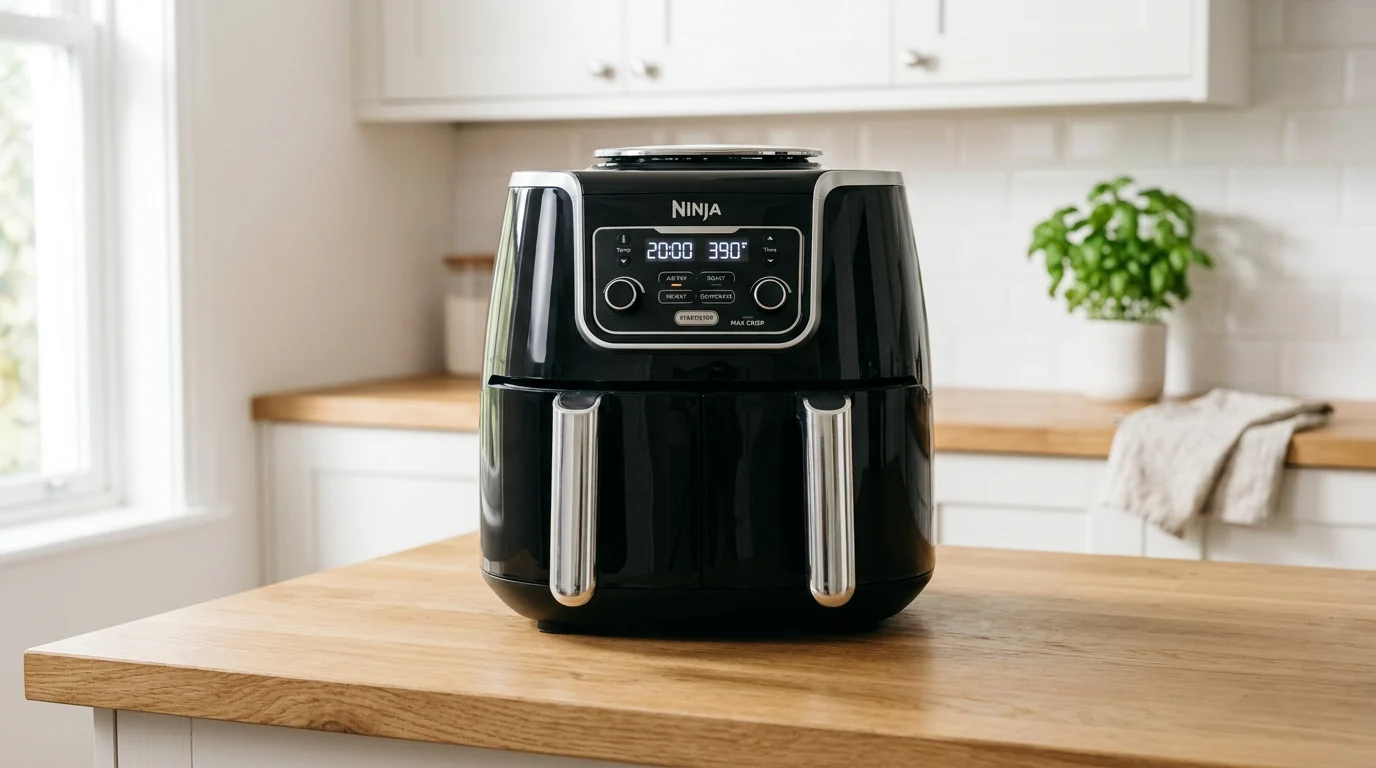
Key supplier capabilities for MOQ, OEM/ODM, and packaging
Standard MOQs (Minimum Order Quantities) in this category usually hover around 1,000 to 2,000 units, which neatly aligns with the capacity of a 1x40HQ shipping container. If you are looking for deep OEM/ODM customization—like custom tooling or proprietary smart features—expect those MOQs to double.
Packaging capabilities are also non-negotiable. You need a supplier capable of producing custom 5-ply color boxes that are retail-ready right off the container. Relying on a factory that outsources packaging to low-tier print shops will ruin the unboxing experience.
How to assess factory strengths and quality systems
Always audit a factory’s quality management system before signing anything. ISO9001 certification is the absolute baseline, not a gold star. You should target a production defect rate of strictly under 1.5%.
This is an area where production lines at Yisure truly shine. We maintain rigorous, multi-stage QC protocols—from incoming raw material inspection to final end-of-line testing. Keeping defect rates well below the industry average protects our partners’ brand reputations and bottom lines.
Practical sourcing steps to reach target cost
To reach your target cost without cutting dangerous corners, tear down the BOM with your supplier. The PCBA (printed circuit board assembly) and the internal heating elements generally account for roughly 35% of total manufacturing costs.
By negotiating bulk component purchases for Multi-function models and standardizing certain internal parts across your SKUs, you can often shave off $2 to $4 per unit FOB. Push for cost engineering rather than blindly demanding a cheaper price, which usually results in inferior plastics or thinner wiring.
Compliance, Packaging, and Logistics for Global Sales
You can secure the best FOB price in the world, but if your goods get stuck at customs or arrive at the warehouse shattered, your ROI plummets. Navigating international logistics and compliance requires strict precision.
Certifications, electrical standards, and market-entry requirements
Entering the European market requires strict adherence to CE, CB, and RoHS compliance. For North America, UL or ETL certifications are mandatory, alongside FDA-approved food-grade coatings for all internal accessories like baskets and drip trays.
Never attempt to bypass these requirements; non-compliance fines and forced recalls can easily exceed $100,000 and destroy seller accounts. Tracking Export Growth data shows that fully certified models clear customs faster and dominate B2B wholesale channels.
Carton design, drop-test readiness, and accessory planning
Carton design is critical for protecting your investment. Insist on ISTA 1A drop test standards for all master cartons. Your 5-ply corrugated packaging must withstand a 36-inch drop on its corners, edges, and flat faces without damaging the appliance inside.
Furthermore, consider your internal dunnage. Transitioning from traditional EPS foam to molded pulp not only helps pass rigorous drop tests but also appeals heavily to eco-conscious retail buyers in Europe and North America.
Shipping, forecasting, and replenishment decisions
Forecasting dictates your cash flow and stock availability. A standard 40HQ ocean container holds roughly 800 to 1,000 oven-style units, depending on the master carton dimensions.
With ocean transit times averaging 35 to 45 days (plus 30 days for manufacturing), you are looking at a 75-day lead time. Place replenishment orders at least 90 days before peak Q4 selling seasons to guarantee inventory during Black Friday and Cyber Monday.
How to Build a Go-to-Market Plan
Having the product safely in your warehouse is only half the battle; now, it must move profitably. Crafting a successful go-to-market strategy requires a deep understanding of your margins, chosen sales channels, and direct competitors.
Sales channels, price bands, and product bundle strategy
Segmenting your sales strategy by distinct price bands is highly effective. Entry-level multi-function ovens sit comfortably at the $99 to $129 MSRP mark, while premium models featuring smart app connectivity and larger capacities can easily push into the $199+ range.
Product bundling is another powerful tactic. By including low-cost accessories—like custom rotisserie forks, pizza stones, or silicone baking mats—you can boost your product’s perceived value by 20% while adding only $2 to $3 to your FOB cost.
Branded vs. exclusive vs. private label models
Deciding between a branded, exclusive, or standard private label model dictates your upfront capital. If you want to completely own the market aesthetic, investing $15,000 to $30,000 in custom tooling for an exclusive exterior design pays off in the long term.
However, if speed to market is your priority, white-labeling an existing, proven chassis allows you to capitalize on current Market Trends rapidly. You can launch a fully branded, standard-tooling product in under 60 days.
Final supplier and product selection criteria
For final supplier and product selection, use a strict matrix to ensure data-driven decisions. Here is a quick breakdown of how to weight the criteria:
| Evaluation Criteria | Weight | Target Metric |
|---|---|---|
| Quality Control & Defect Rate | 40% | < 1.5% Defect Rate |
| Cost / FOB Price | 30% | $35 – $60 (Oven models) |
| Production Lead Time | 20% | 30 – 45 Days |
| R&D / Innovation Capability | 10% | 2+ New models annually |
Partnering with a sophisticated supplier like Yisure ensures you hit these metrics consistently. We provide the supply chain stability, manufacturing excellence, and continuous innovation needed to scale your brand globally without the usual sourcing headaches.
Frequently Asked Questions
Why are multi-function air fryer ovens growing faster than basic models?
They offer higher capacity and replace multiple appliances, such as ovens, dehydrators, and rotisserie cookers. This makes them more attractive for retailers, private label brands, and consumers seeking better value.
What capacity range is best for wholesale air fryer oven sourcing?
For oven-style models, 10L to 25L is the most practical range. It supports family cooking, baking, and roasting without becoming too bulky for countertop use.
What power level should buyers choose for a 15L air fryer oven?
Choose 1500W to 1800W for strong preheating and crisp results. Models below 1500W may cook slowly and increase the risk of poor reviews or returns.
Are basket air fryers or oven-style air fryers better for private label brands?
Basket models suit low-cost promotions, while oven-style models are better for premium positioning. Private label brands often choose oven models for higher margins and stronger feature differentiation.
What features should importers check before selecting an air fryer supplier?
Check for OEM/ODM capability, stable MOQ, digital controls, stainless steel interiors, dehydrator functions, packaging options, and quality control processes. Yisure focuses on these features for B2B air fryer sourcing.